Scaling Commerce for a
3,000-Store Co-op
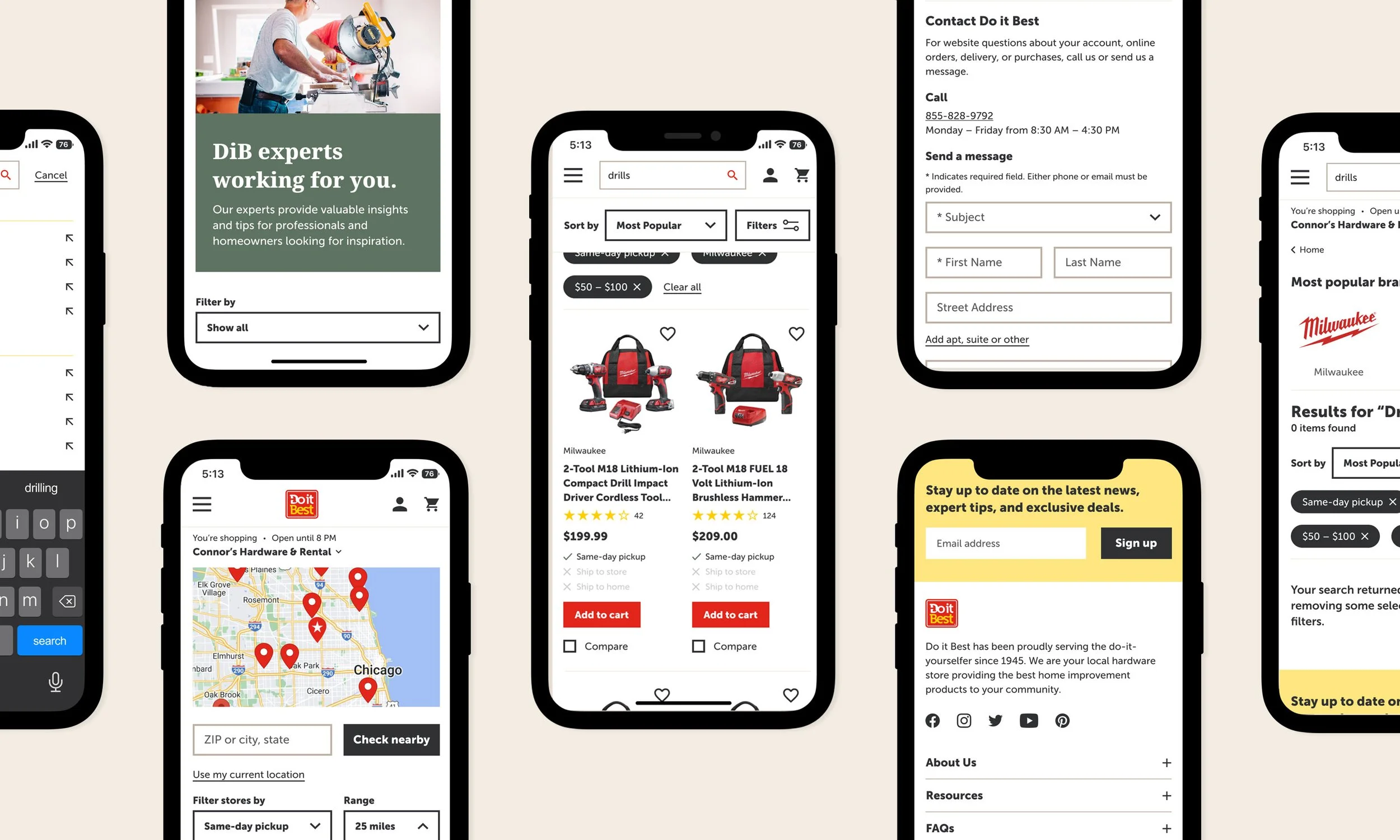
Snapshot
Client
Do it Best
Company
Publicis Sapient
Focus
B2C + B2B platform E-commerce Transformation
Role
UX Lead, Design, Research
Team
Design, product, engineering
Timeline
10 months to launch
Impact
+67% post-relaunch, online revenue
+60% in orders, including a 56% increase in ship-to-store orders
+4.6% average digital order value, fueled by same-day pickup
The Problem
Client Description
Do it Best is a U.S.-based, member-owned cooperative supplying hardware and building materials to 2,000+ members across 3,000 retail locations, expanding its network through the acquisition of True Value.
The business operates across wholesale distribution and e-commerce, generating approximately $5B in wholesale revenue and supporting an estimated $14B in member retail sales, with a growing presence in 50+ countries.
The Challenge
The redesign needed to balance two audiences: B2C customers, who browse online and buy in-store, and B2B member retailers, often smaller, family-owned stores, who depend on Do it Best’s digital infrastructure to power their own consumer sales.
Do it Best also needed to modernize its e-commerce platform to remain competitive amid rapid growth in ‘Buy Online, Pickup in Store’ (BOPIS) and digital commerce. The existing experience:
Limited customers to local store inventory, leading to lost sales
Lacked a unified experience across corporate and member-owned stores
Did not effectively support dual audiences: consumers and independent retailers
Each Do it Best store is independently owned and operated, yet customers expect a seamless retail experience across all touchpoints.
The Reality
Unlike traditional retail, the platform had to support a cooperative model where independent stores operate as both customers and operators, adding complexity to the experience design and system requirements.
Dual audience complexity
Designed for both B2C customers and B2B member retailers, each with different needs and dependencies on the platform.Distributed retail network
Thousands of independently owned stores required a solution that balanced centralization with local flexibility.Operational constraints at the store level
Member stores lacked efficient tools to support same-day pickup and fulfillment, creating friction.Global team collaboration
Coordinated across North America and India teams, requiring strong alignment and communication to maintain consistency.
Strategy &
Key Decisions
The platform needed to serve dual audiences: B2C customers seeking online-to-in-store convenience and B2B member retailers relying on the system to power their own sales involving:
Unified, centralized platform
Built a single-vendor system to connect 3,000+ stores while supporting both corporate and local store experiences.Omnichannel fulfillment flexibility
Enabled same-day pickup, ship-to-store, delivery, and transfer options to meet evolving customer expectations.Improved product discovery and availability
Helped users quickly find products, verify inventory, and avoid store-hopping.Operational enablement tools
Designed internal tools like Pick & Pack to streamline store-level fulfillment and improve reliability.
My Role
Led end-to-end UX/UI design across research, wireframing, and delivery.
Managed a North American team of two designers, while contributing hands-on to design work.
Built and scaled a reusable design system across global teams.
Partnered with India-based teams to ensure consistency and quality.
Led development refinement sessions to maintain cross-functional alignment.
Served as primary client contact, presenting solutions and managing stakeholder feedback.
The Impact
During the soft launch, Hotjar was installed to track user behavior and discovered high drop-off rates on the “Add to Cart” and Checkout pages.
In response, the design team re-engineered the Checkout flow to eliminate previous technical constraints and improve conversion. Within the first two months of relaunch, the new digital experience delivered:
+67% online revenue post-launch
+60% increase in orders, including +56% in ship-to-store
+4.6% increase in average order value, driven by same-day pickup
The platform ultimately enabled a seamless omnichannel experience, improved fulfillment efficiency, and supported both customer growth and member retailer success.
Learnings
Global collaboration requires intentional alignment
Working across distributed teams required stronger coordination to maintain consistency and speed.Small behaviors build stronger teams
Keeping cameras on during remote collaboration improved communication and team cohesion.Advocate for testing early and often
Grounding decisions in real user behavior reduced risk and led to more effective design outcomes.
Discovery Highlights
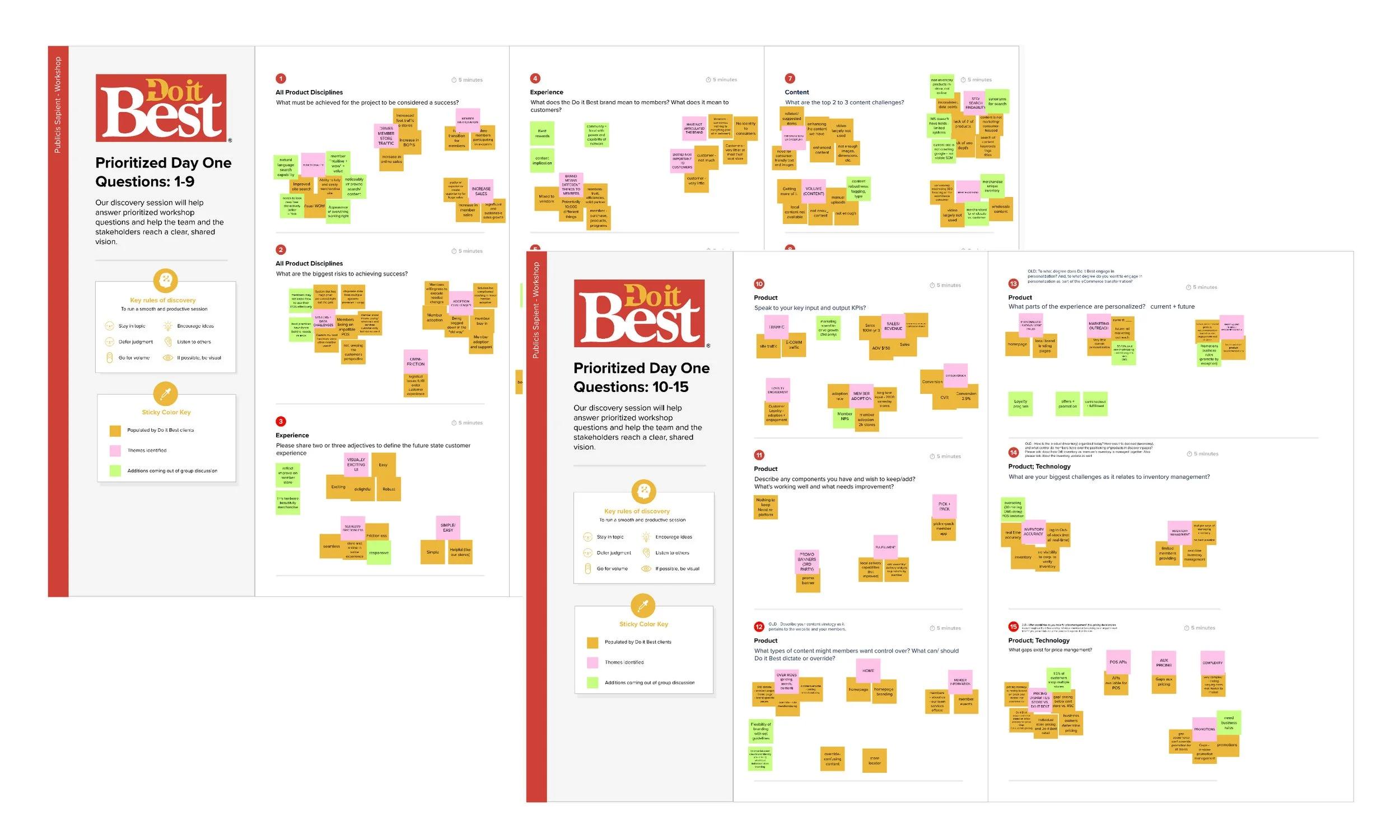
Facilitated a 2-day in-person discovery workshop with cross-functional client stakeholders to align on goals, surface priorities, and define project success criteria.
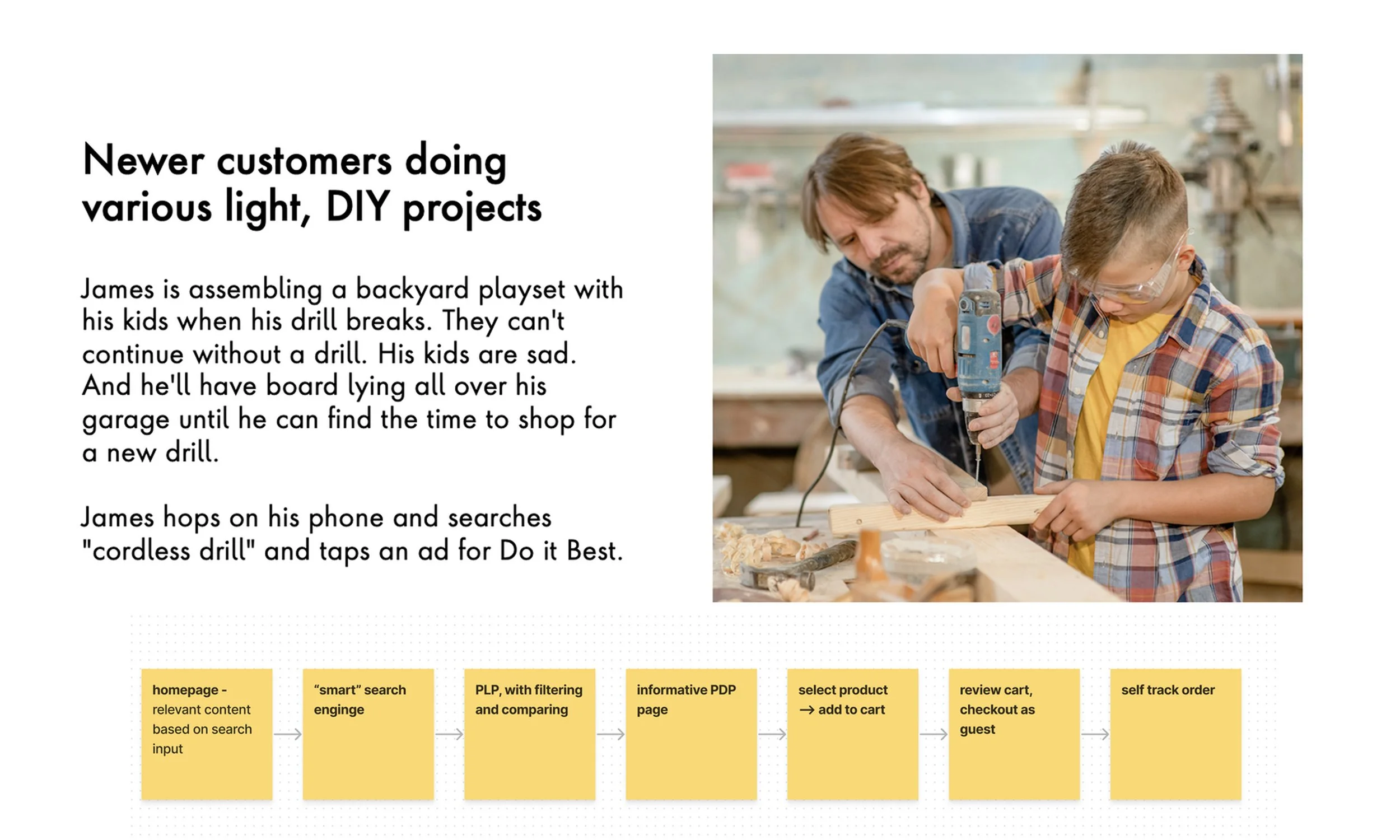
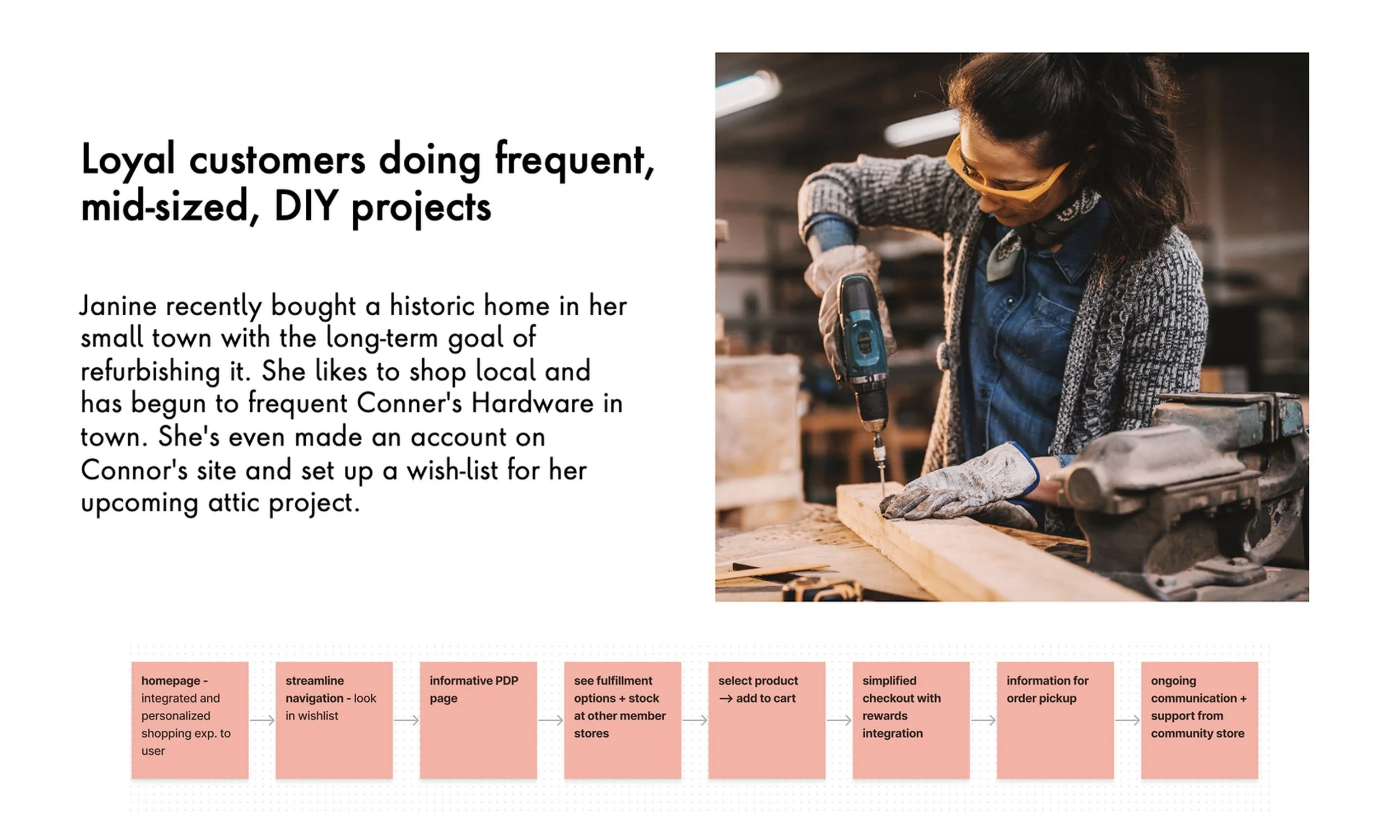
Shoppers access Do it Best through the main site or member sites. Two personas and journeys were mapped to capture these distinct paths.
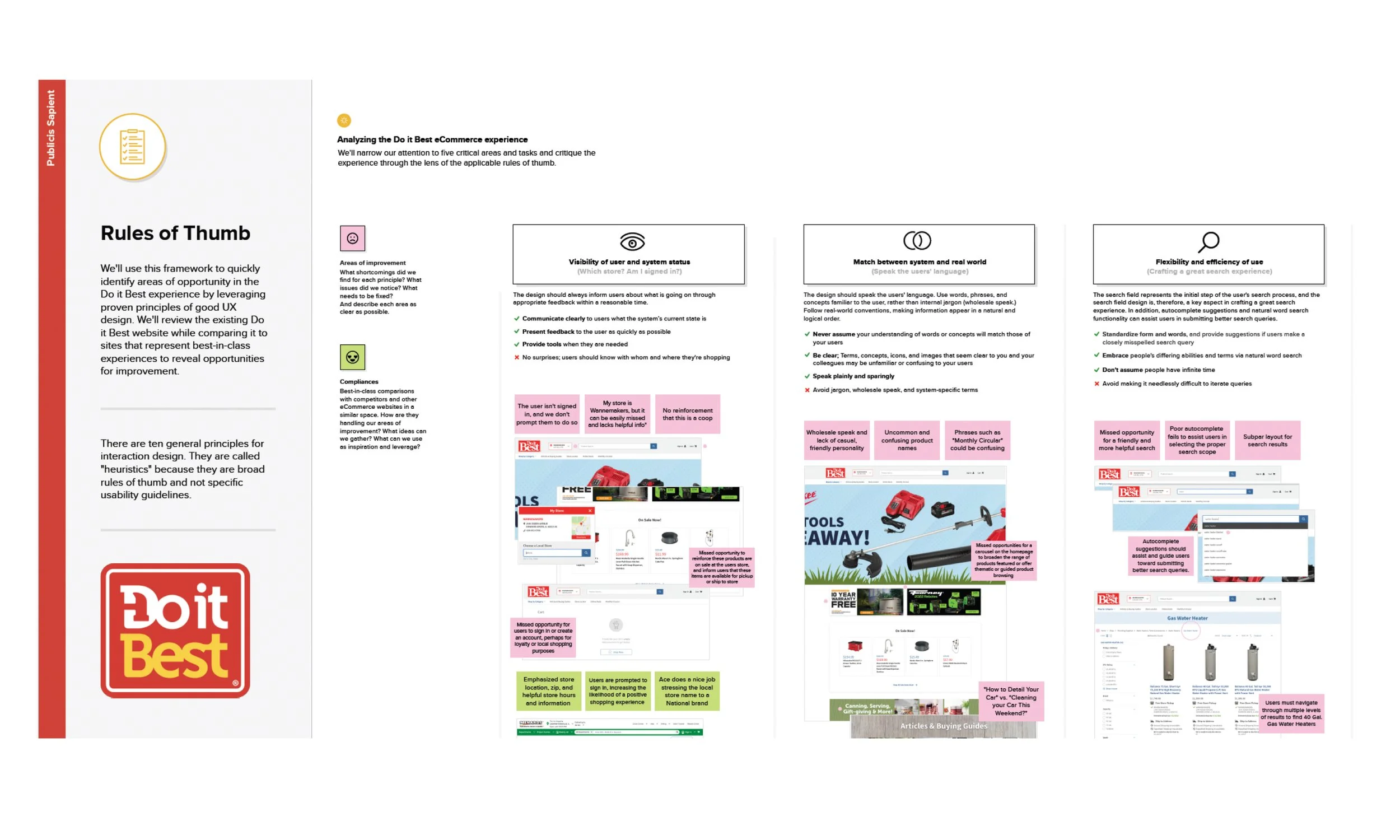
Evaluated the site through heuristic principles to identify pain points and opportunities for improvement.
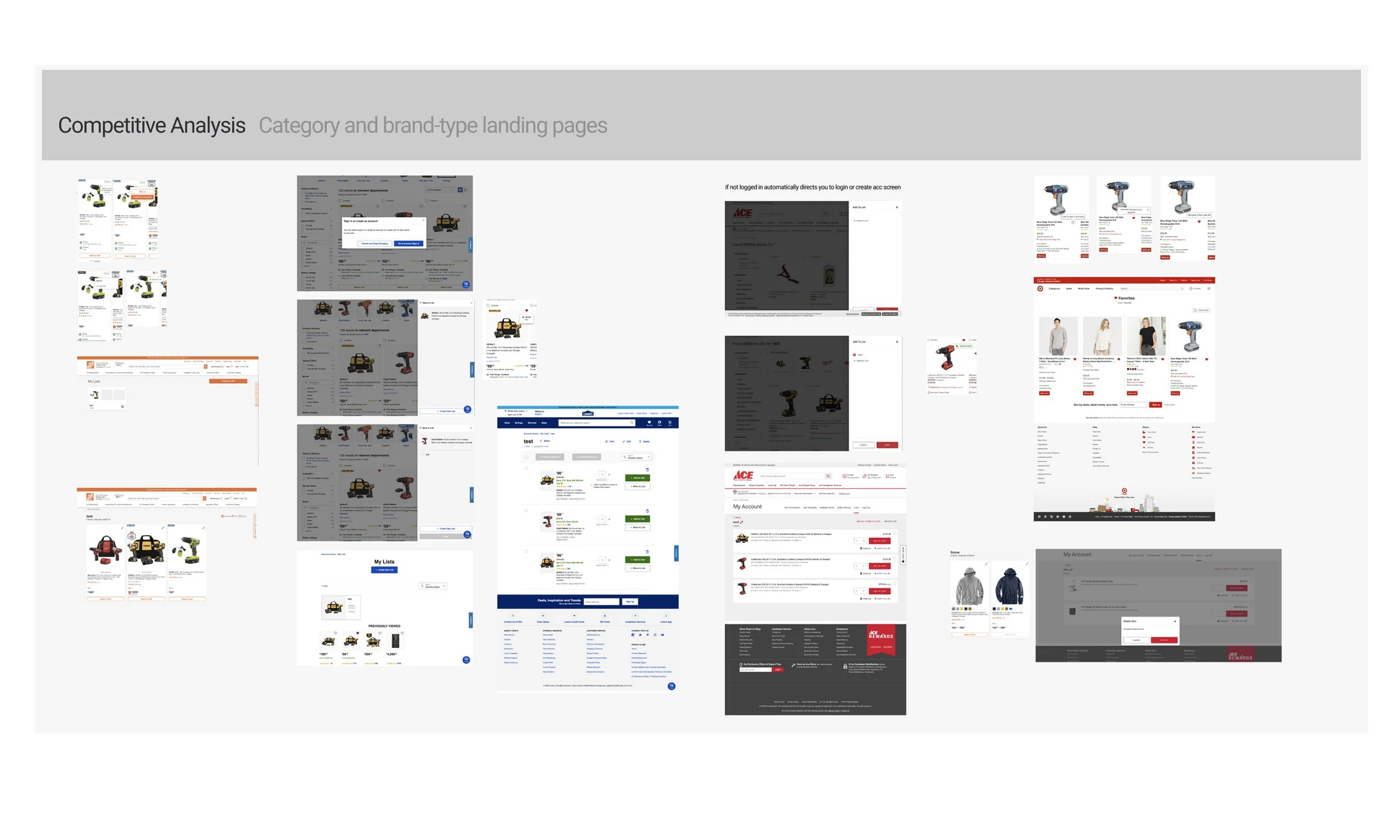
Performed a competitive analysis to identify strengths, gaps, and differentiators guiding strategy.
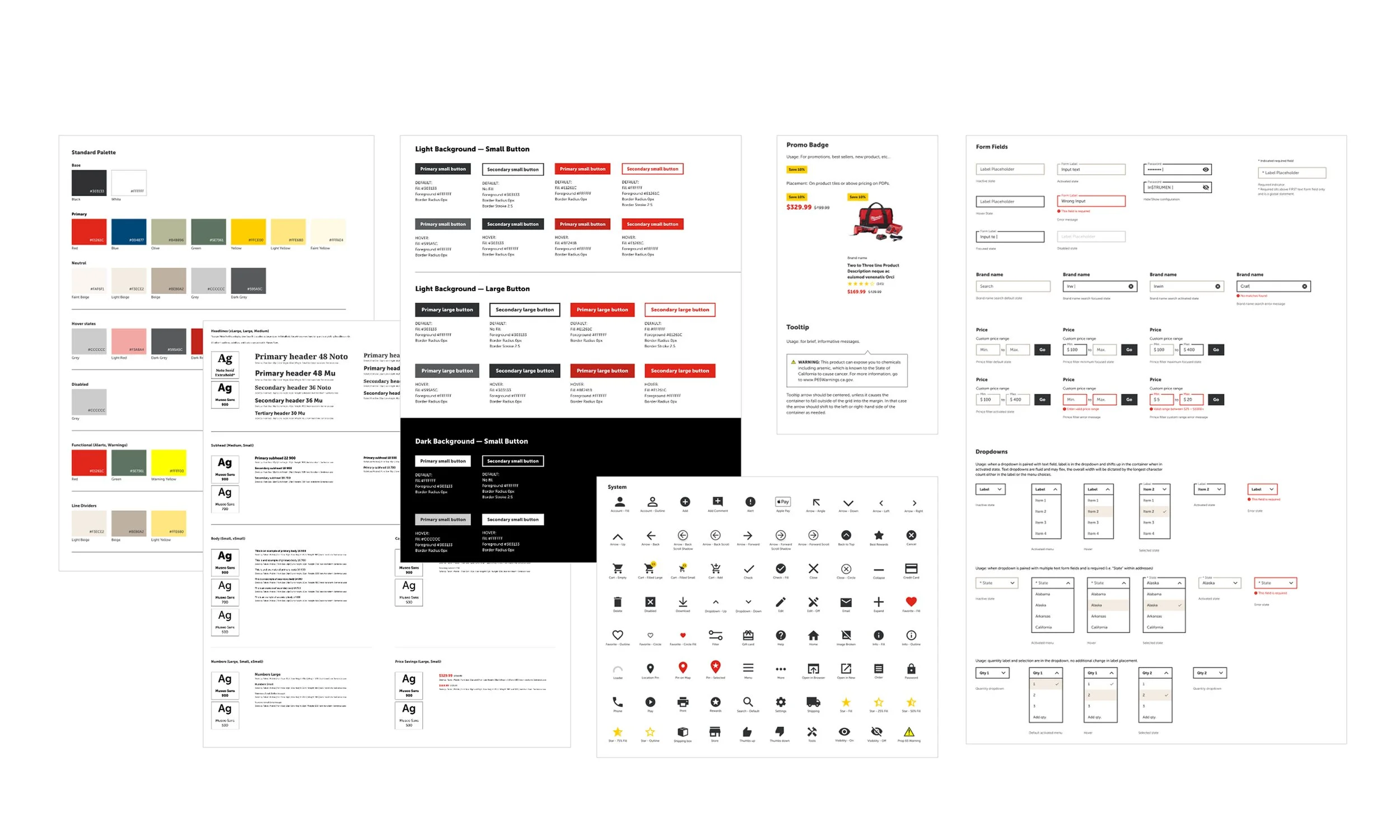
Built and scaled an accessible, reusable design system across U.S. and India teams, reducing inconsistencies and accelerating feature delivery.
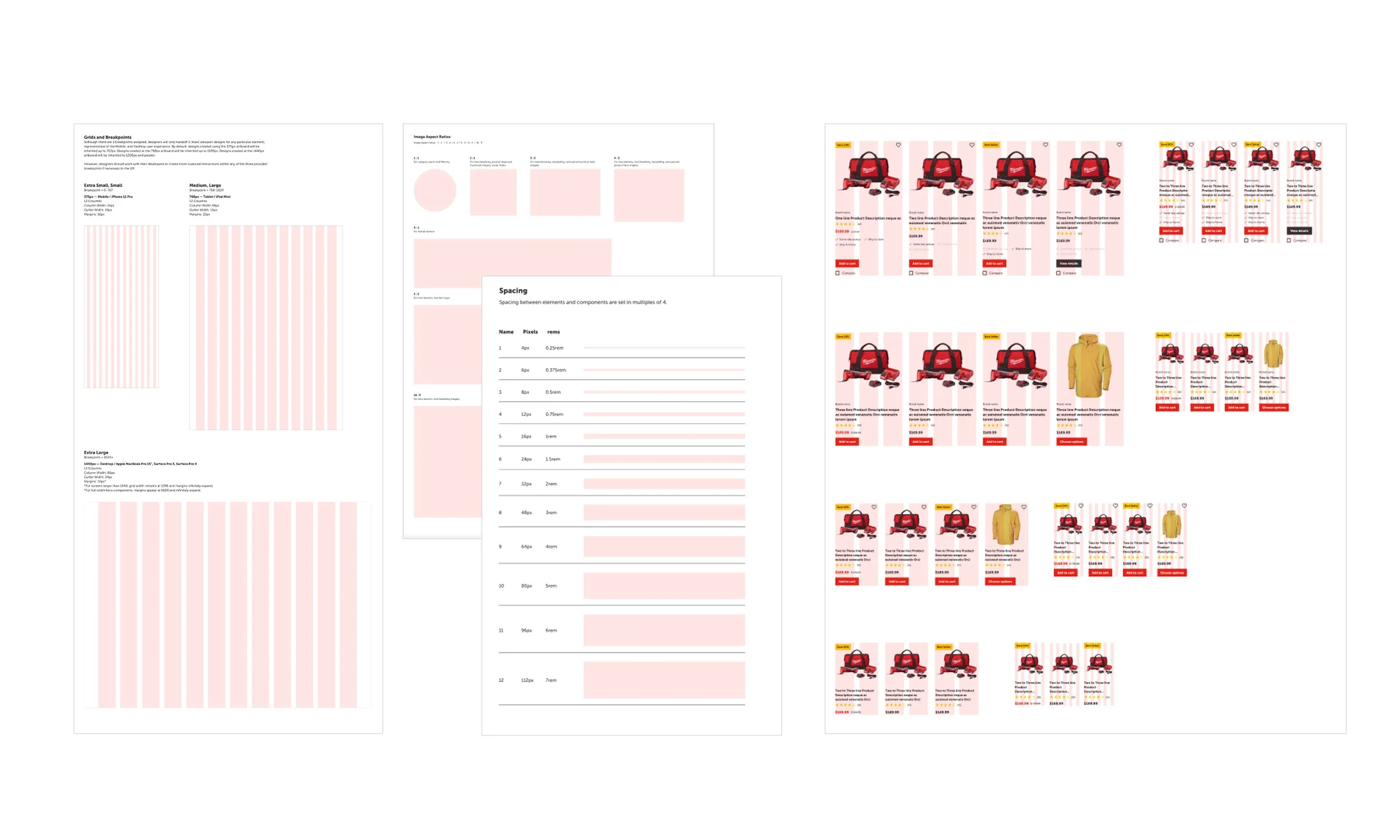
Toolkit extension with component variations and pattern guides.
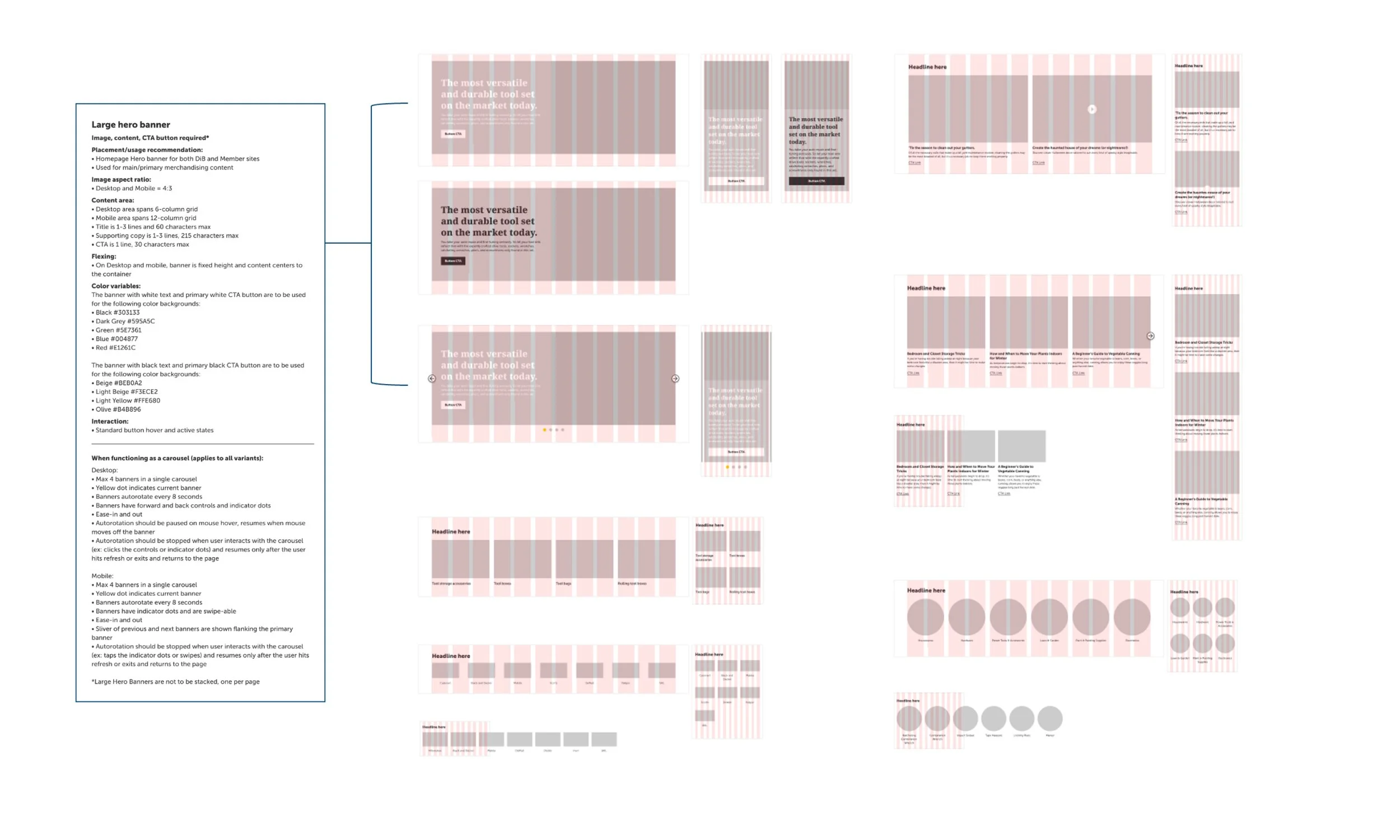
The Design System handoff included detailed component usage guidelines and requirements for designers, developers, and content authors. This was particularly valuable given the large CMS component, enabling authors (DIB & Members) to customize content effectively.
Key Wireframes
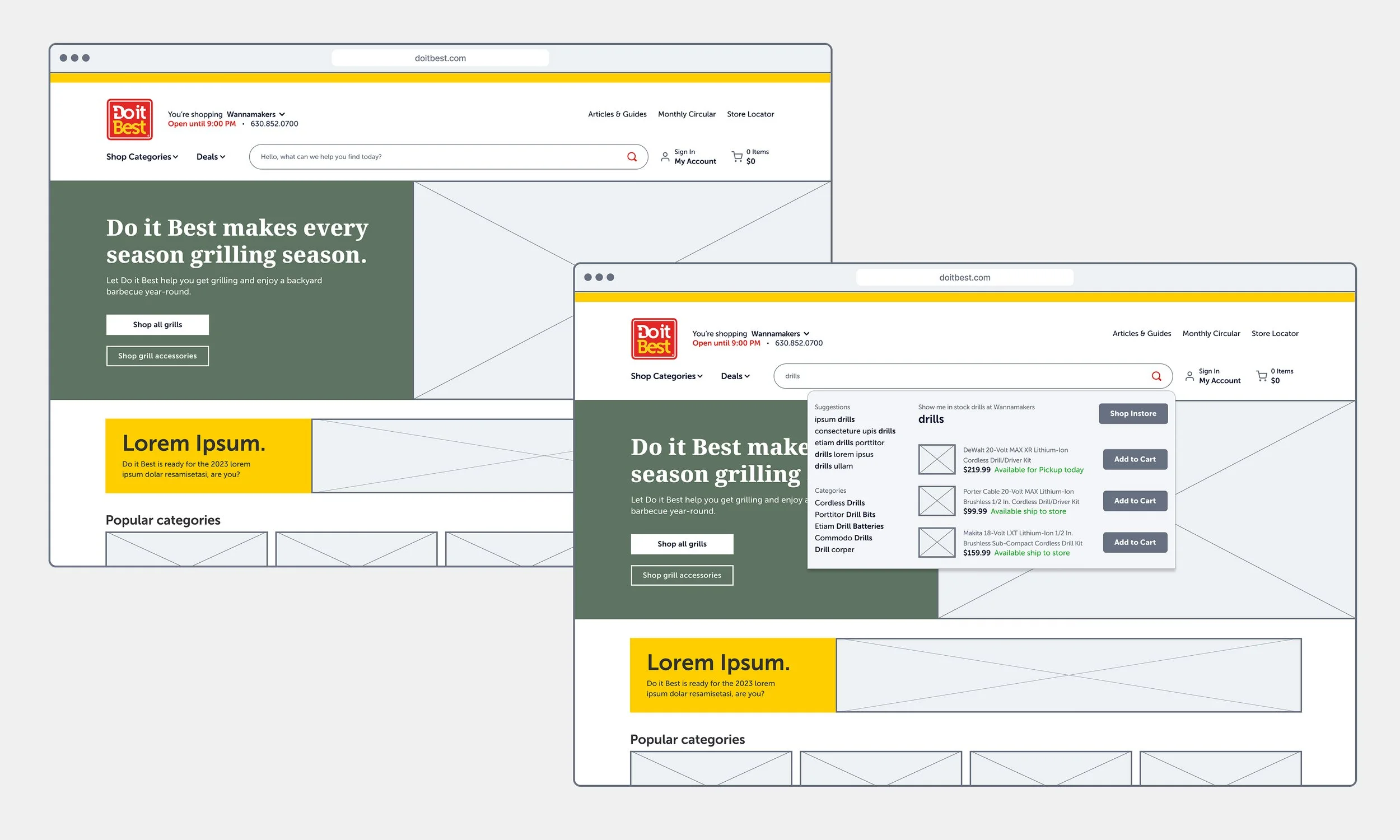
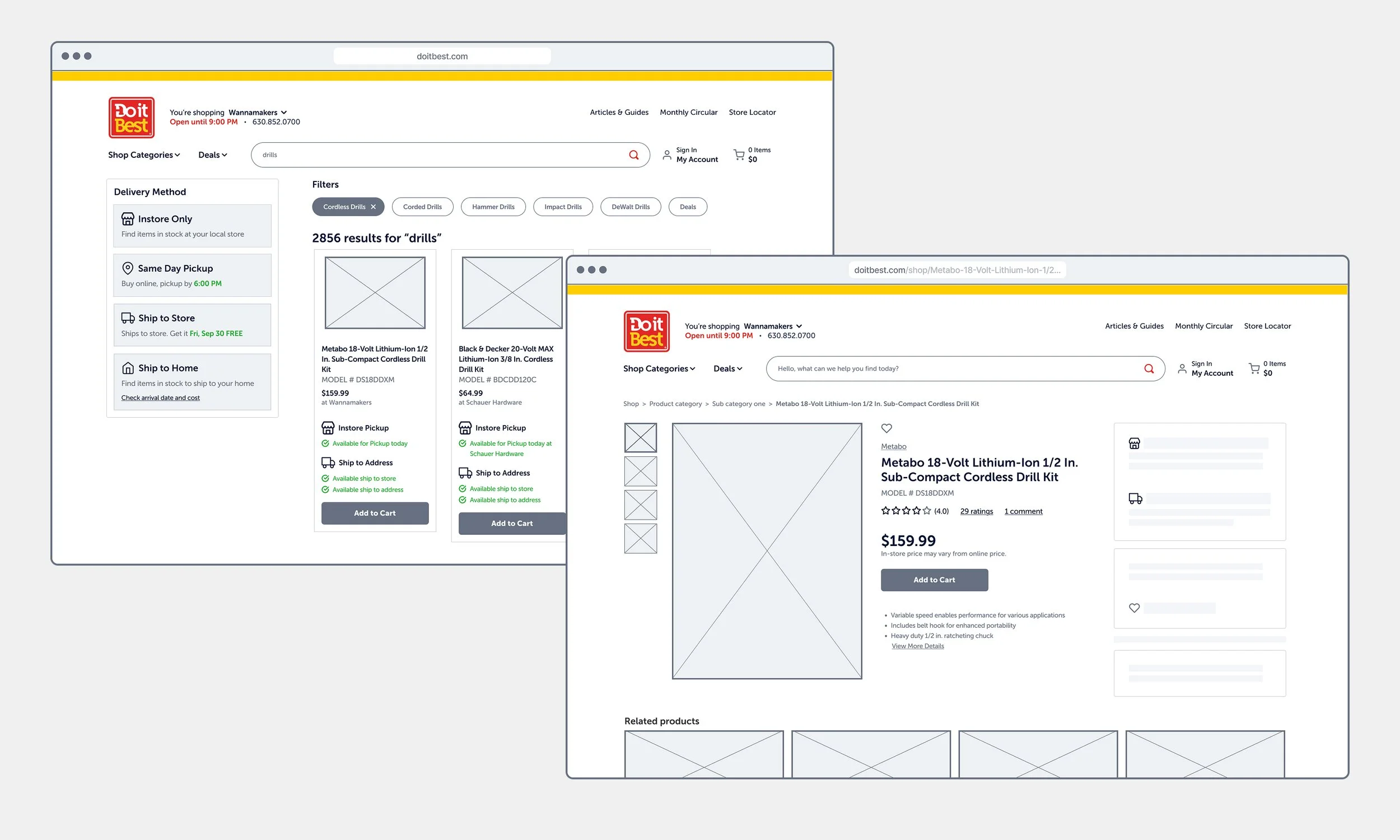
Produced mid-fidelity wireframes to test and refine the design system.
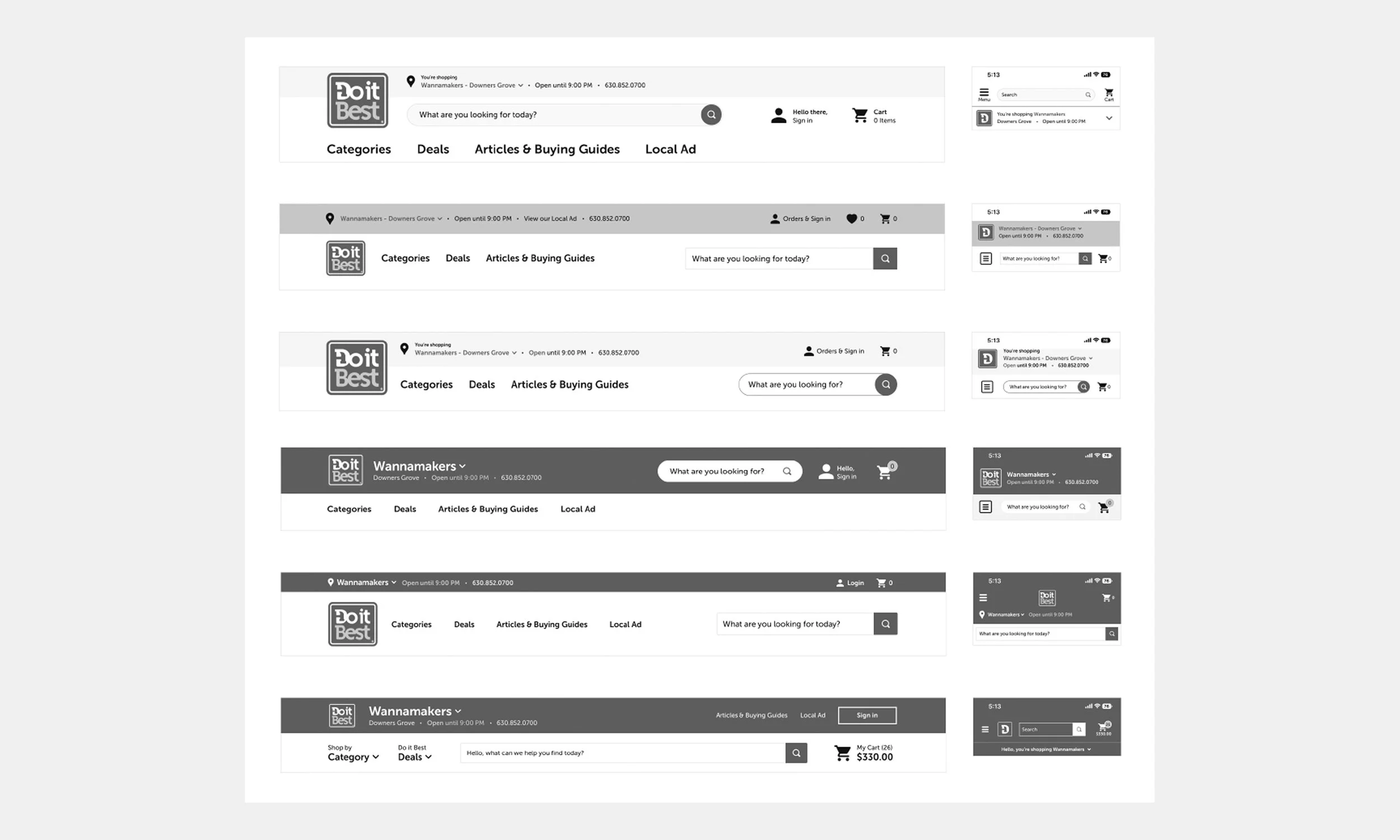
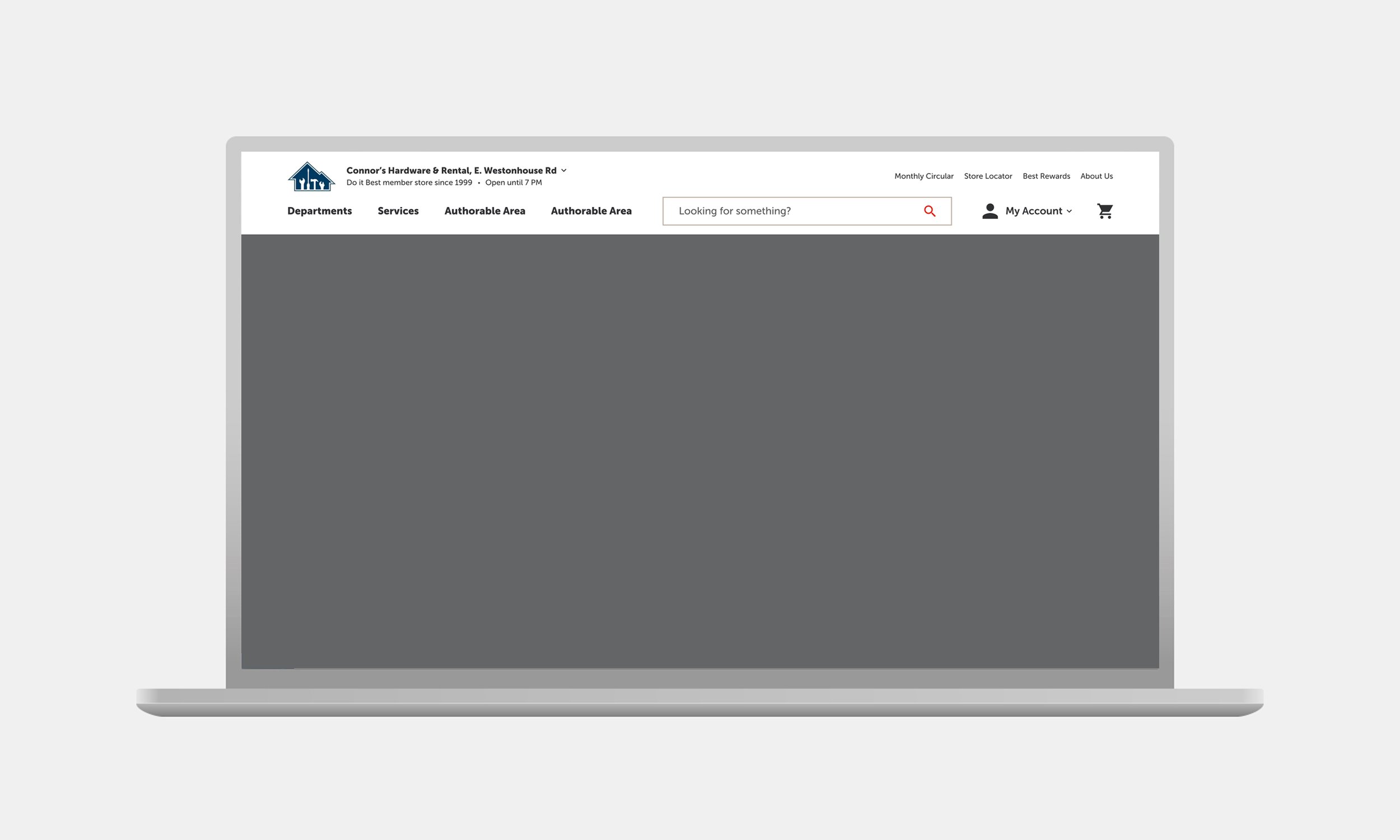
As a co-op, the challenge was to create a unified customer experience across DoitBest.com and member sites while supporting individual branding. To address this, we needed a header design that enabled customizable navigation and content.
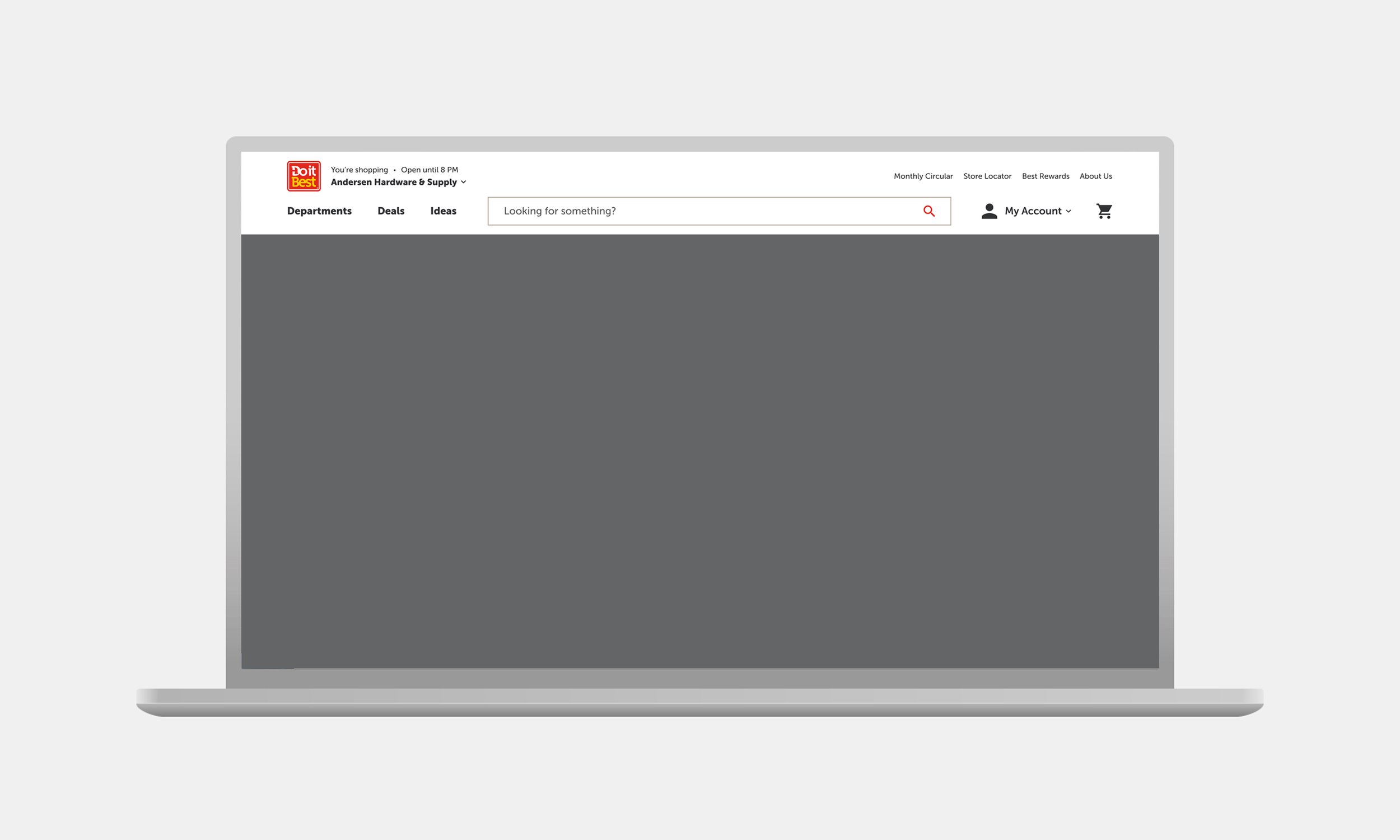
Flexible header solution that accommodates both DoitBest.com and member sites.
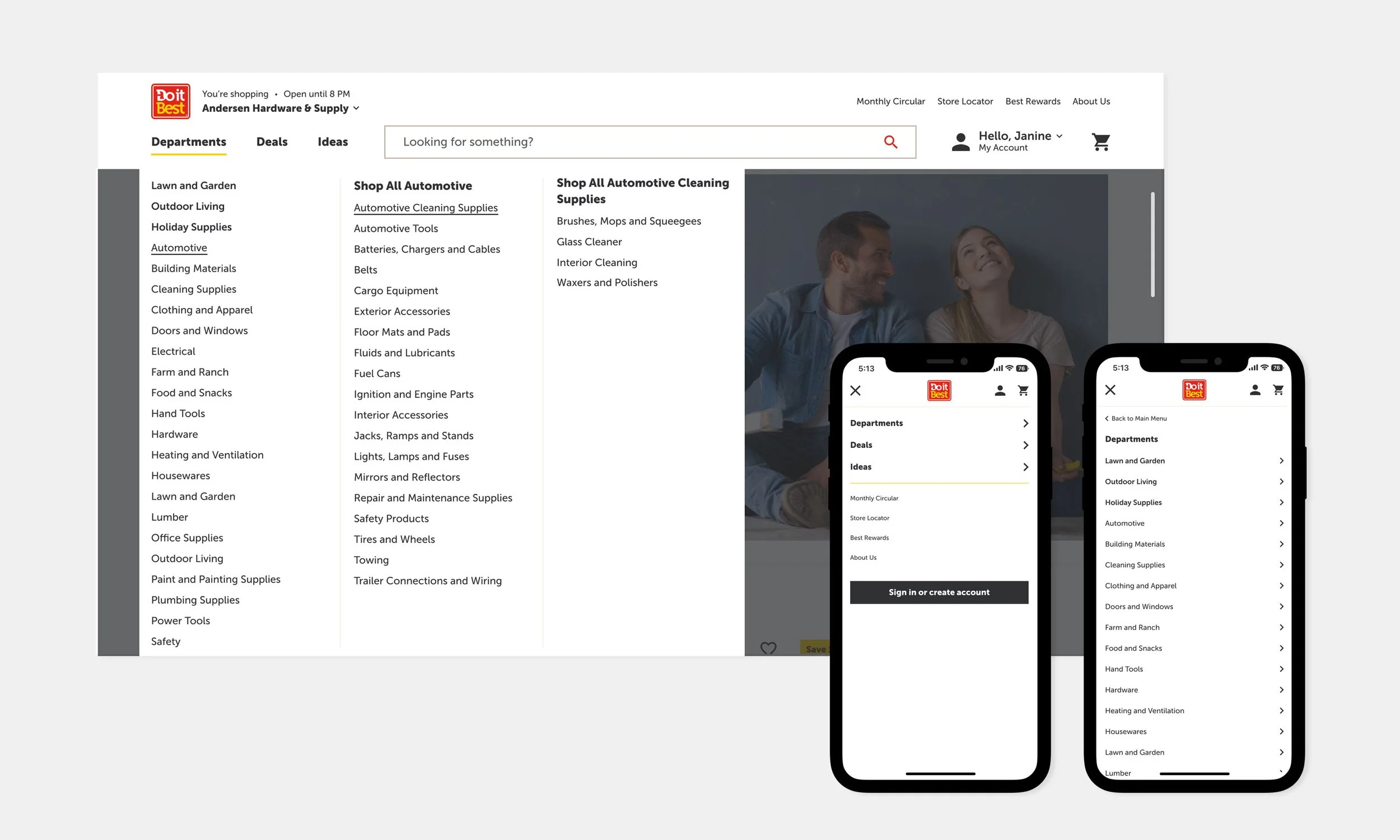
Navigation
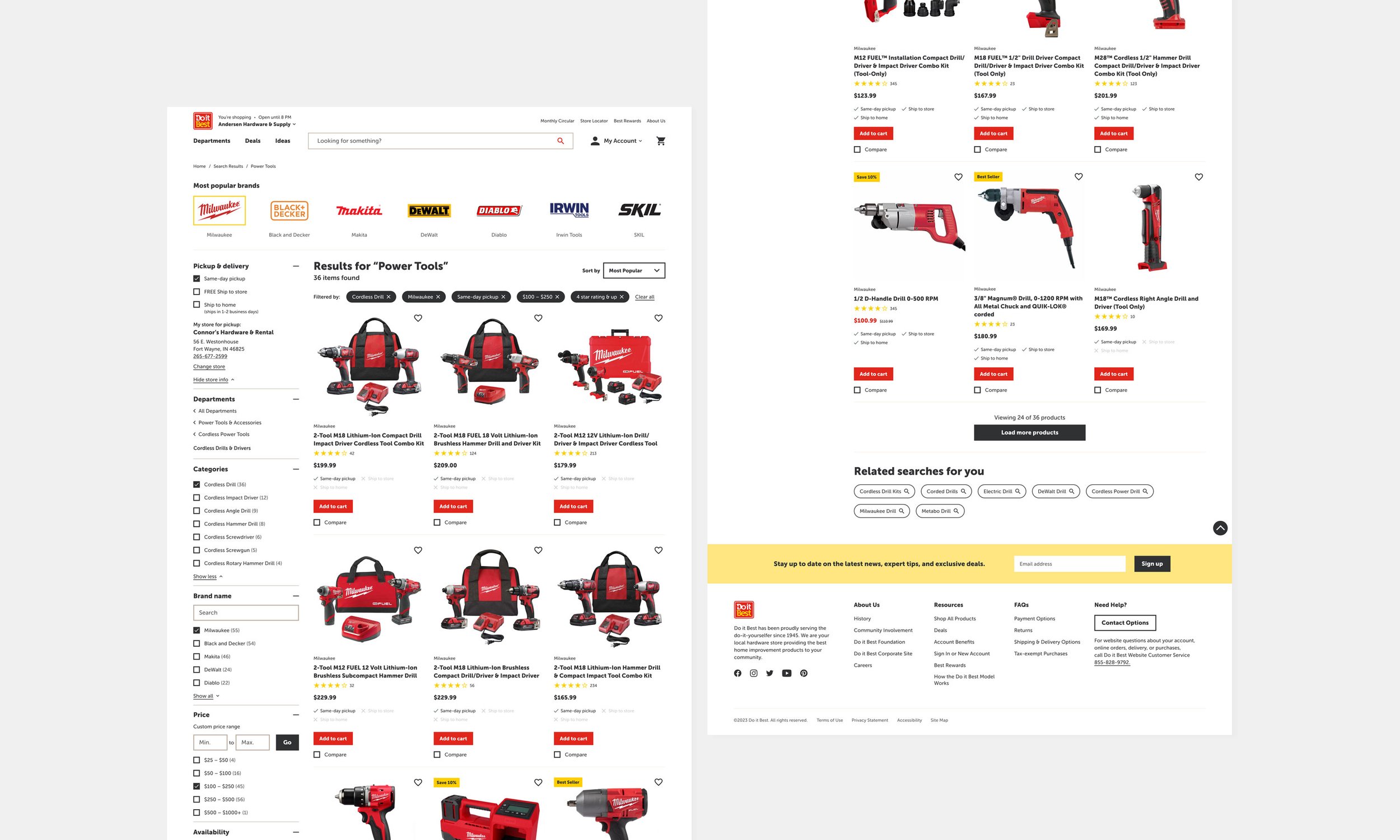
PLP
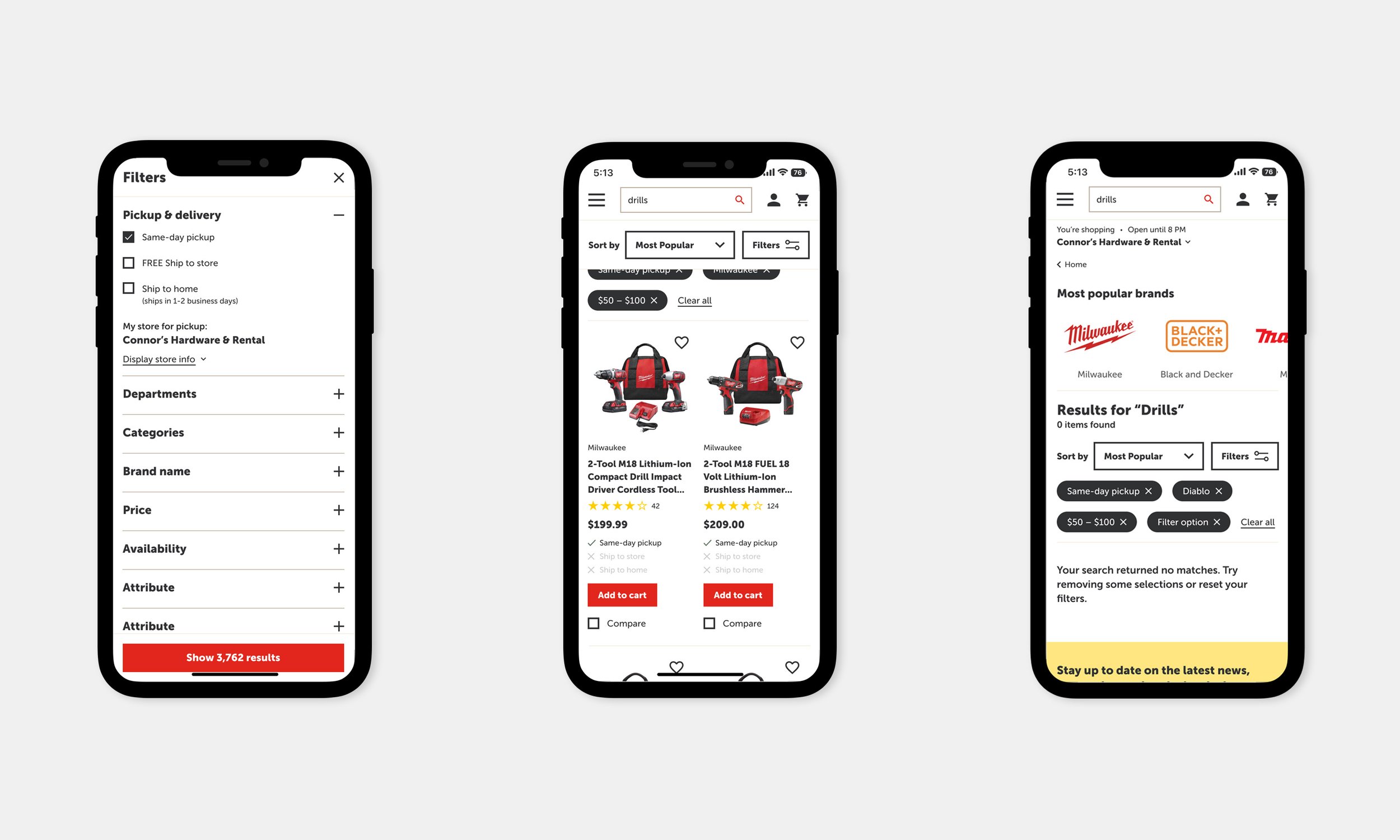
Mobile
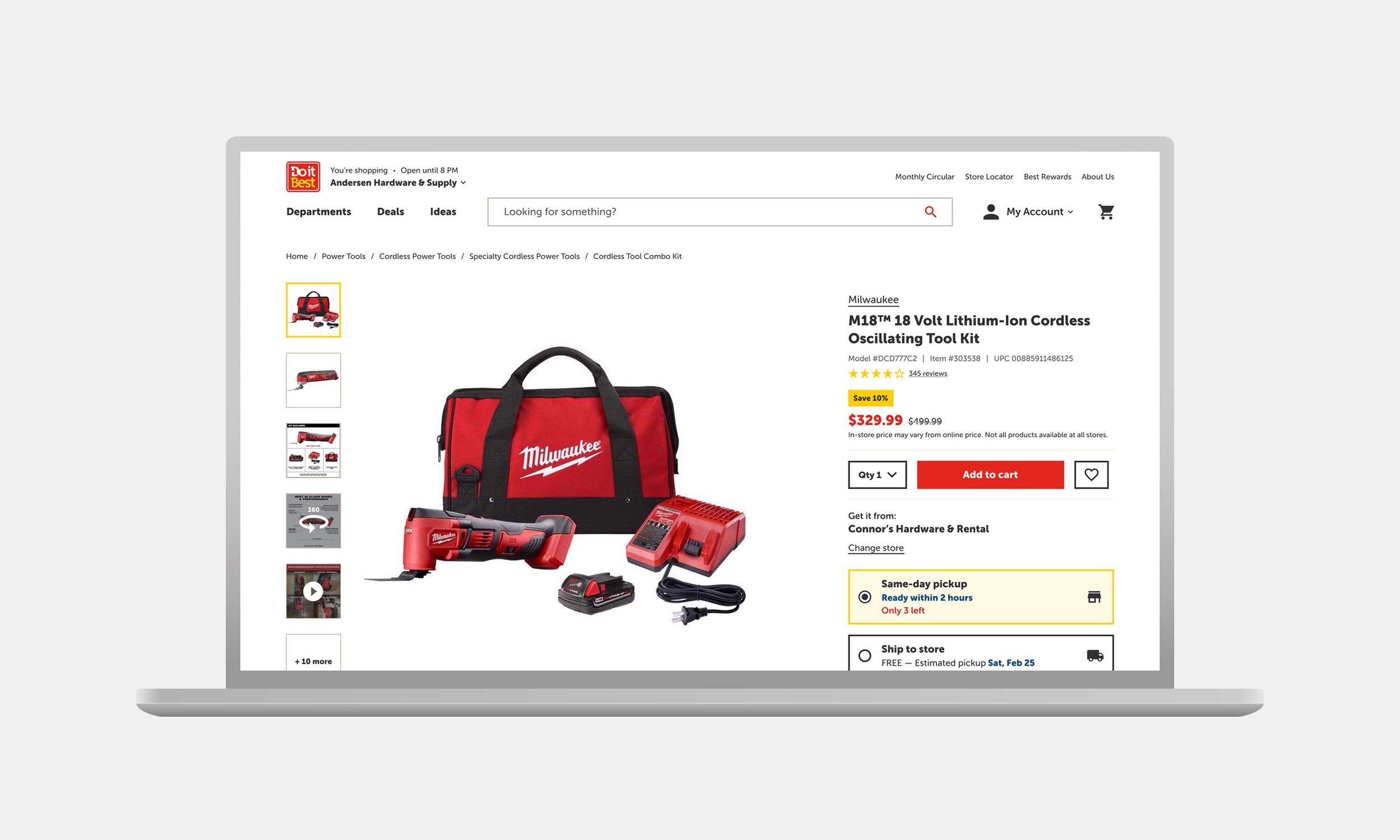
PDP
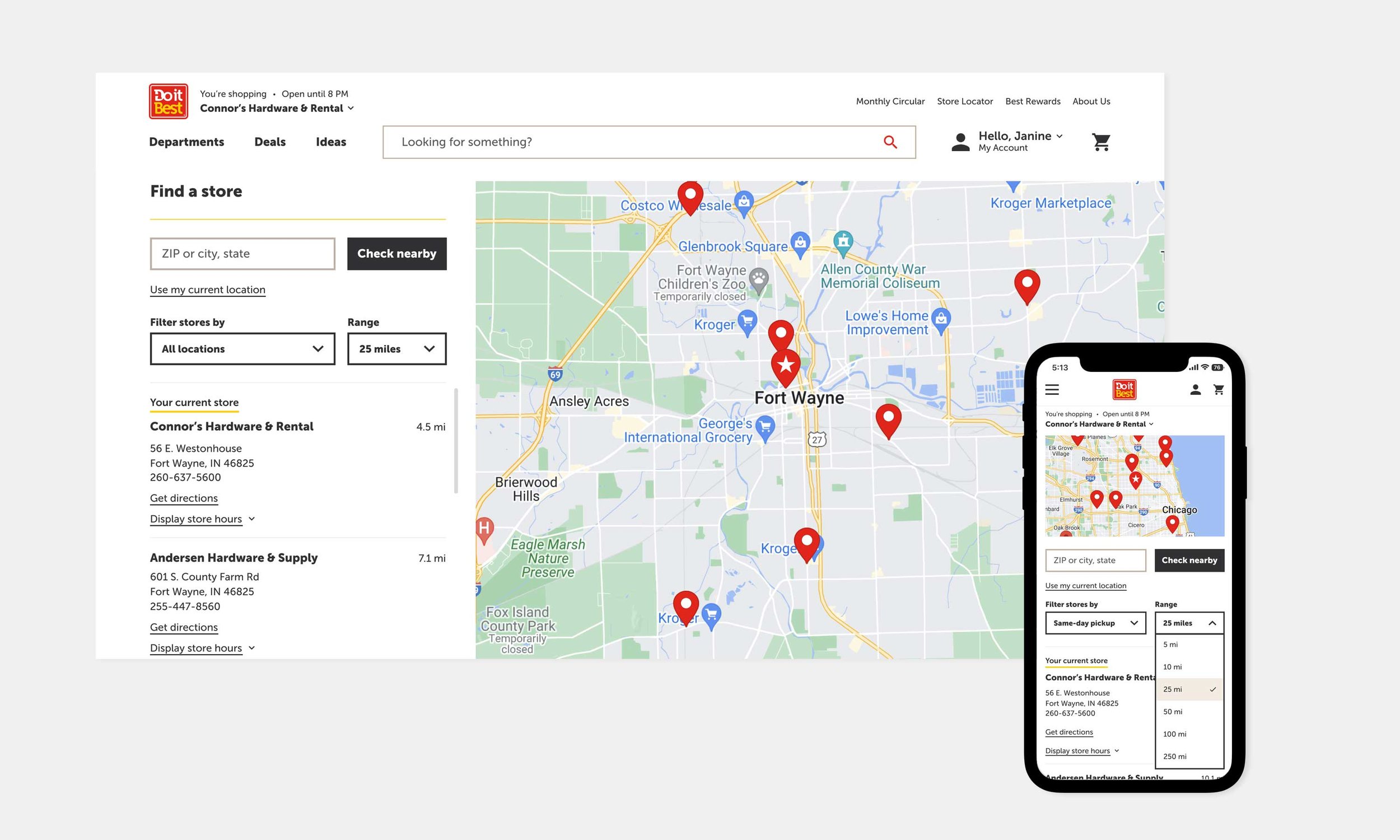
Dealer Search and Results
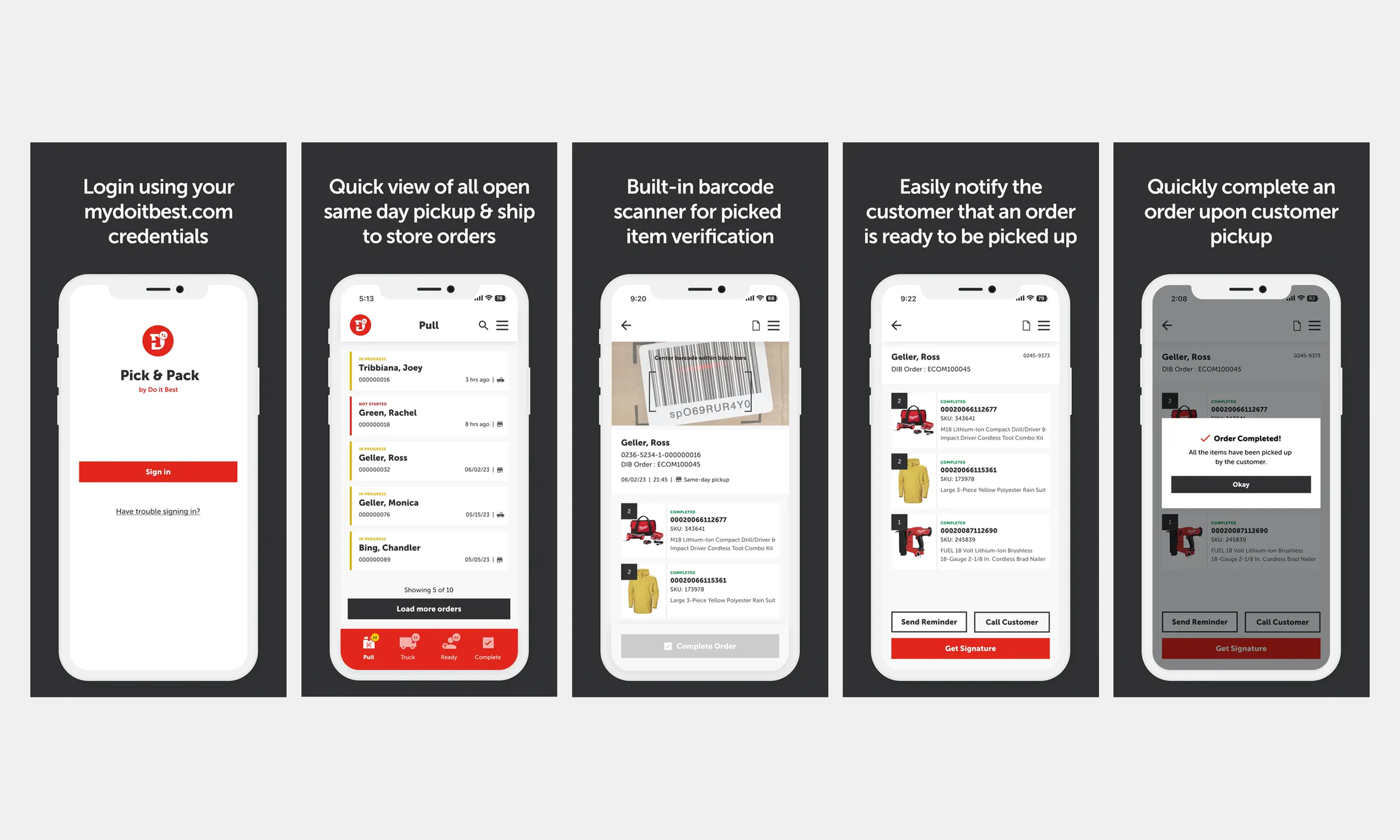
As E-commerce orders grew, member stores lacked a fast, reliable way to fulfill same-day pickup and ship-to-store orders, resulting in operational delays and friction. The Pick & Pack App streamlined store fulfillment, enabling faster, more reliable same-day pickup and ship-to-store orders.