Transforming 100+ Sites into a Unified Platform

Snapshot
Client
Bridgestone
Company
iCrossing
Focus
Global B2B & B2C platform unification
Role
UX Lead, Research
Team
Design, content strategy, product, engineering
Timeline
12 months to launch, + ongoing enhancement support
Impact
-90% YOY cost per site
+93% time spent on site
+27% PDP page views and +71% PLP page views
30% reduction in post-launch errors through creative-specific QA
The Problem
Client Description
Bridgestone Corporation, the world’s largest tire and rubber company, manufactures Bridgestone and Firestone tires and other products across North and Latin America and Europe, operating about 50 facilities with roughly 55,000 employees.
The Challenge
Bridgestone’s digital ecosystem had grown to over 100 regional and product-specific sites, each built independently by different teams.
Fragmented experience across B2C and B2B audiences
Difficult navigation and product discovery
Duplication of content and inconsistent messaging
They needed a unified digital platform that:
Supports multiple audiences
Reduces duplication
Improves scalability for global teams
Bridgestone’s digital presence spans across markets, brands, and customer needs. Their ecosystem needs to provide focus, not confusion, for customers.
The Reality
This project was more complex than a typical website redesign. Several organizational and technical challenges shaped the work.
Fragmented ecosystem
Over 100 regional and product-specific sites had been built independently, resulting in inconsistent navigation, content, and flows.Competing stakeholder priorities
B2C and B2B client teams had different goals and metrics, requiring careful alignment for a coherent user experience.Technical constraints and data limitations
The platform couldn’t be rebuilt from scratch; solutions had to scale within existing technical and data limitations.Internal process gaps
Inherited weak alignment between design and development caused rework and had eroded client trust.
Strategy &
Key Decisions
To turn a fragmented digital ecosystem into a cohesive experience, I focused on creating a scalable, flexible framework that addressed both user and business needs while navigating complex constraints. Key strategic decisions included:
Modular, reusable components
Created a single component set powering dozens of sites, improving efficiency, consistency, and speed of development.Unified user experience
Ensured consistent journeys for consumer and commercial audiences while allowing audience-specific variations.Scalable framework for future growth
Built a system that could support new regions and product launches without major rework.Structured internal processes
Introduced requirement templates and a creative-specific QA process to close workflow gaps, reduce errors, and rebuild client trust.
My Role
I served as Design Lead managing a team of three UX/UI designers while staying hands-on with research and wireframing. My responsibilities included:
Translating stakeholder feedback into clear, actionable direction for the team, removing blockers, and keeping work aligned with project goals.
Leading development refinement sessions to ensure cross-functional alignment and feasibility.
Acting as the primary liaison with the analytics partner to integrate data insights into design decisions.
Collaborating directly with external stakeholders as the main point of contact, presenting solutions and managing expectations.
Synthesizing and managing feedback from extended stakeholder groups to maintain clarity and consistency in design execution.
The Impact
The rebuild delivered measurable results across the global ecosystem:
90% YOY in cost per site
+93% time spent on site
+71% PLP page views and +27% PDP page views
Removed 470 pages and assets, streamlining content and navigation
30% reduction in post-launch errors through creative-specific QA
The result is a scalable, cost-efficient platform that drives stronger engagement, return visits, and meaningful browsing while supporting future growth and improved user experiences.
Learnings
Include both front-end and back-end developers early
Bringing developers into refinement sessions sooner improves visibility, surfaces technical constraints, and enables more accurate estimations.Set clearer expectations with stakeholders
Communicating technical limitations upfront reduces friction during design reviews and streamlines decision-making.
Discovery Highlights

Audited ~100 NA, LATAM, EMEA sites. Pinpointing global functionality and component gaps, prioritizing reusable and adaptable elements to support a scalable, consistent experience across regions and audiences. Tagged all components as Reuse, Adapt, or Invent.
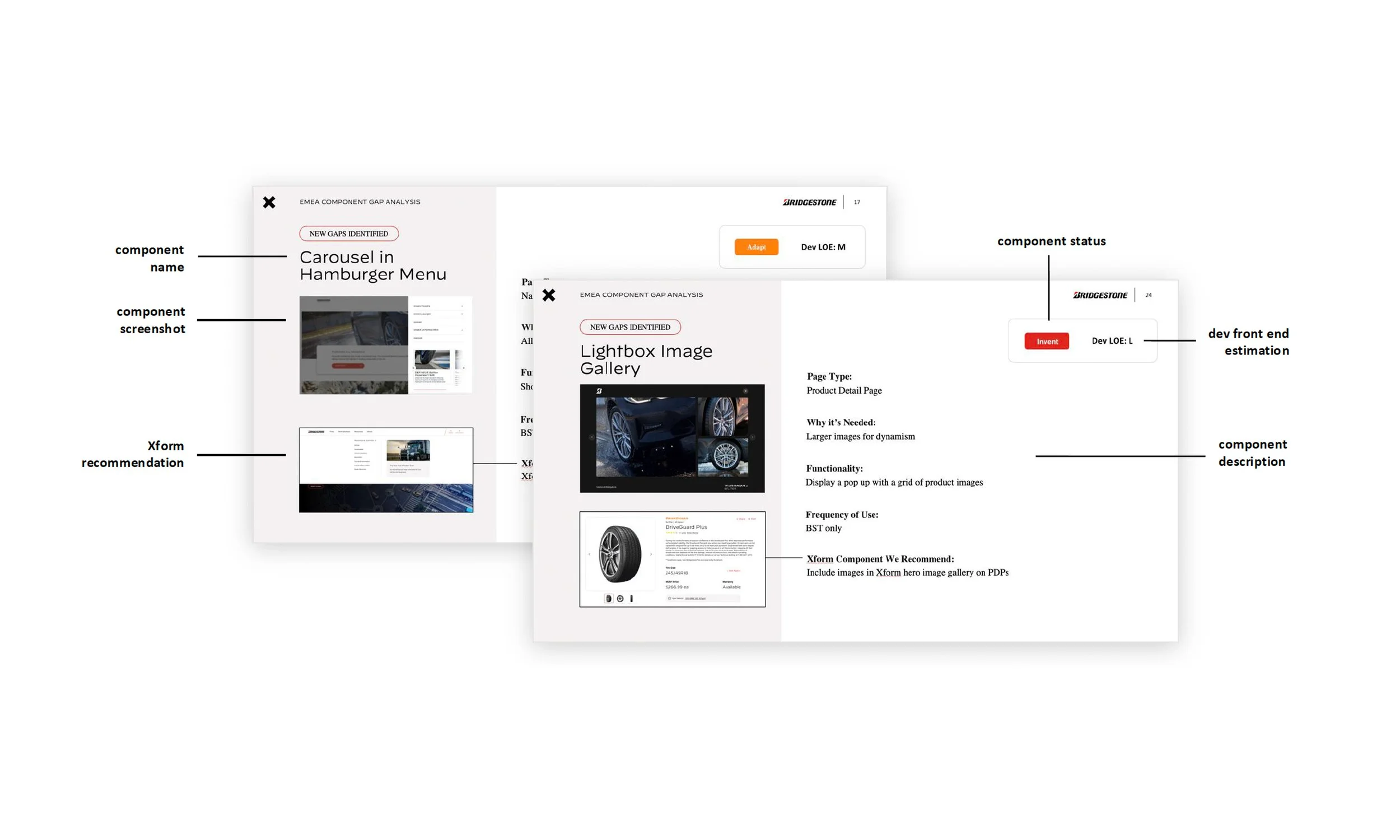
The Gap analysis showed only 10% of components required net new development. Most new features addressed regional needs, such as WhatsApp integration, and product card regulatory considerations.
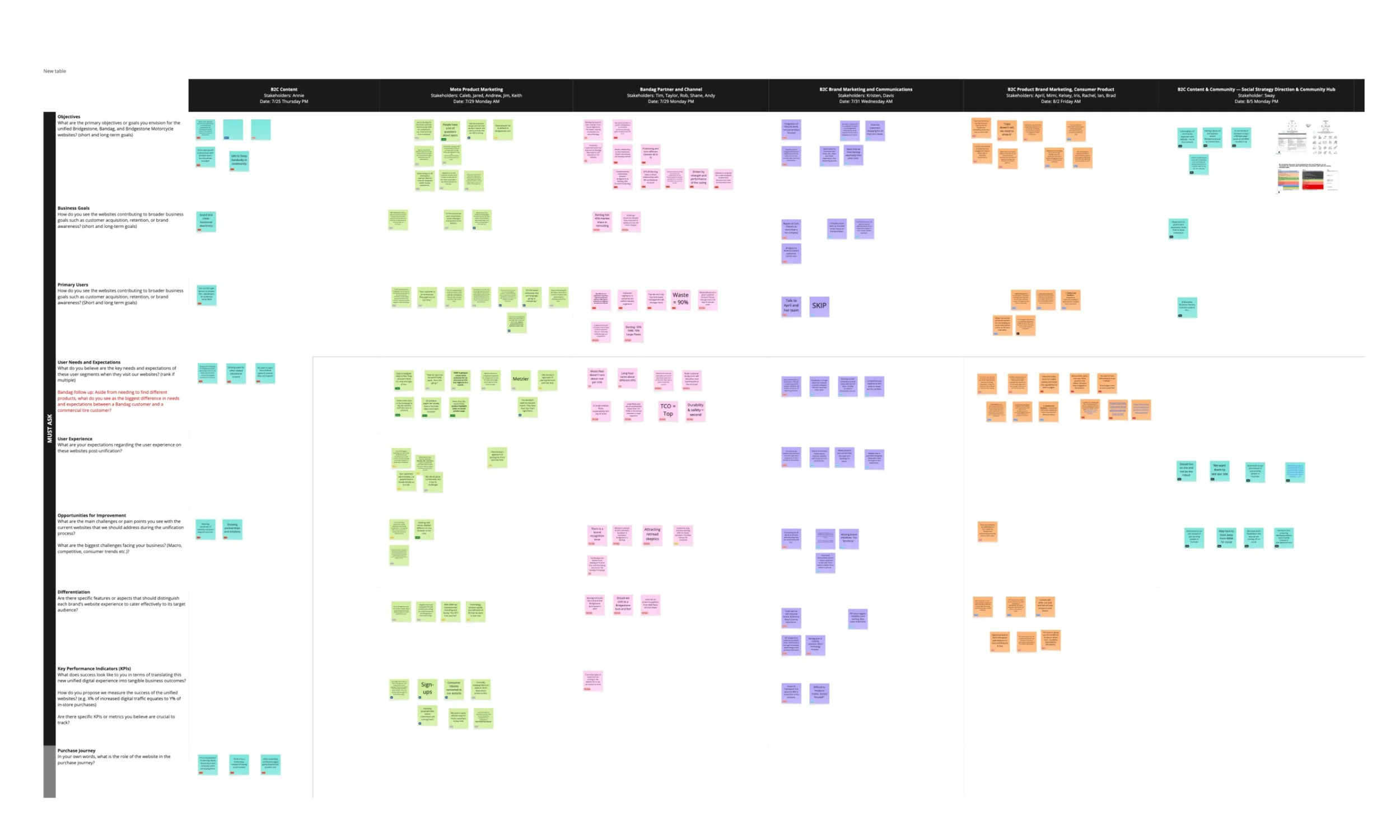
Interviewed 23 stakeholders across nine B2B and B2C groups, uncovering diverse user needs and business priorities. Findings emphasized the importance of a customer-focused approach, highlighting dealers as a key audience and motorcycle buyers as enthusiast-driven users.

Developed personas using existing data, social listening, user insights, and stakeholder interviews to inform audience-focused design decisions across B2B and B2C users

Users prioritize data and education, value technological advancements, cultivate customer relationships, and rely on brand reputation for trust.
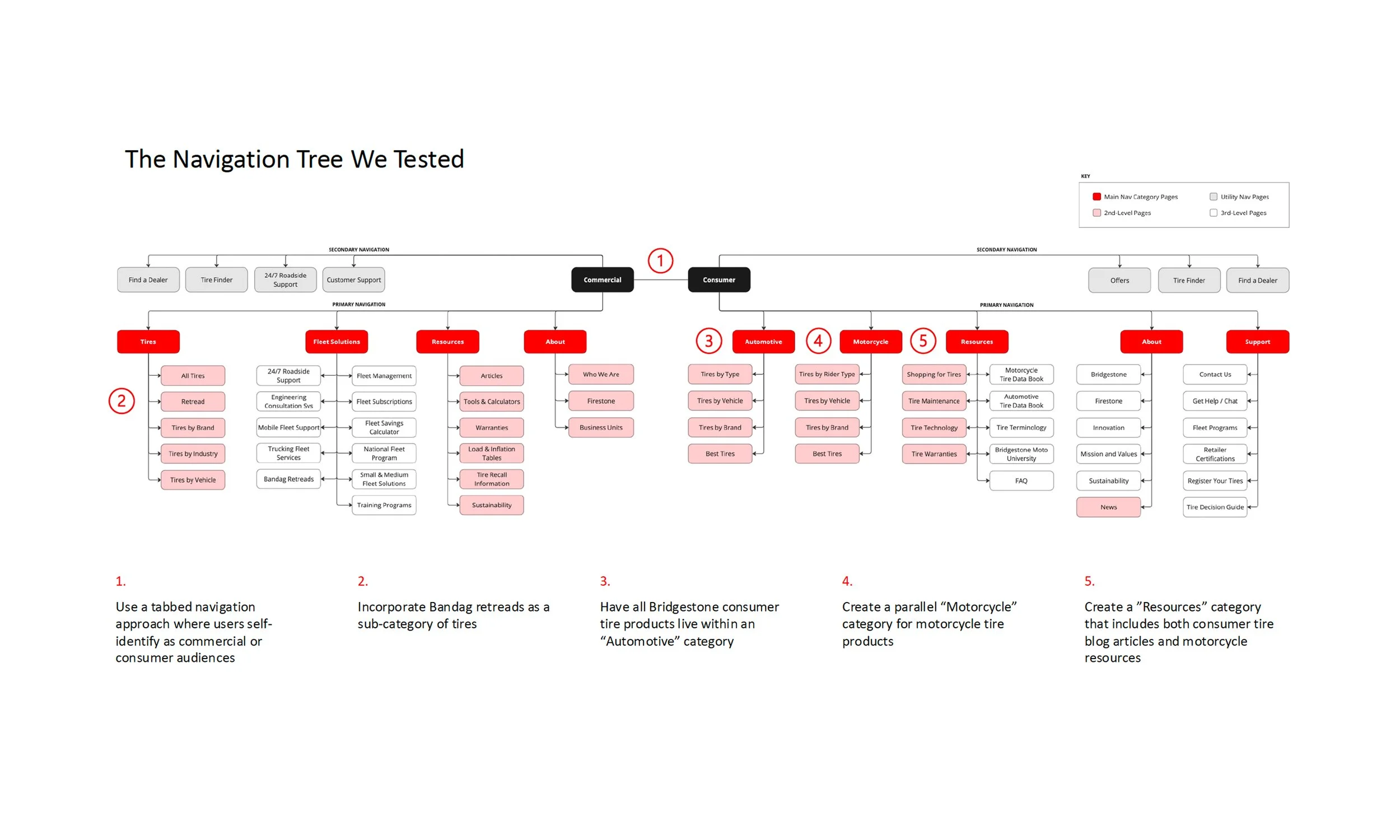
Conducted tree testing with 105 participants to validate navigation and simplify the unified site experience across commercial, automotive, and motorcycle audiences.
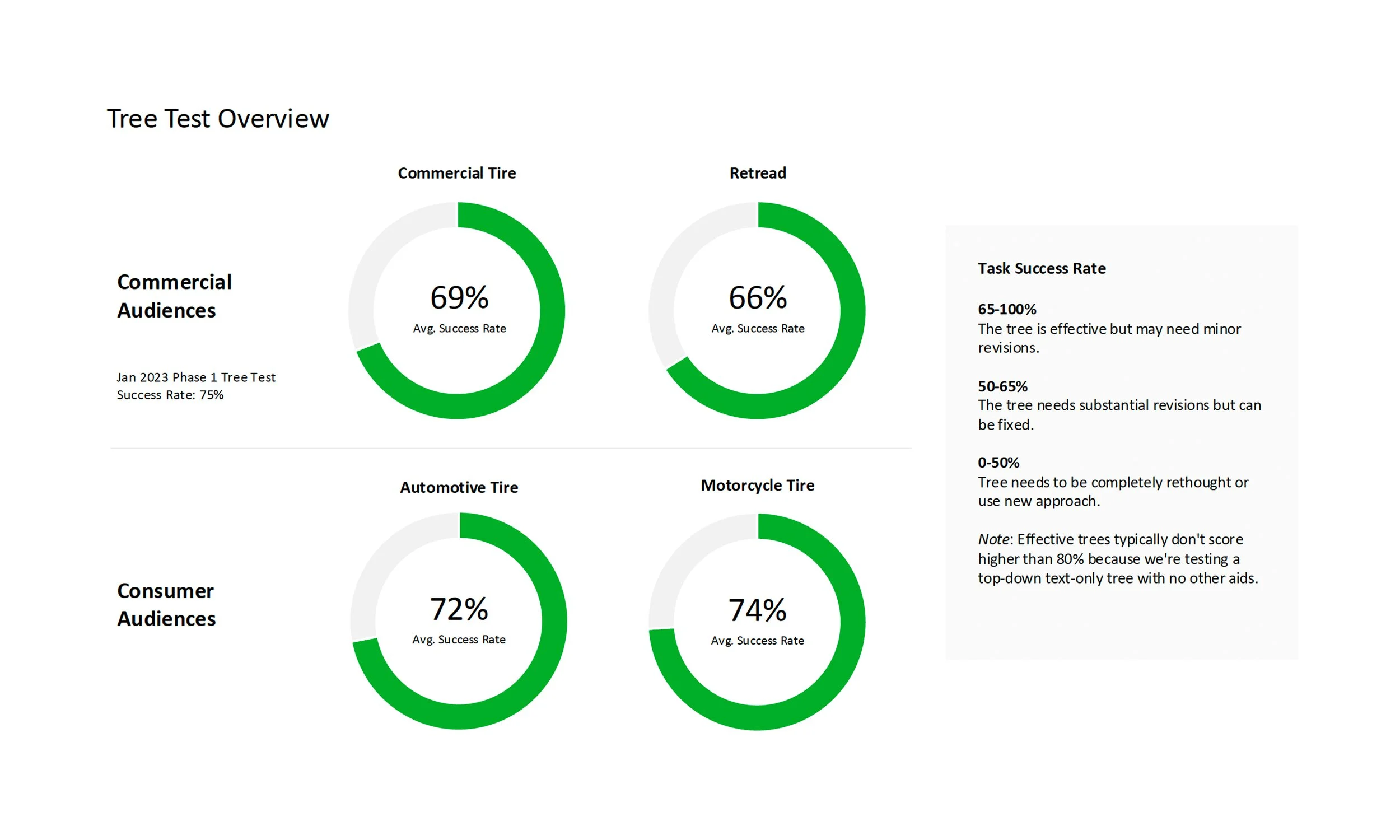
Overall task success was strong, with consumers performing slightly better. Key opportunities include clarifying educational tool segmentation and improving cross-linking to boost searchability.
Key Wireframes
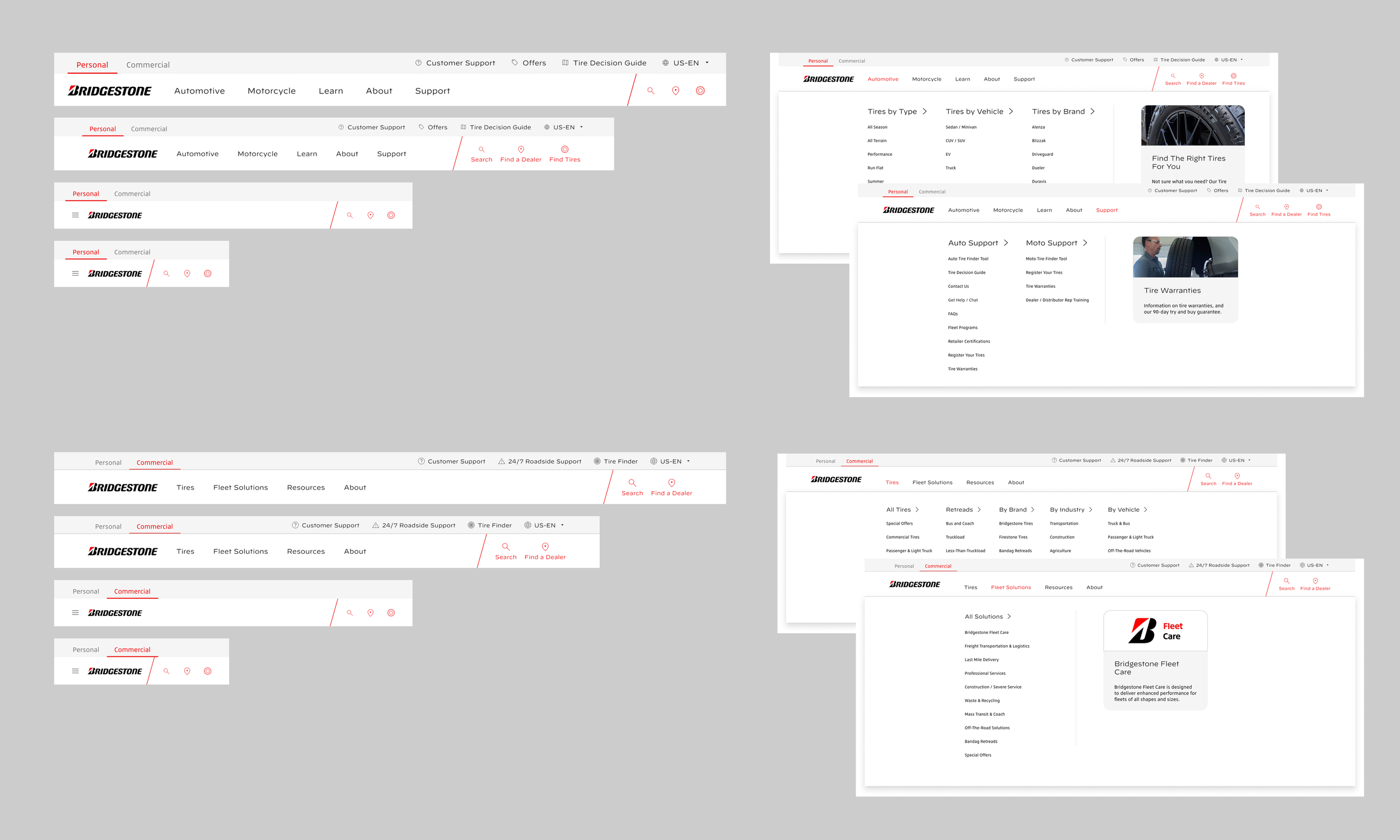
As part of consolidation, the unified site delivers a seamless shopping experience, allowing customers to easily switch between Consumer and Commercial products and solutions.

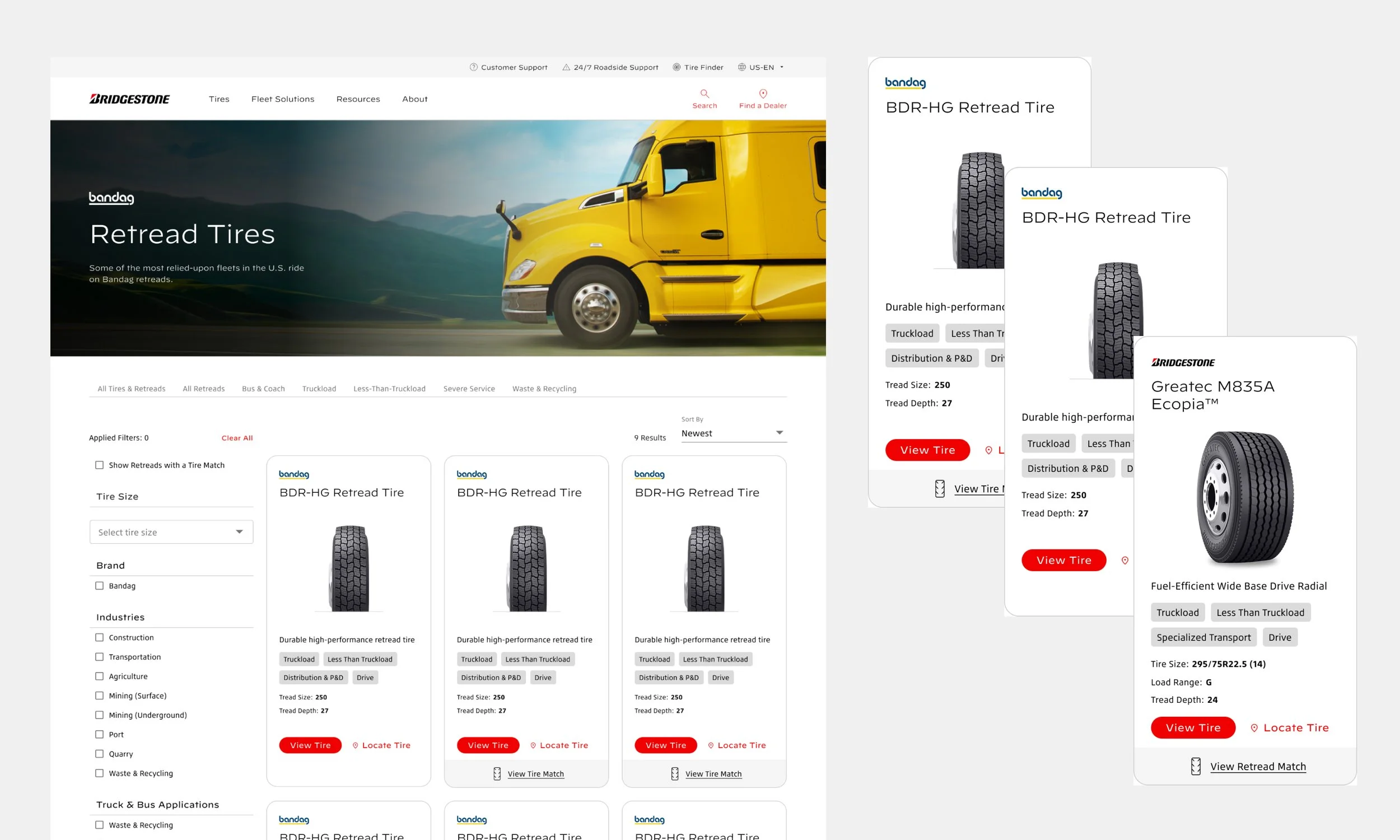
Commercial PLP
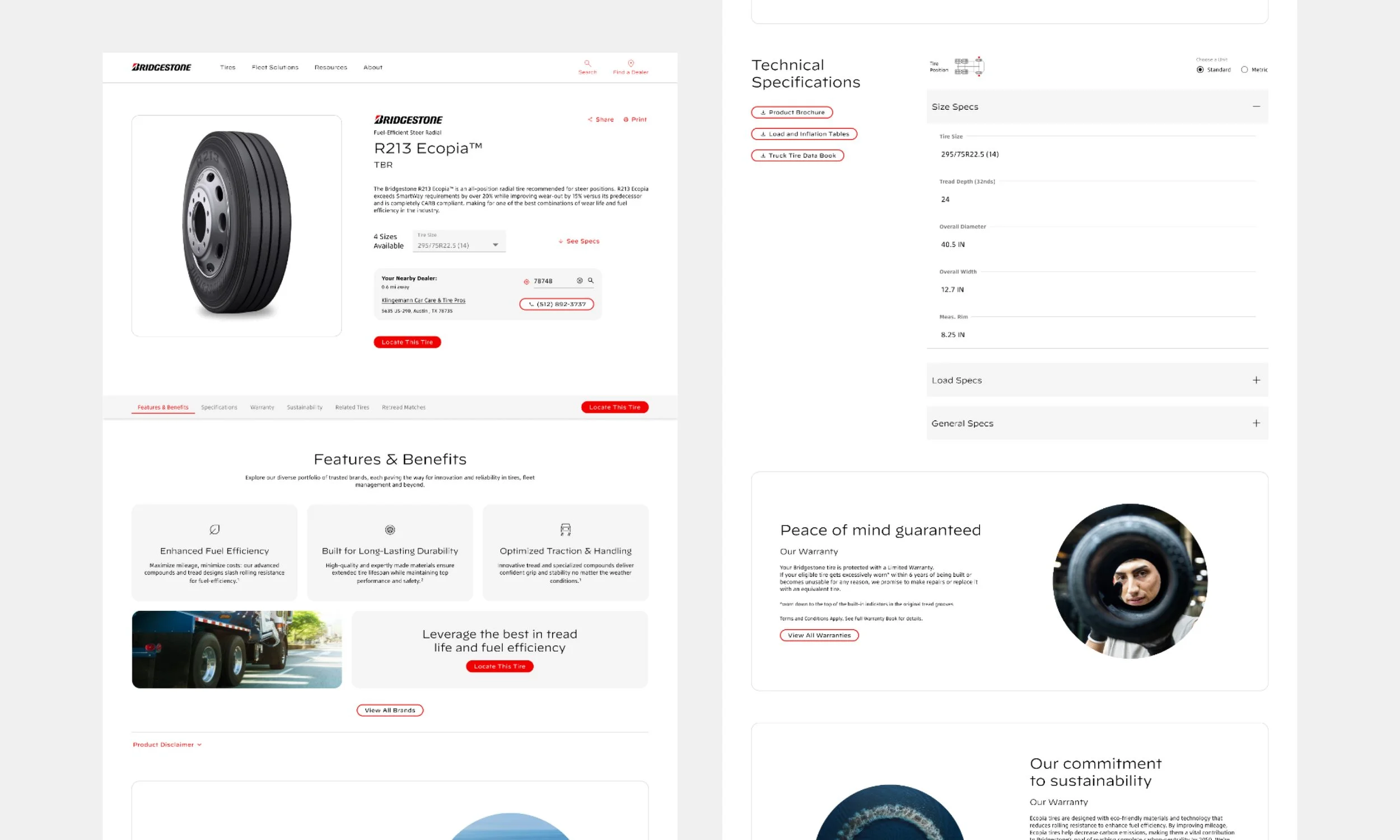
Commercial PDP
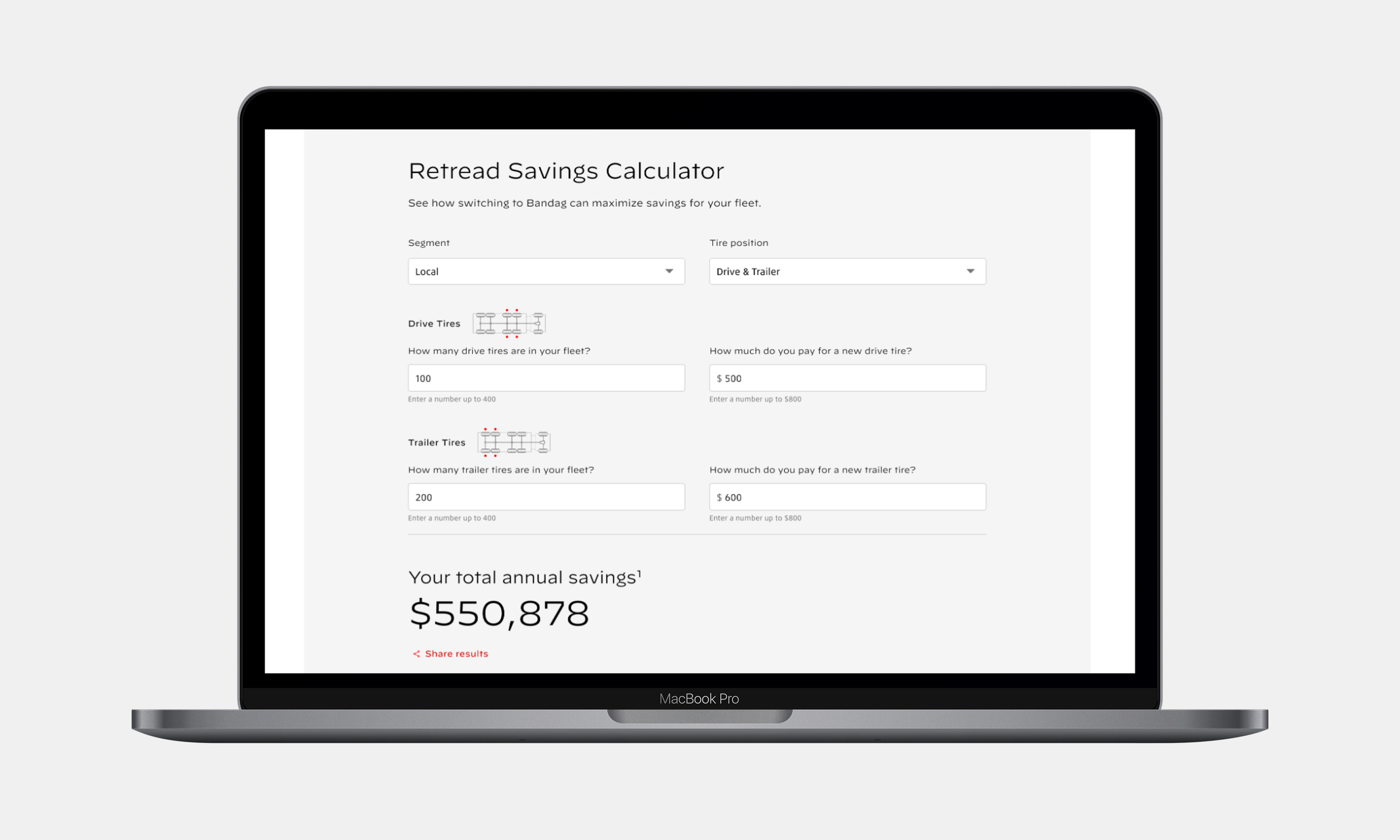
Commercial Retread Savings Calculator
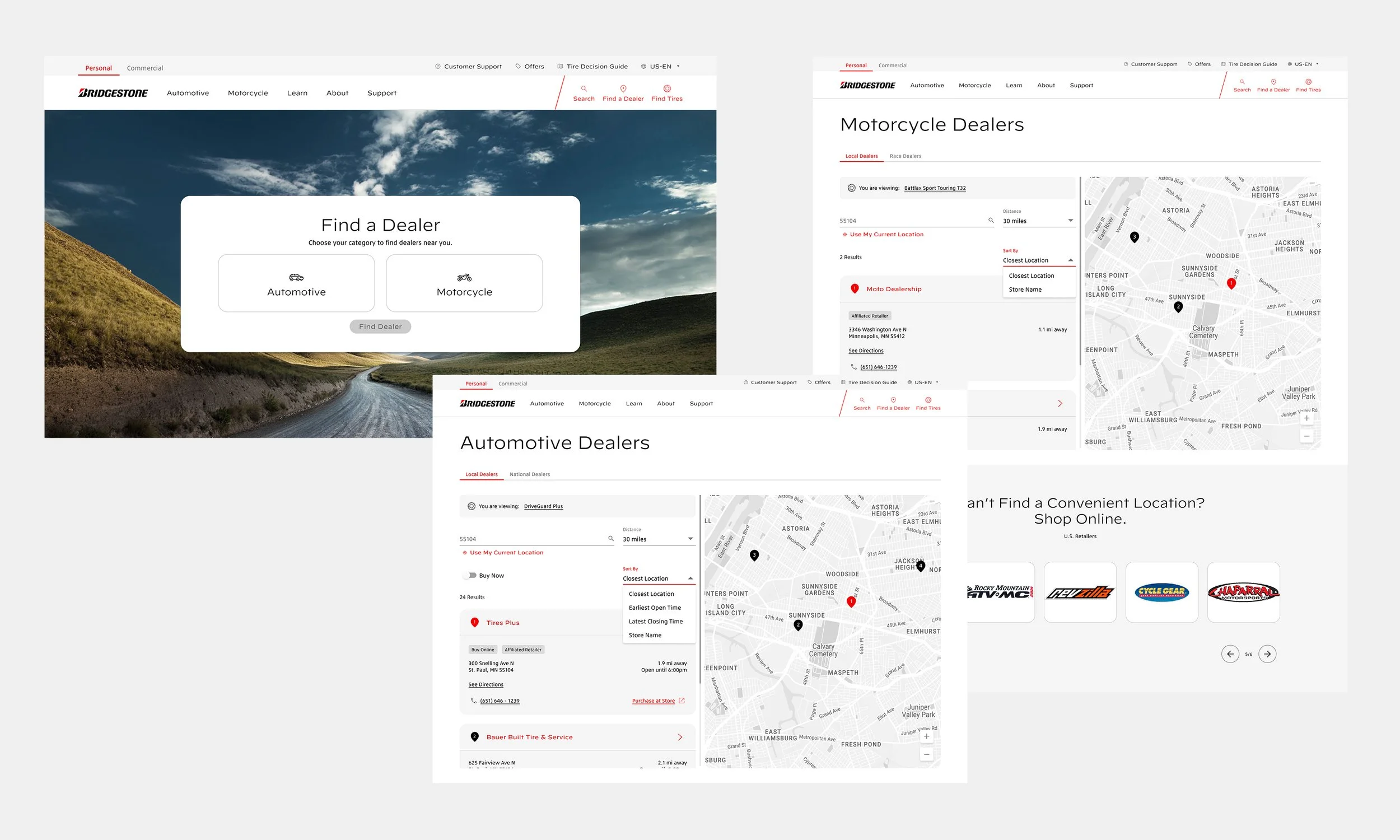
Consumer Dealer Search with self-selection for Automotive or Motorcycle results
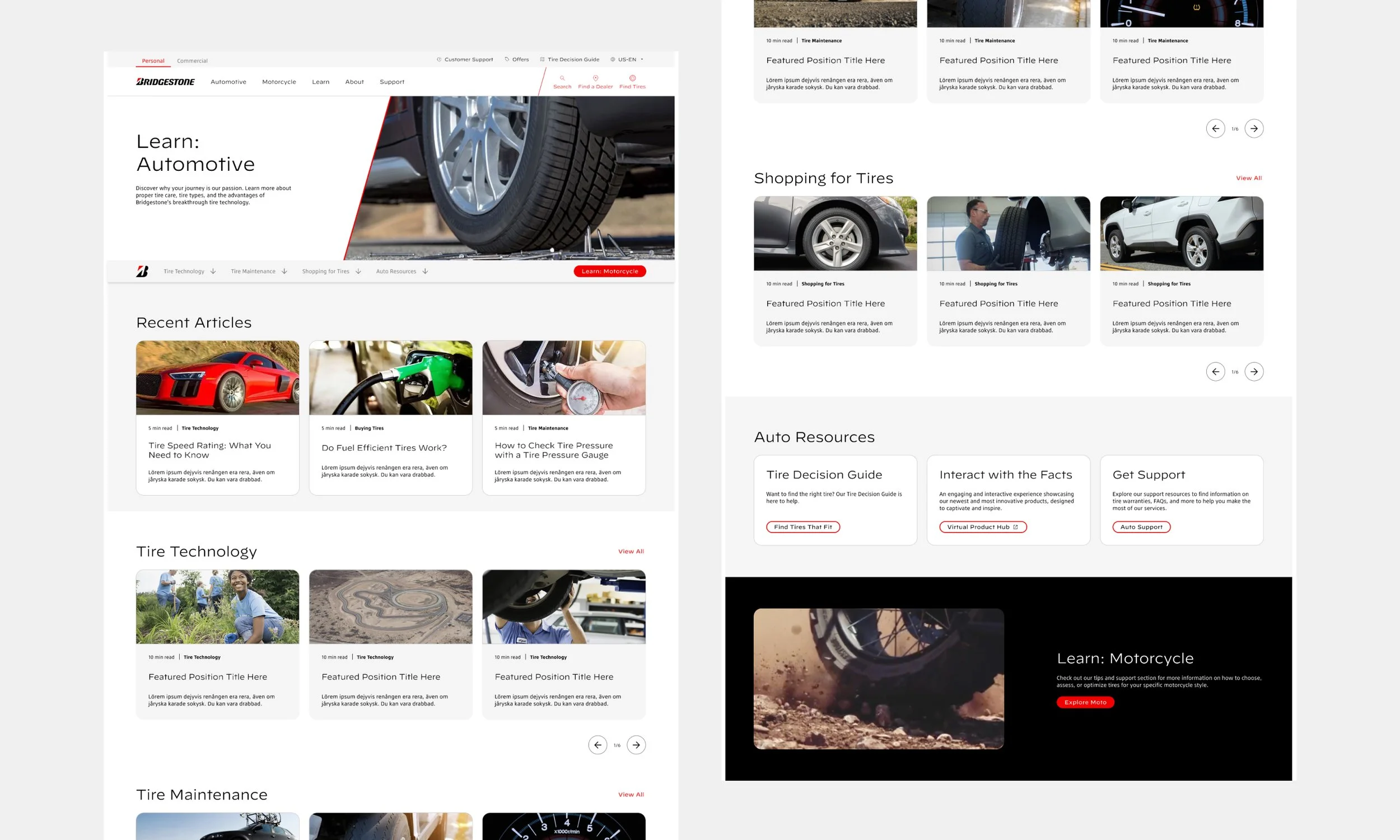
Consumer Resource Center
Usability Testing
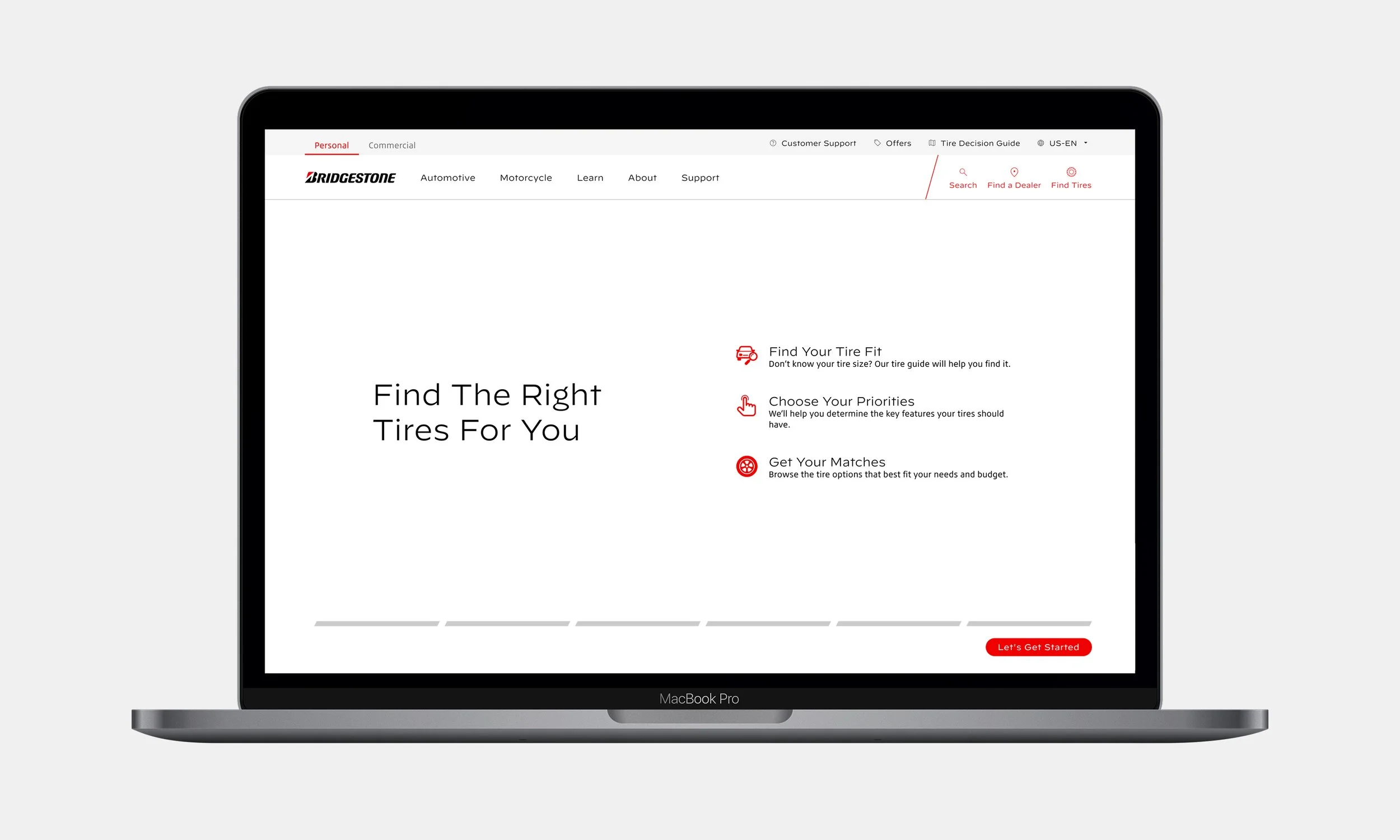
The Tire Decision Guide is a shopping tool that helps consumers, especially those less familiar with tire purchasing, find curated tire matches by entering personalized vehicle details, converting prospects into customers.
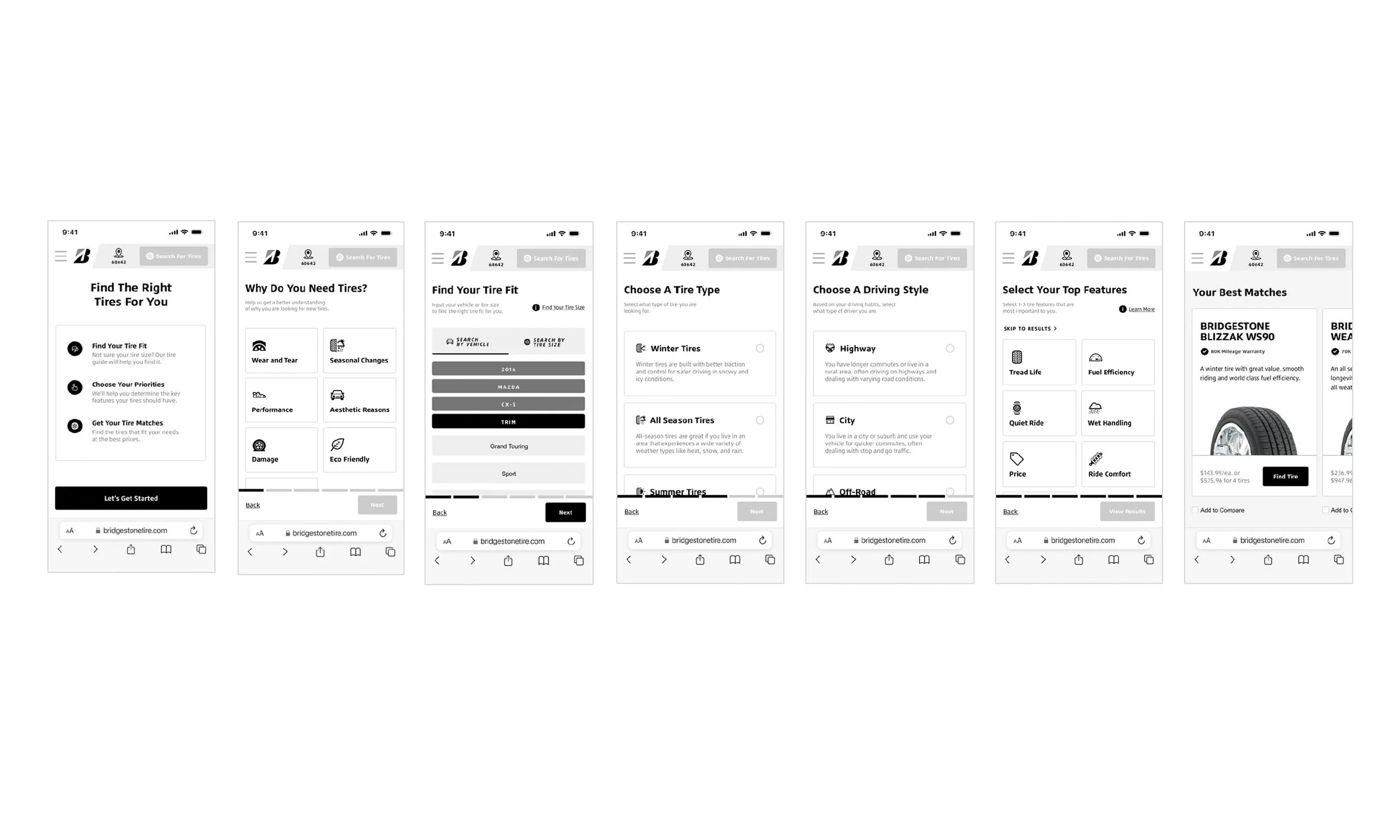
Conducted unmoderated usability testing to evaluate process intuitiveness, clarity of next steps, and usefulness of match results for supporting purchase decisions.

Tool received a 4.8/5 helpfulness rating, with 80% of users finding all steps clear; minor improvements were suggested, including clarifying the “Why Do You Need Tires” step and adding VIN/license plate lookup in the future.

Essential UX improvements were implemented and documented, while lower-priority enhancements were backlogged for future phases.