Improving Medication Safety Through Digital Tracing
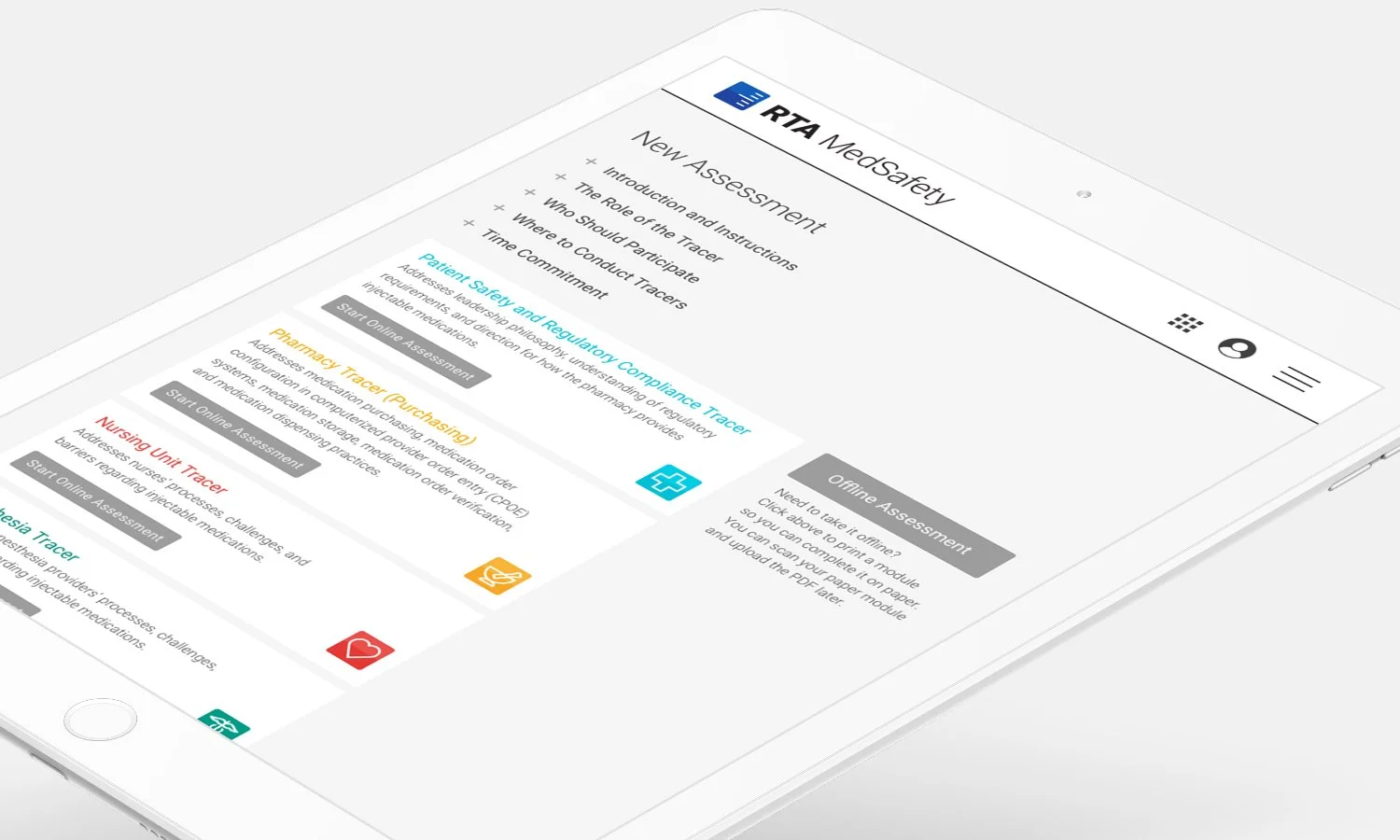
Snapshot
Client
The Joint Commission
Company
Multiple, Inc
Focus
Injectable medication safety, digital self-assessment
Role
UX Lead, Designer
Team
Design, engineering
Timeline
5 months to launch
The Problem
Client Description
The Joint Commission is a nonprofit that accredits over 20,000 U.S. healthcare organizations, ensuring high standards of patient safety and quality care. It also operates Joint Commission International to provide accreditation services globally.
The Challenge
Errors in hospital administration and preparation of injectable medications create significant patient safety risks. Existing tracer tools were analog, fragmented, and didn’t support continuous performance improvement. The client needed a digital platform that could:
Identify barriers to delivering ready-to-administer medications
Track progress across hospitals
Support corrective actions and measurable improvements
The Reality
High-stakes healthcare environment
The project operated under strict medical, legal, and regulatory requirements, necessitating ongoing reviews from multiple internal client teams at every stage of design.Multiple stakeholder groups
Design decisions had to balance the needs of clinicians, hospital administrators, and global oversight teams, each with unique goals, priorities, and perspectives.Tight timeline
Only five months were available from concept to launch, requiring rapid validation and iteration under pressure.Limited analytics & tracking support
The tool itself was designed to monitor safety, yet post-launch tracking infrastructure was minimal, making it challenging to measure adoption and outcomes.Restricted stakeholder access
Engagement with hospitals and clinicians was limited and scheduled around operational constraints, reducing opportunities for hands-on testing and feedback.
Strategy &
Key Decisions
Digitized the tracer methodology while preserving core clinical rigor.
Designed a four-part self-assessment experience tailored to hospital workflows.
Focused on usability, adoption, and continuous monitoring, ensuring hospitals could easily track corrective actions.
Balanced data capture and clinician time constraints to avoid disruption of care.
My Role
Served as Design Lead, overseeing end-to-end digital design and collaborating with cross-functional teams.
Conducted journey mapping and opportunity identification to digitize the tracer process.
Created interactive wireframes and proof-of-concept screens to validate usability and workflow with stakeholders.
Translated stakeholder feedback into actionable design refinements.
The Impact
Launched in five months, successfully delivering the digital Tracer Tool.
Hospitals now have a systematic way to monitor injectable medication safety, with growing account creation and user activity.
Supports continuous performance improvement and measurable adoption of best practices.
Enables hospitals to identify risks, implement corrective actions, and realize sustainable patient safety improvements.
Learnings
Plan adoption strategies and analytics tracking alongside design to ensure usage, performance measurement, and continuous improvement post-launch.
Secure structured access to end users early for testing and validation, even in operationally constrained environments.
Key Wireframes
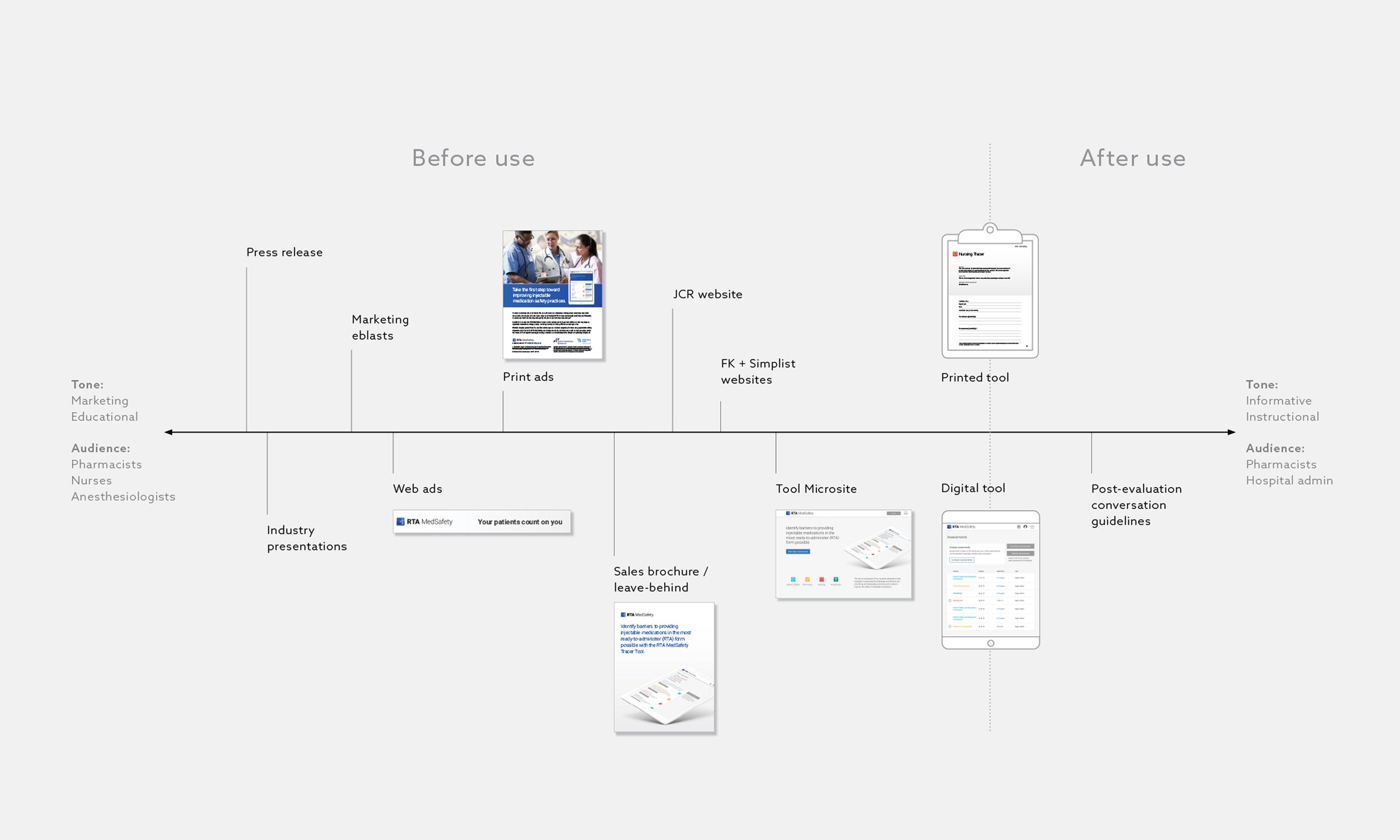
Marketing roadmap guiding awareness, adoption, and sustained usage
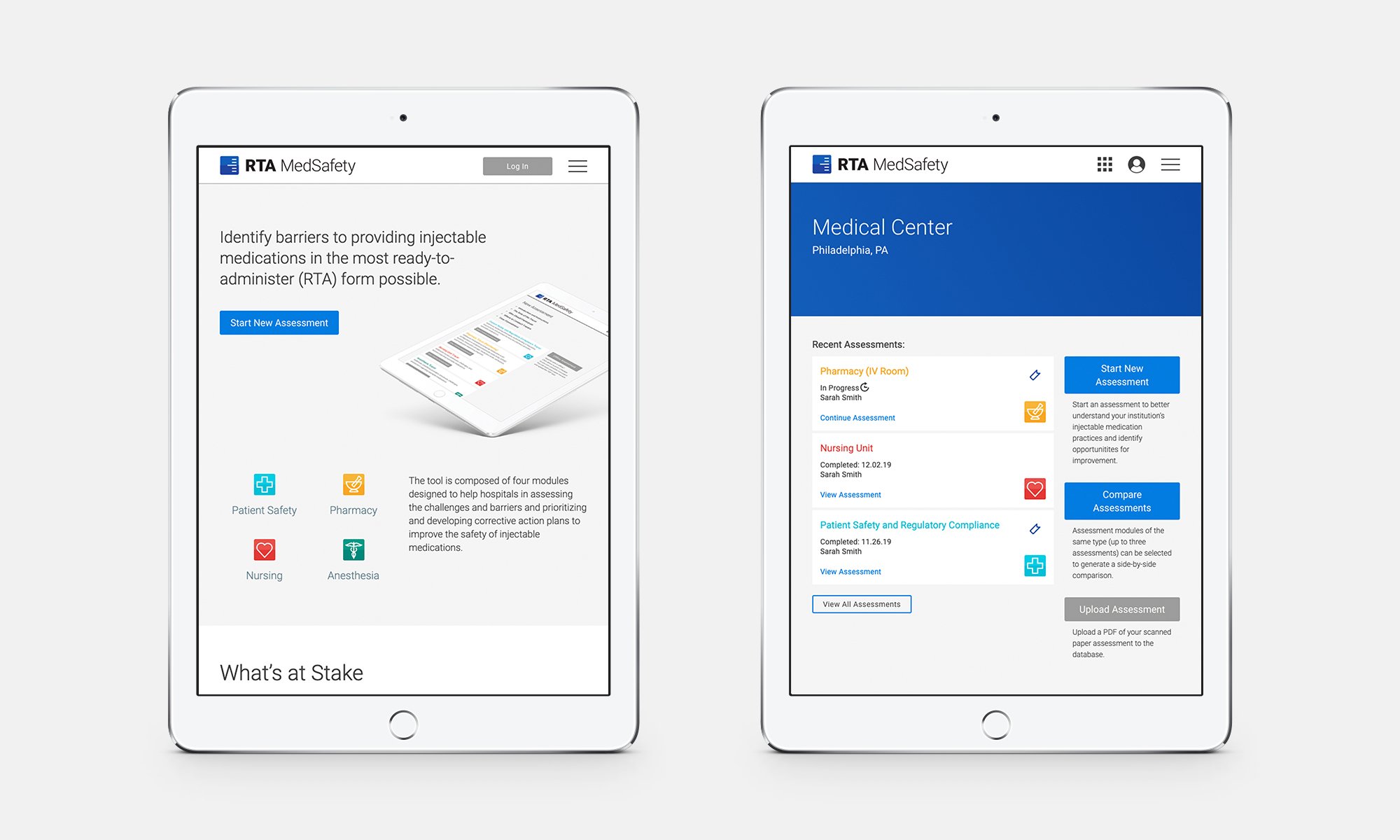
The tool was optimized for tablet use to accommodate hospital staff on the move
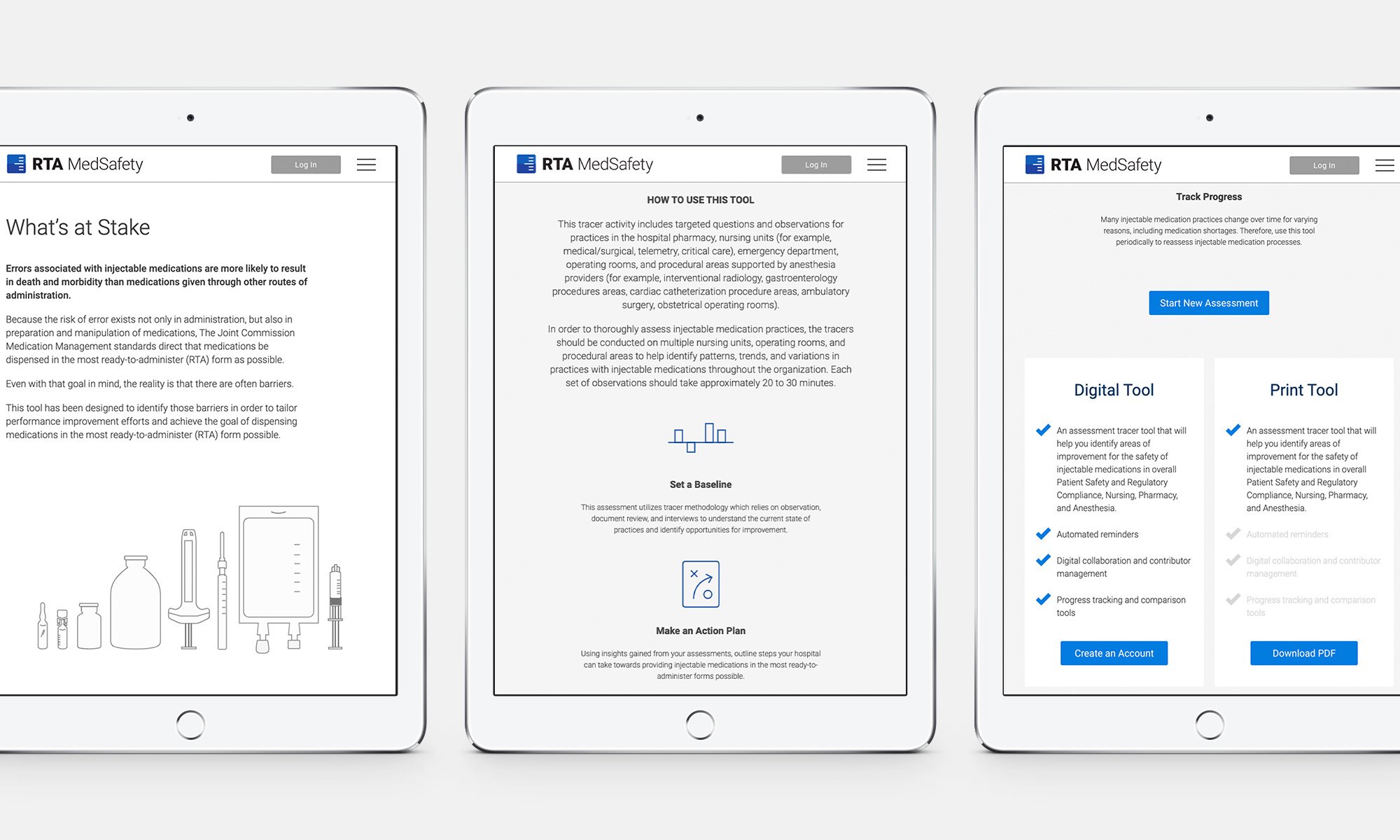
Onboarding screens
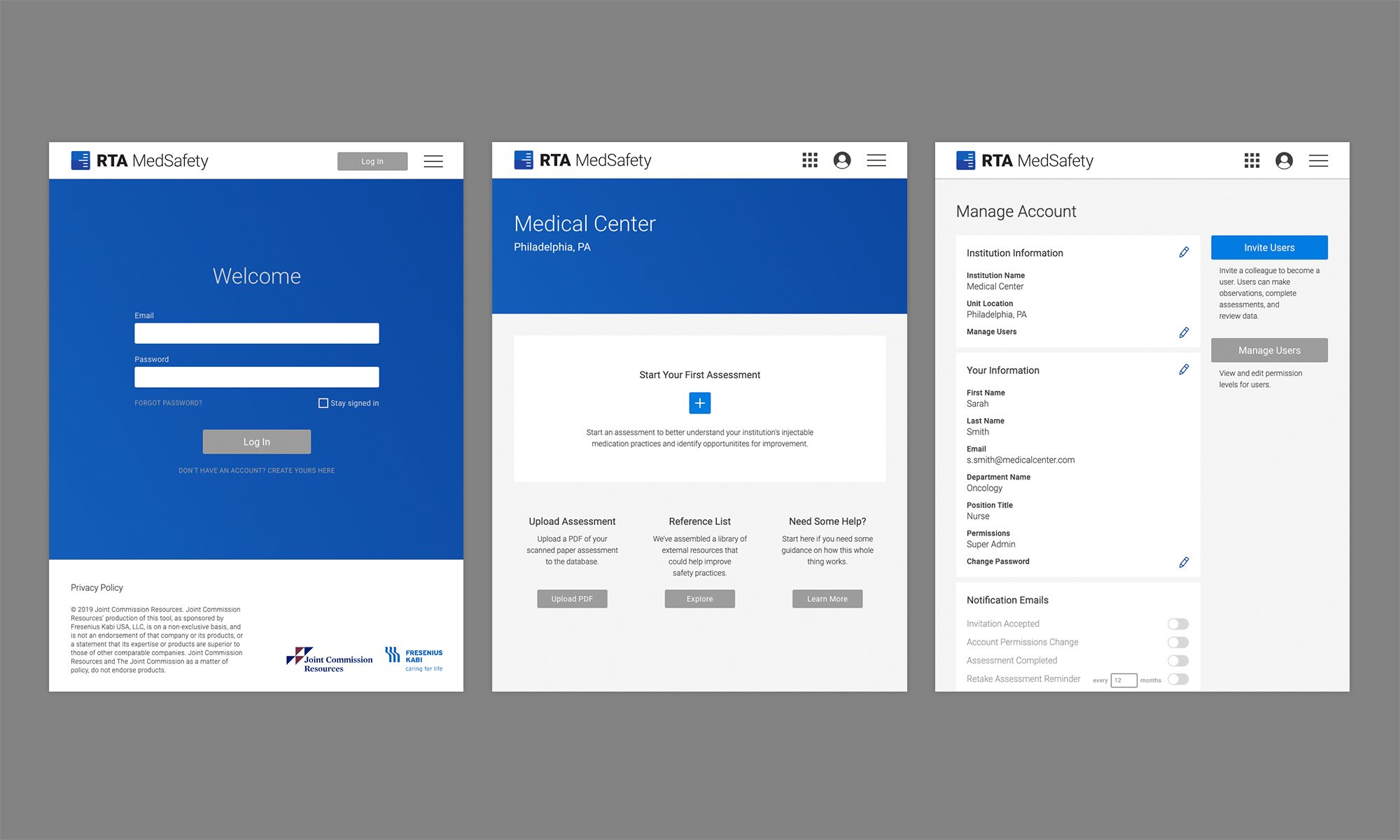
User login and account screens
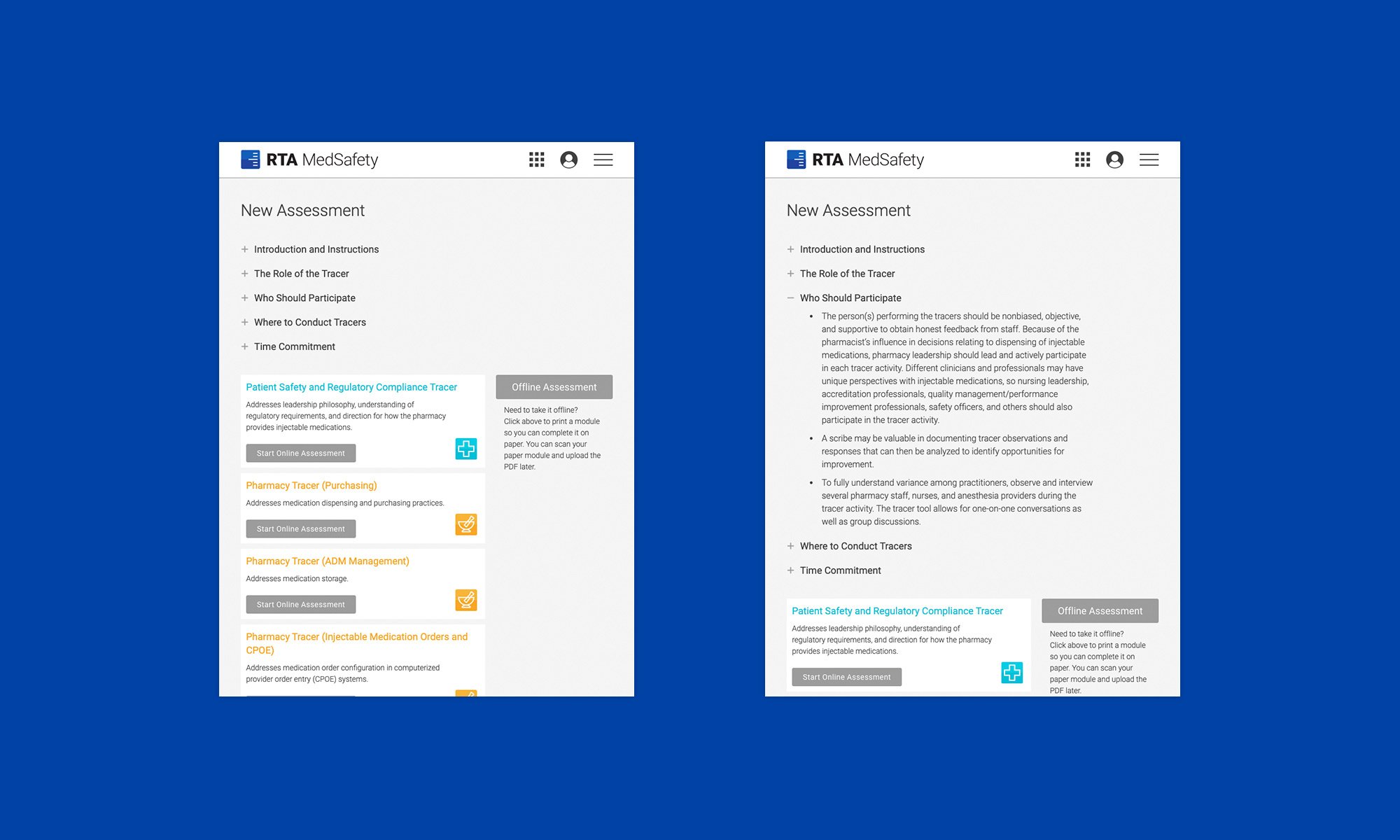
The tool guides users through profile creation, authentication, authorization, asset handling, data entry, and logging and auditing, with the option to generate static reports for each section or for the complete assessment.
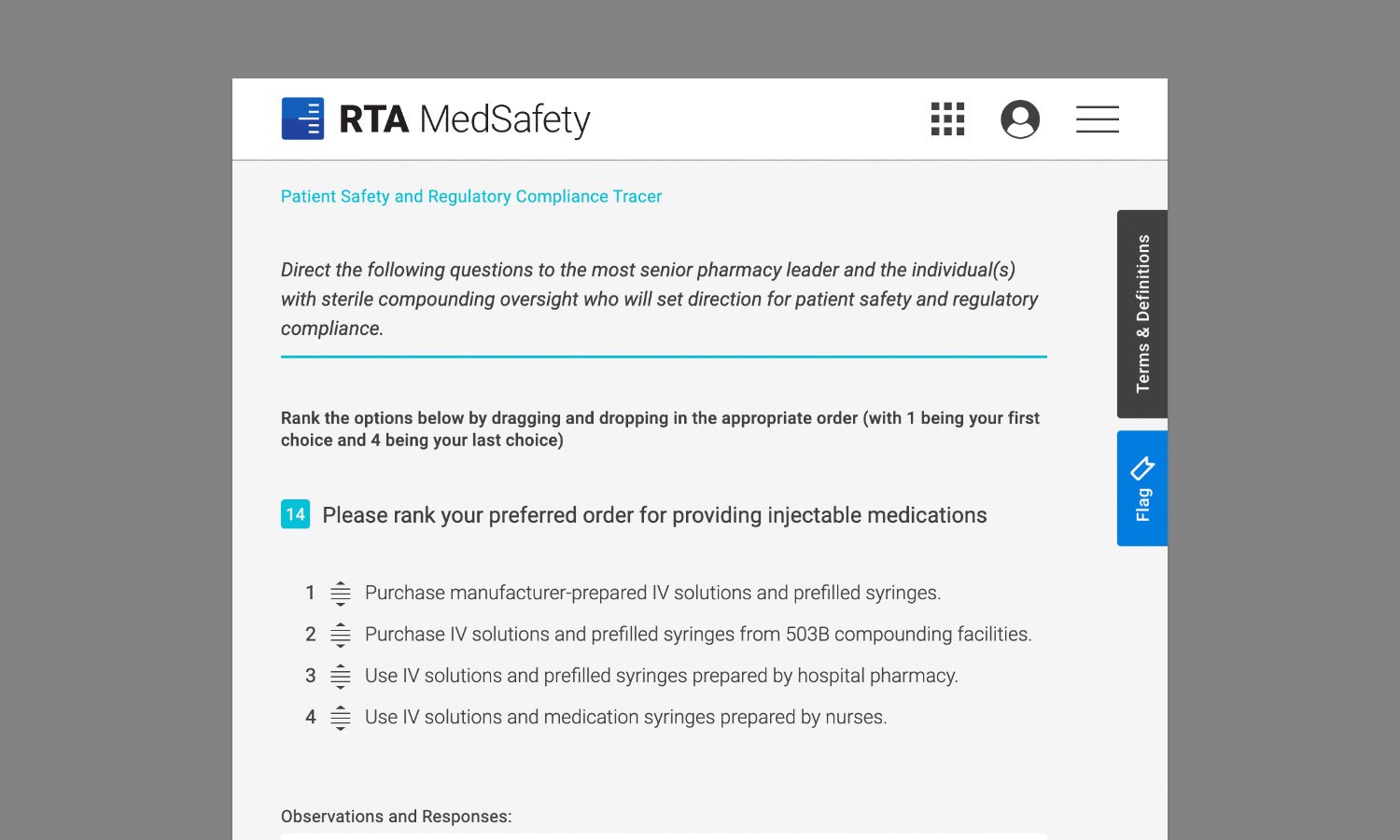
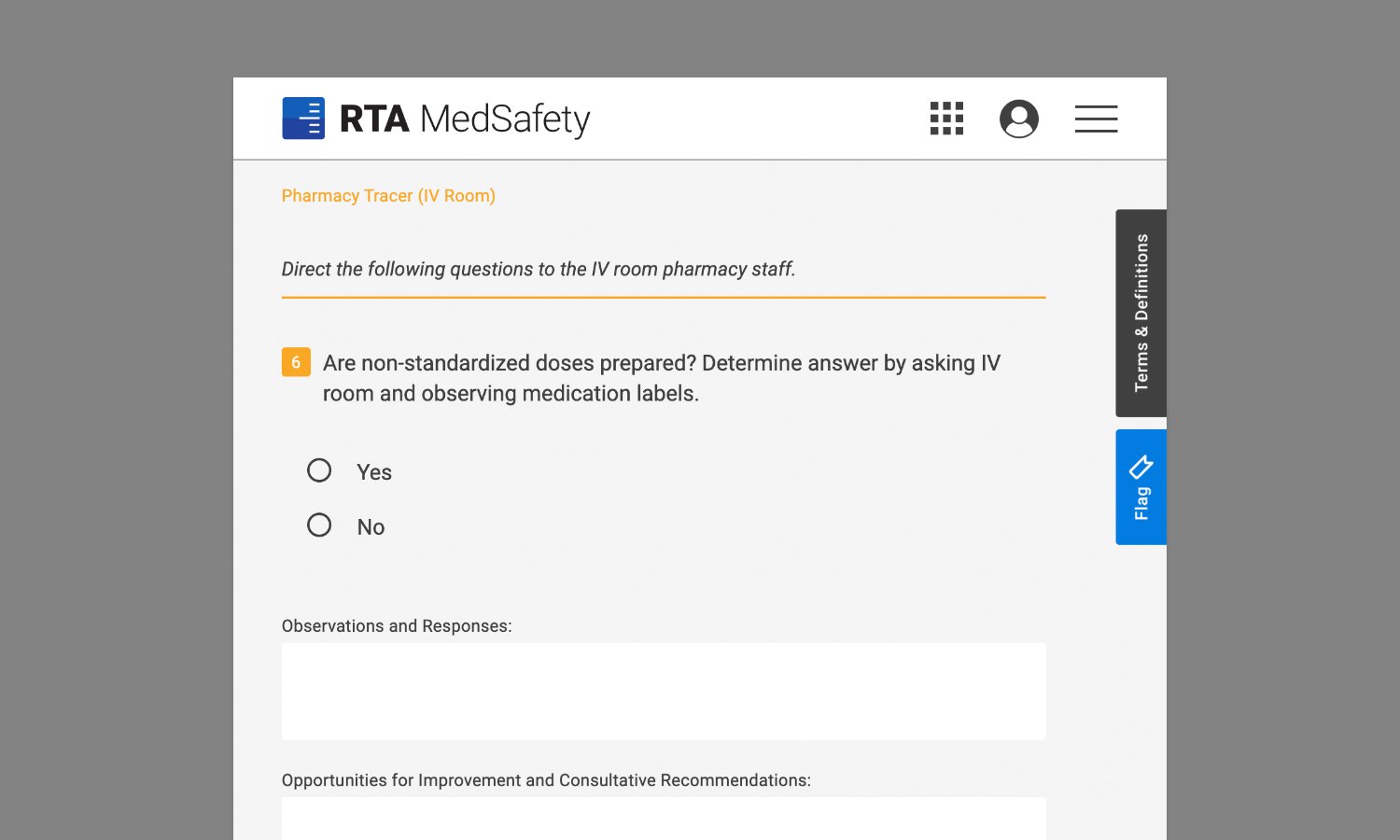
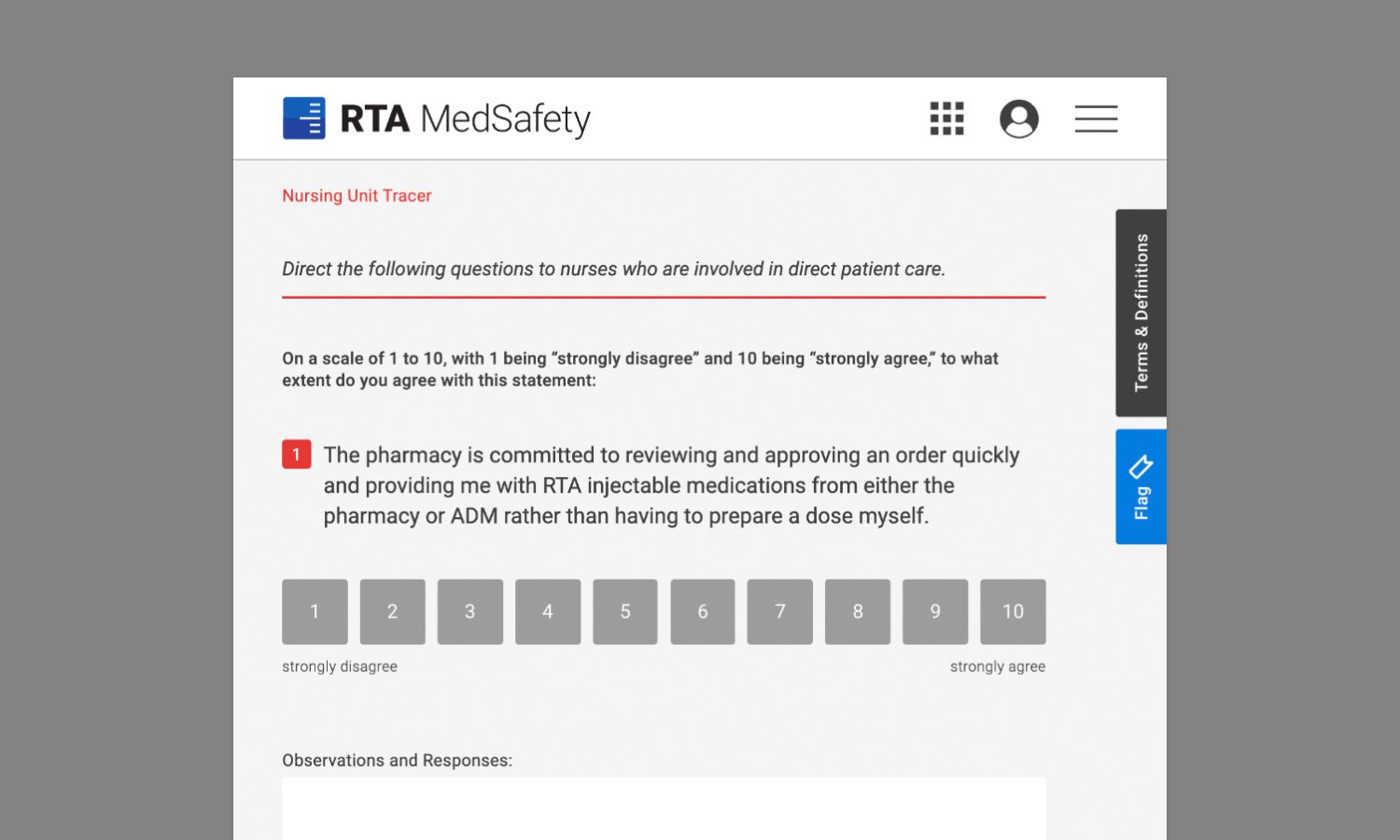
Each step was targeted towards a specific audience segment
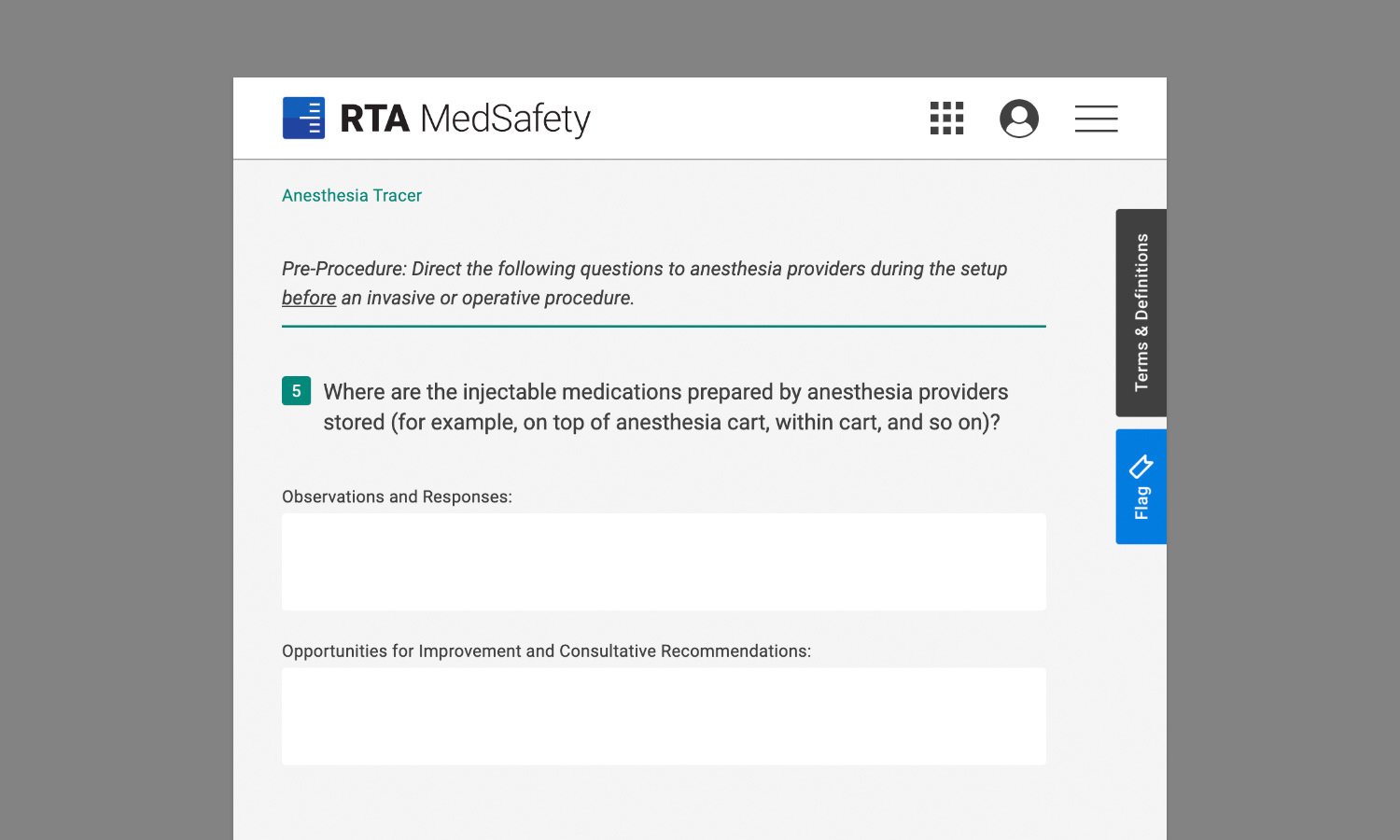

Completed assessments within the same module can be compared