Commerce Built for a 3,000-Store Co-op
Snapshot
Client / Do it Best is a U.S.-based, member-owned cooperative supplying hardware and building materials to 2,000+ members across 3,000 retail locations in 50+ countries, with $5B in wholesale revenue and an estimated $14B in member retail sales.
Company / Publicis Sapient
Focus / B2B & B2C platform E-commerce Transformation
Role / Experience Lead, Design, Research
Team / 20 people across design, product, and engineering
Timeline / 10 months to launch
Impact / +67% online revenue, +60% increase in orders
Do it Best faced the challenge of optimizing its
e-commerce B2B and B2C platform to remain competitive amid rapid Buy Online, Pick up In-Store (BOPIS) and digital growth.
Context
Do it Best needed to modernize its e-commerce platform to keep up with online ordering and in-store pickup, while making the experience consistent across doitbest.com and thousands of independently owned member stores.
The old site only showed local inventory, so customers missed out on products available elsewhere. The experience was inconsistent store to store.
Approach
The response centered on one connected platform: a single-vendor system linking 3,000+ stores instead of each running its own disconnected setup, built to move fast on fulfillment and flexible enough to scale, centralized enough to keep every store consistent, but adaptable enough to support individual store and web experiences as the network grew.
Each of the 3,000 member stores is independently owned and operated, yet customers expect a seamless retail experience across every touchpoint.
Challenge
With thousands of independent stores, each with its own local customer base and inventory quirks (livestock, lumber, etc.), one consistent platform experience had to flex without becoming inconsistent. Too rigid, and local stores couldn't reflect what actually made them work for their communities. Too flexible, and the "one platform" promise would fall apart store by store.
That tension was sharper here than in typical retail because of the co-op model itself: independent store owners were both customers of the corporate platform and operators serving their own local customers, so getting the balance wrong didn't just hurt the shopper experience, it hurt the people running the stores too.
I addressed this with a modular template and header system paired with tiered customization, giving stores real flexibility within a consistent structure, rather than a one-size-fits-all platform. It also meant customers could shop across stores within a single order, something the old fragmented setup never allowed.
Strategy
The platform had to serve two audiences at once, corporate and local store owners, each with different needs. I interviewed store owners and stakeholders to understand where the current experience broke down for each side, then tested directions with both groups. Here's what came out of it:
One platform, built to scale.
A single-vendor system connecting 3,000+ stores, supporting both corporate and local store experiences.Fulfillment that flexes.
Same-day pickup, ship-to-store, delivery, and transfer, so customers could get what they needed however worked for them.Discovery that actually works.
Helped users find products and verify real inventory fast, without store-hopping.Tools built for the people using them.
Designed Pick & Pack to streamline store-level fulfillment and make reliability possible.
Member stores are mostly mom-and-pop shops serving rural areas, where shoppers built real relationships in person. But if an item wasn't in stock locally, they waited or drove to another store.
Ownership
As Experience Lead, I directed a North American team of three designers, partnering with an India-based design pod to keep standards consistent across a global team, while staying close to research and delivery. My work included:
Bridged two continents.
Partnered with the India design pod to keep design and UX standards consistent across both teams.Built the system.
Built and scaled a reusable design system across global teams.Aligned design and engineering.
Ran development refinement sessions so both teams stayed aligned as work moved forward.Owned the client relationship.
Served as the main point of contact, presenting solutions and handling stakeholder feedback directly.
Impact
During the soft launch, Hotjar tracking revealed high drop-off on "Add to Cart" and Checkout. We re-engineered the checkout flow in response.
Within the first two months of relaunch:
Revenue: +67% online revenue post-launch
Orders: +60% increase in orders, including +56% in ship-to-store specifically
Order value: +4.6% increase in average order value, driven by same-day pickup
Reflection
Global collaboration requires intentional alignment.
The India team wasn't in client review sessions due to time zones, so key context got lost and they were hearing decisions secondhand instead of firsthand. We started sending recordings and added more design syncs to keep information from getting lost in translation.Small behaviors build stronger teams.
Cameras stayed off during most remote calls, so people worked together for months without ever seeing who they were talking to. It made a real difference in how connected and collaborative the teams actually felt.Advocate for testing early and often.
Testing got treated as an afterthought when leadership first pitched the project, which meant mistakes made it further than they should have. The value of testing needs buy-in from the whole team, not just the experience side.
Discovery Process
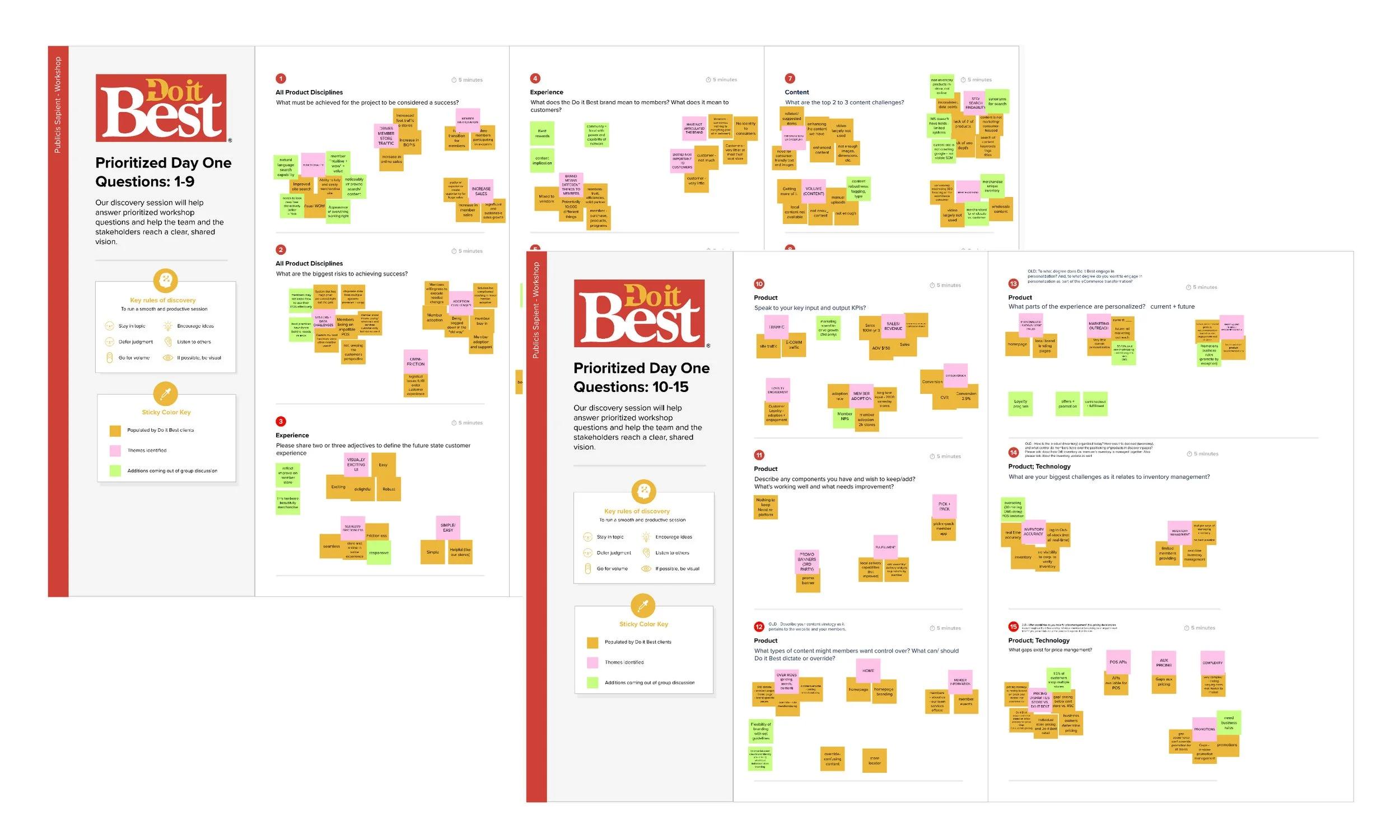
Facilitated a 2-day in-person discovery workshop with cross-functional client stakeholders to align on goals, surface priorities, and define project success criteria.
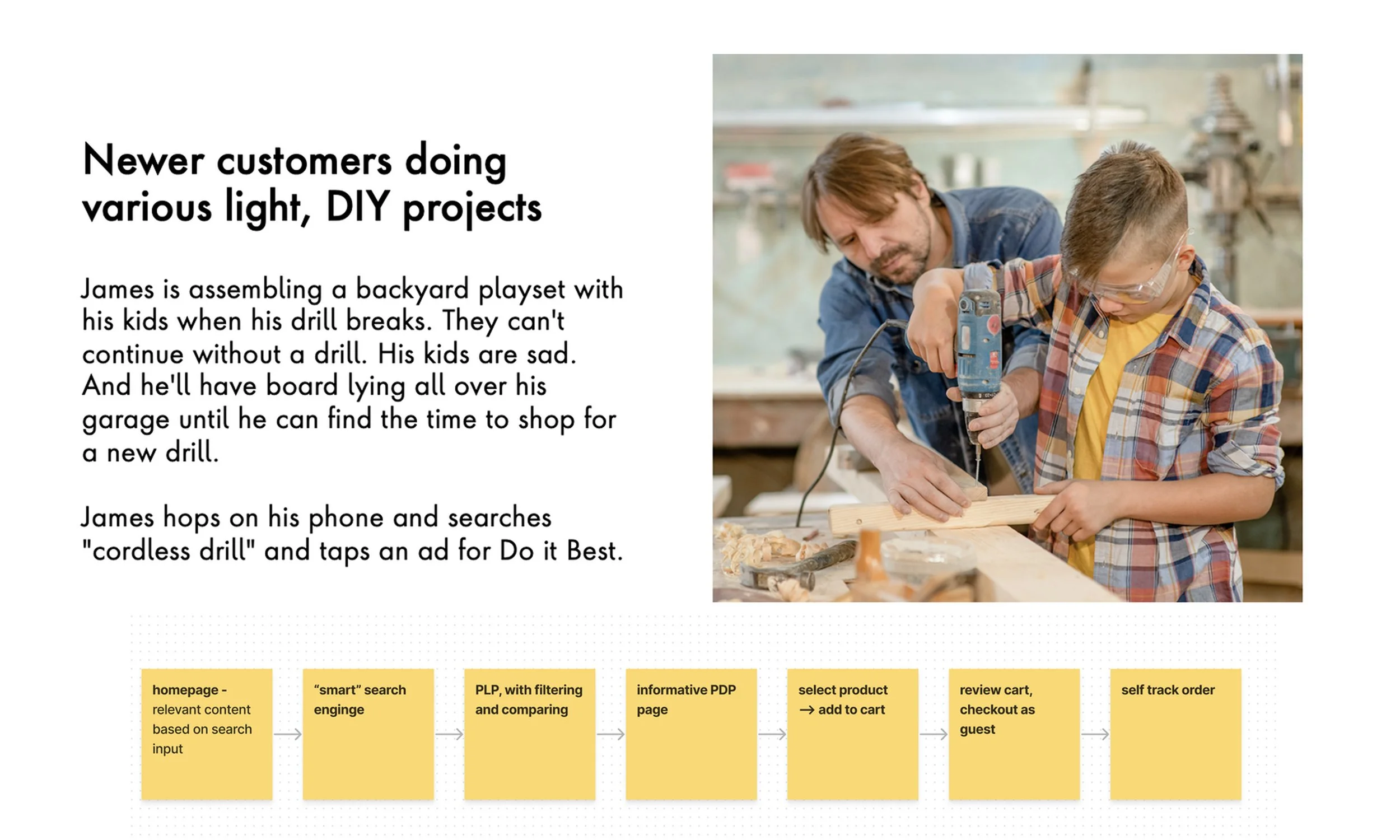
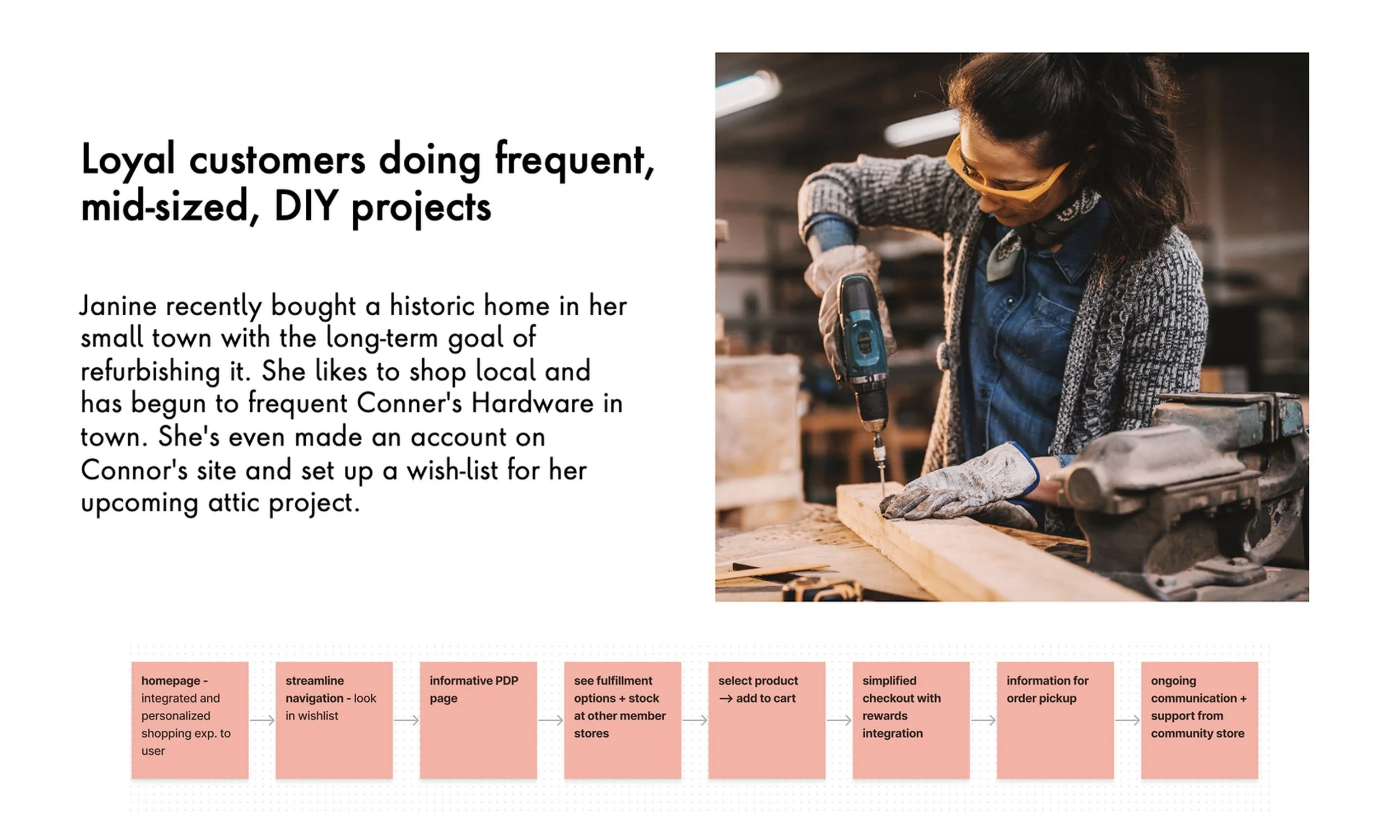
Shoppers access Do it Best through the main site or member sites. Two personas and journeys were mapped to capture these distinct paths.
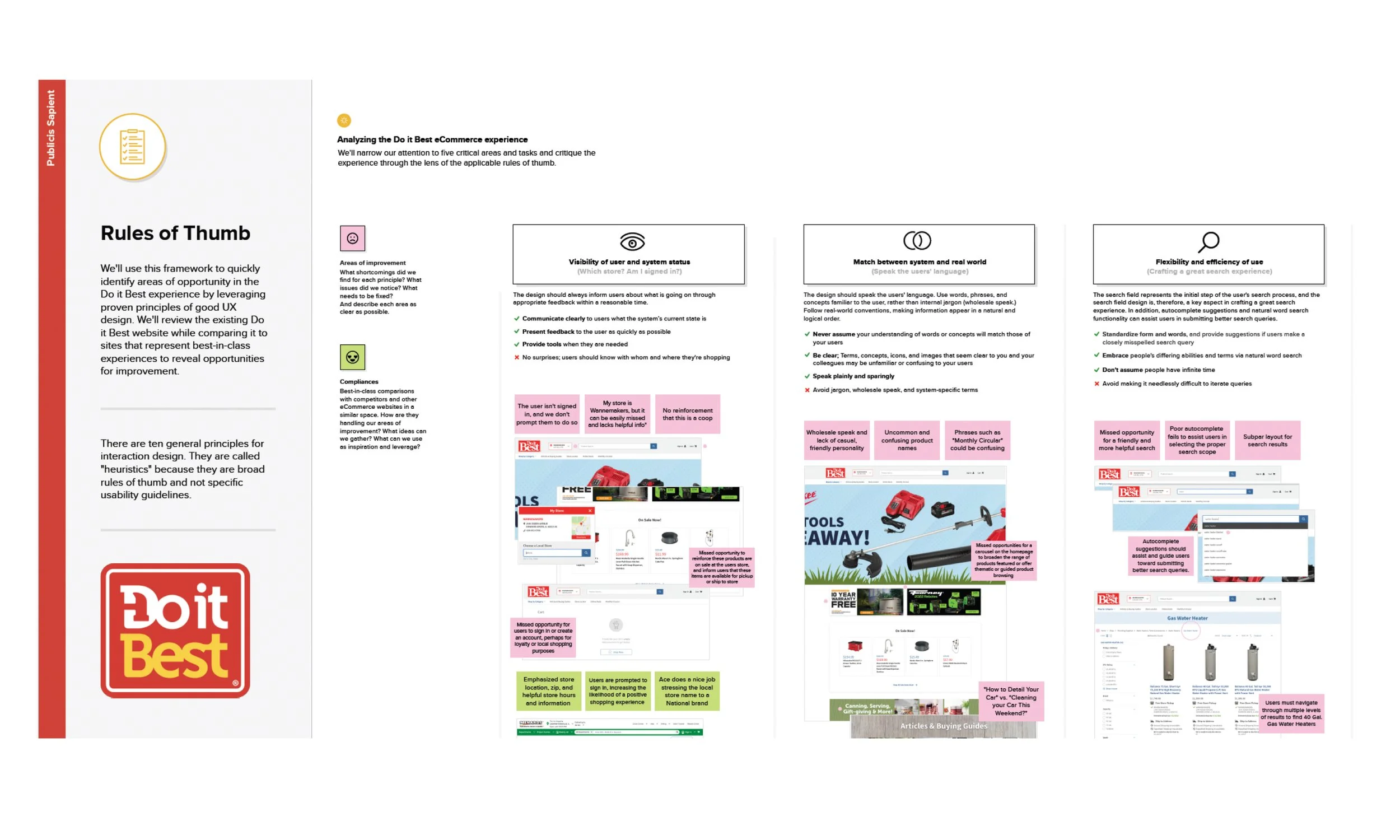
Evaluated the site through heuristic principles to identify pain points and opportunities for improvement.
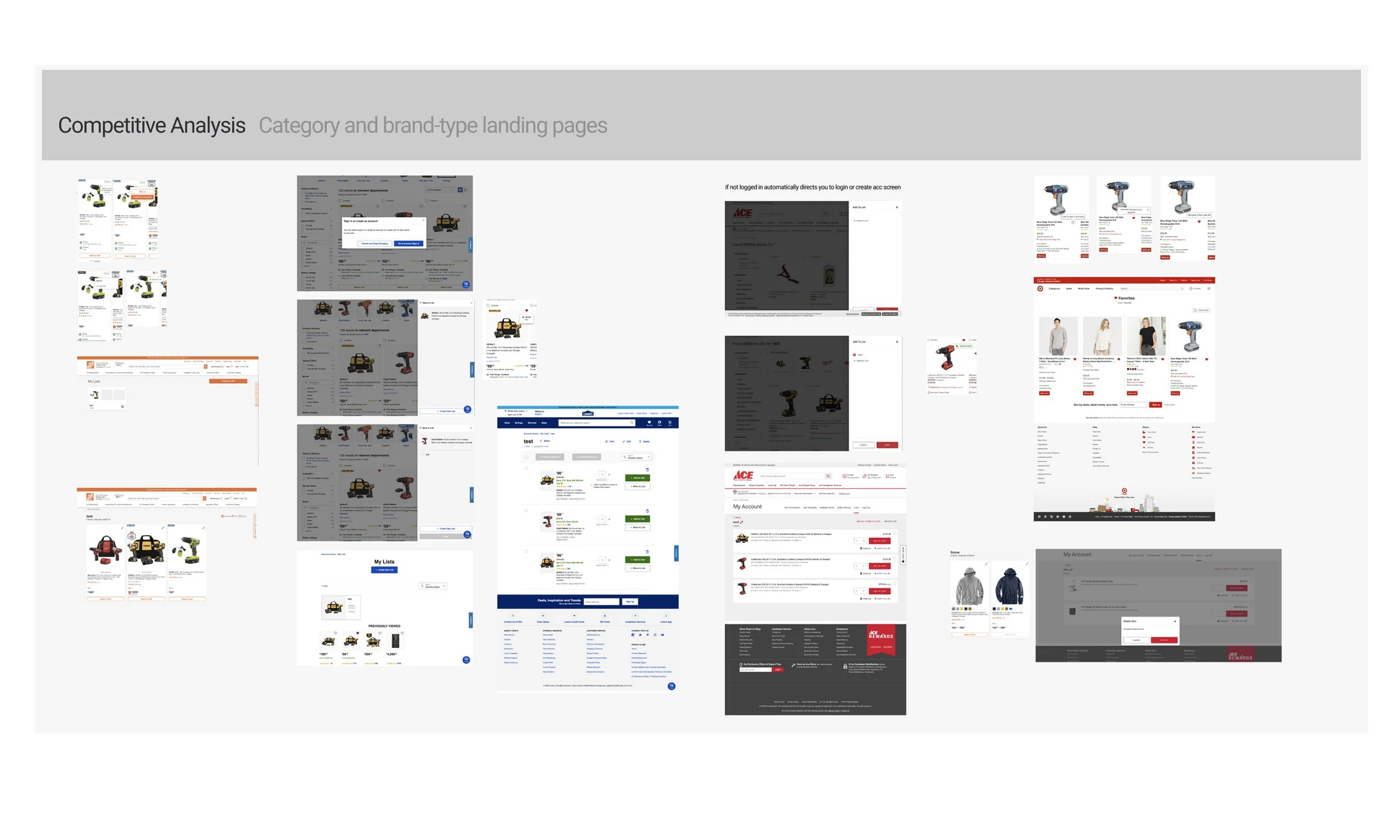
Performed a competitive analysis to identify strengths, gaps, and differentiators guiding strategy.
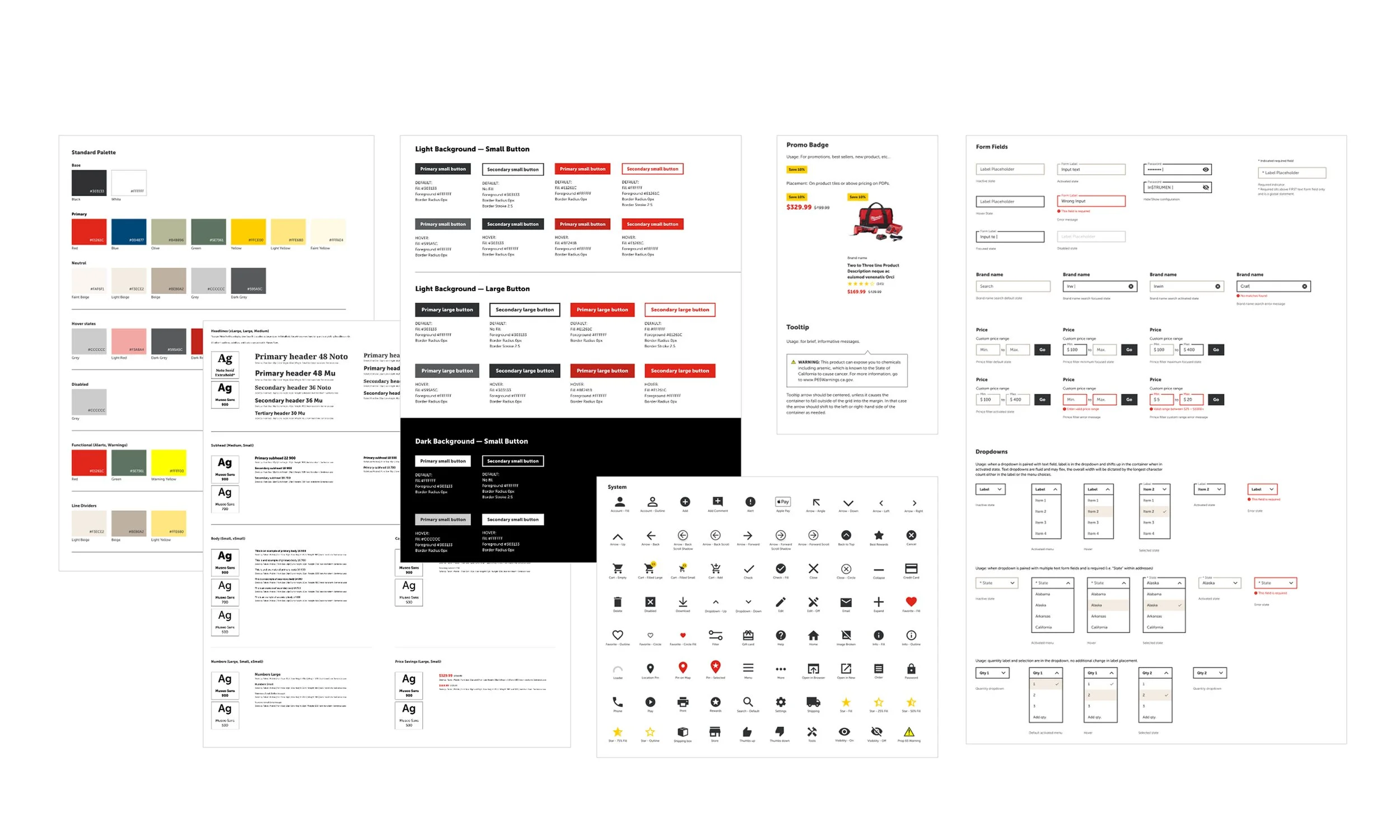
Built and scaled an accessible, reusable design system across U.S. and India teams, reducing inconsistencies and accelerating feature delivery.
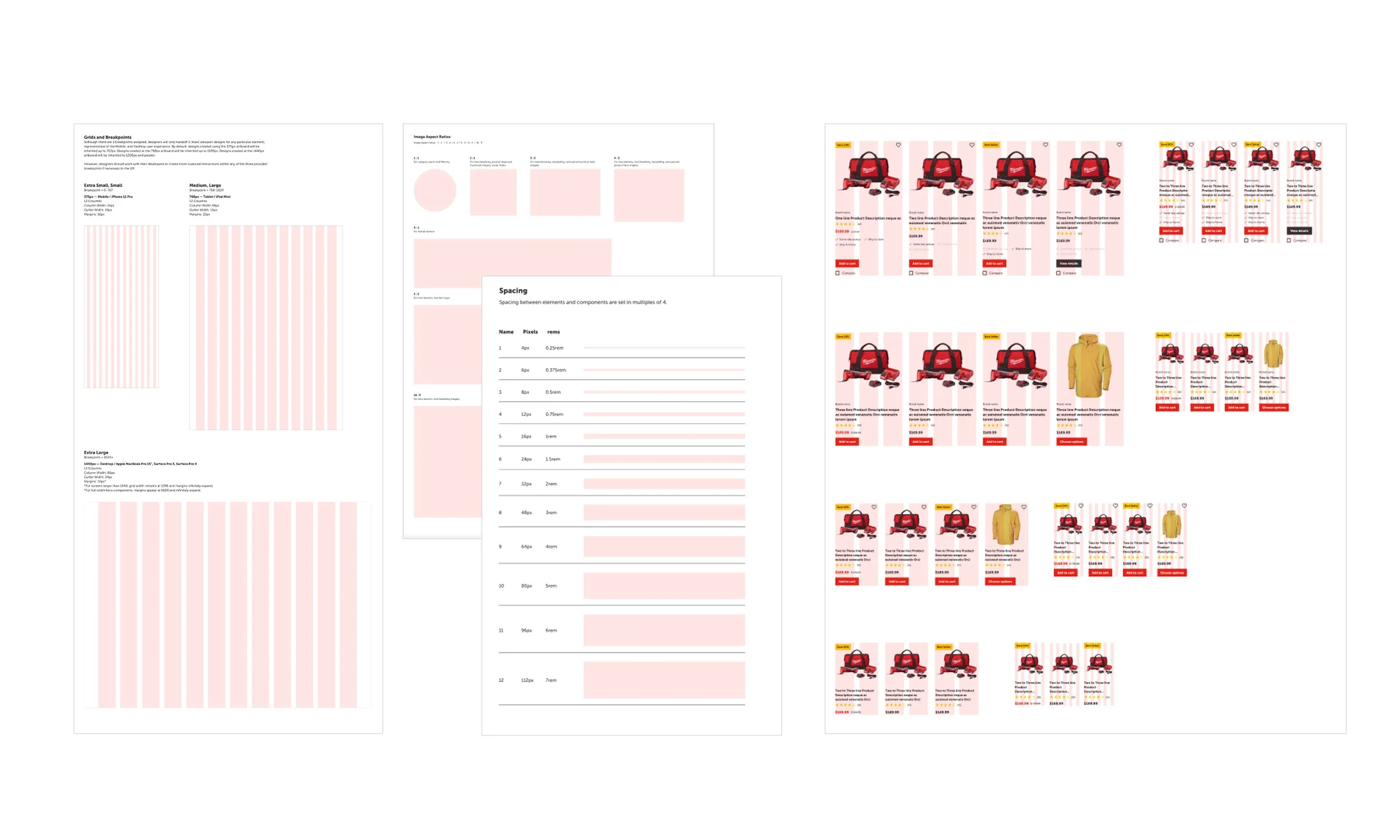
Toolkit extension with component variations and pattern guides.
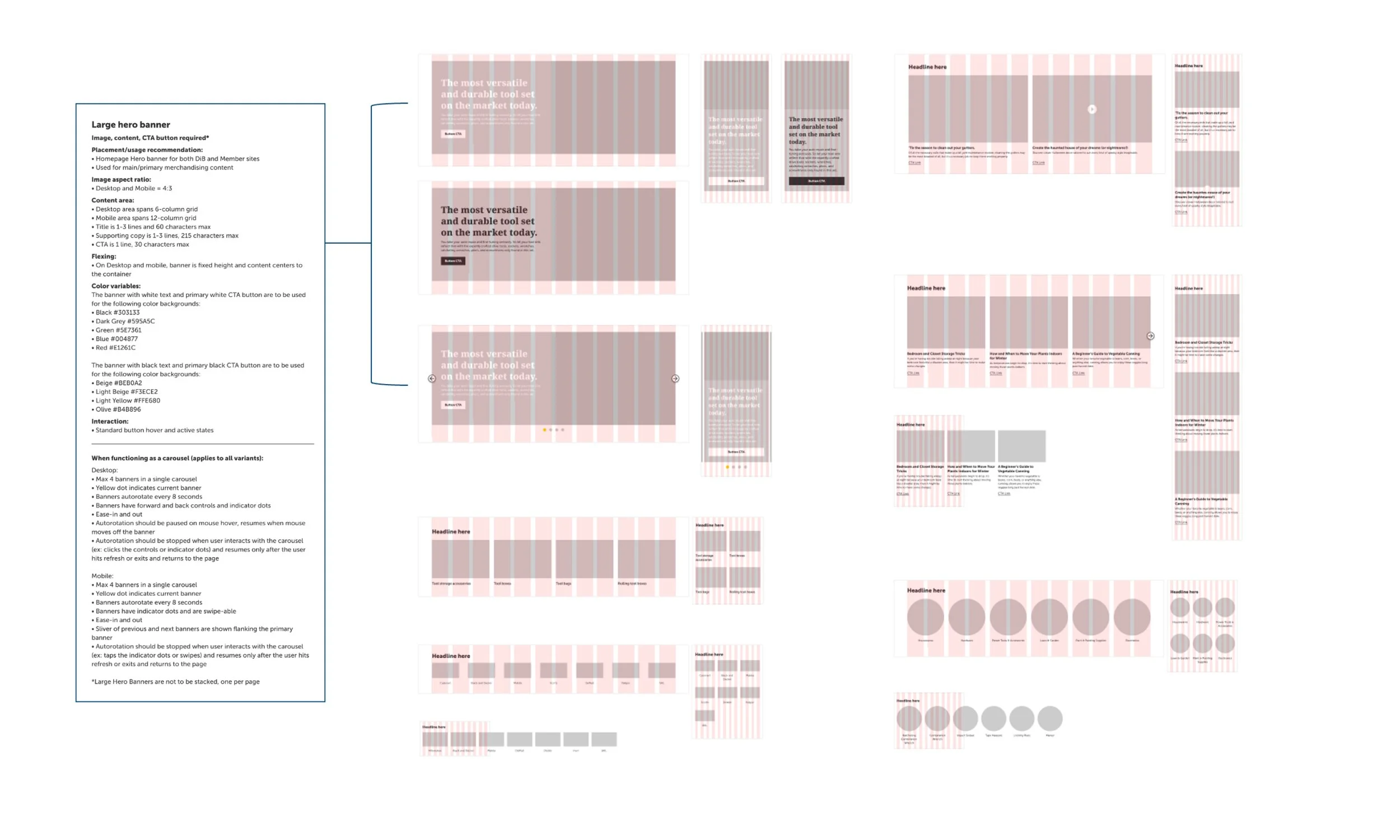
The Design System handoff included detailed component usage guidelines and requirements for designers, developers, and content authors. This was particularly valuable given the large CMS component, enabling authors (DIB & Members) to customize content effectively.
Designs
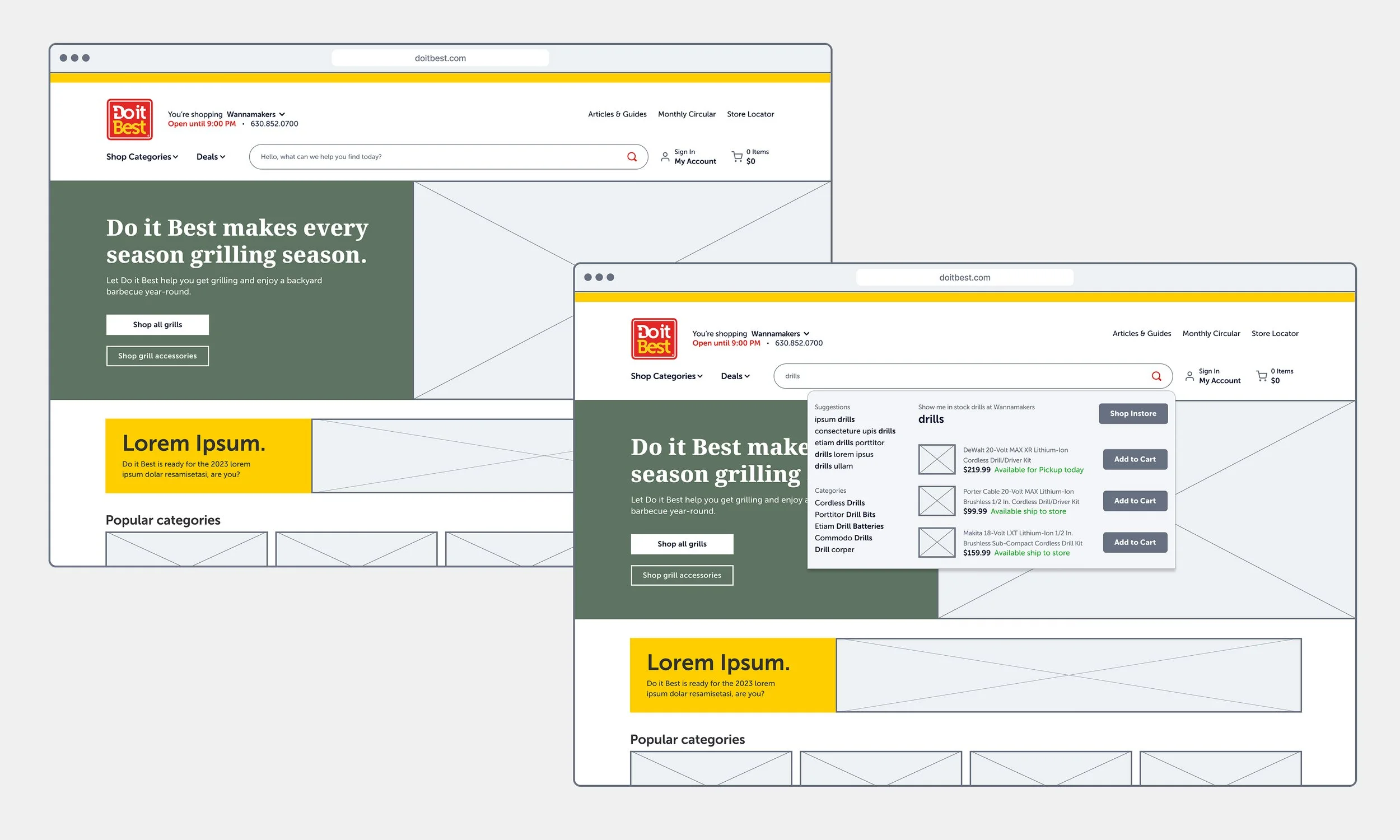
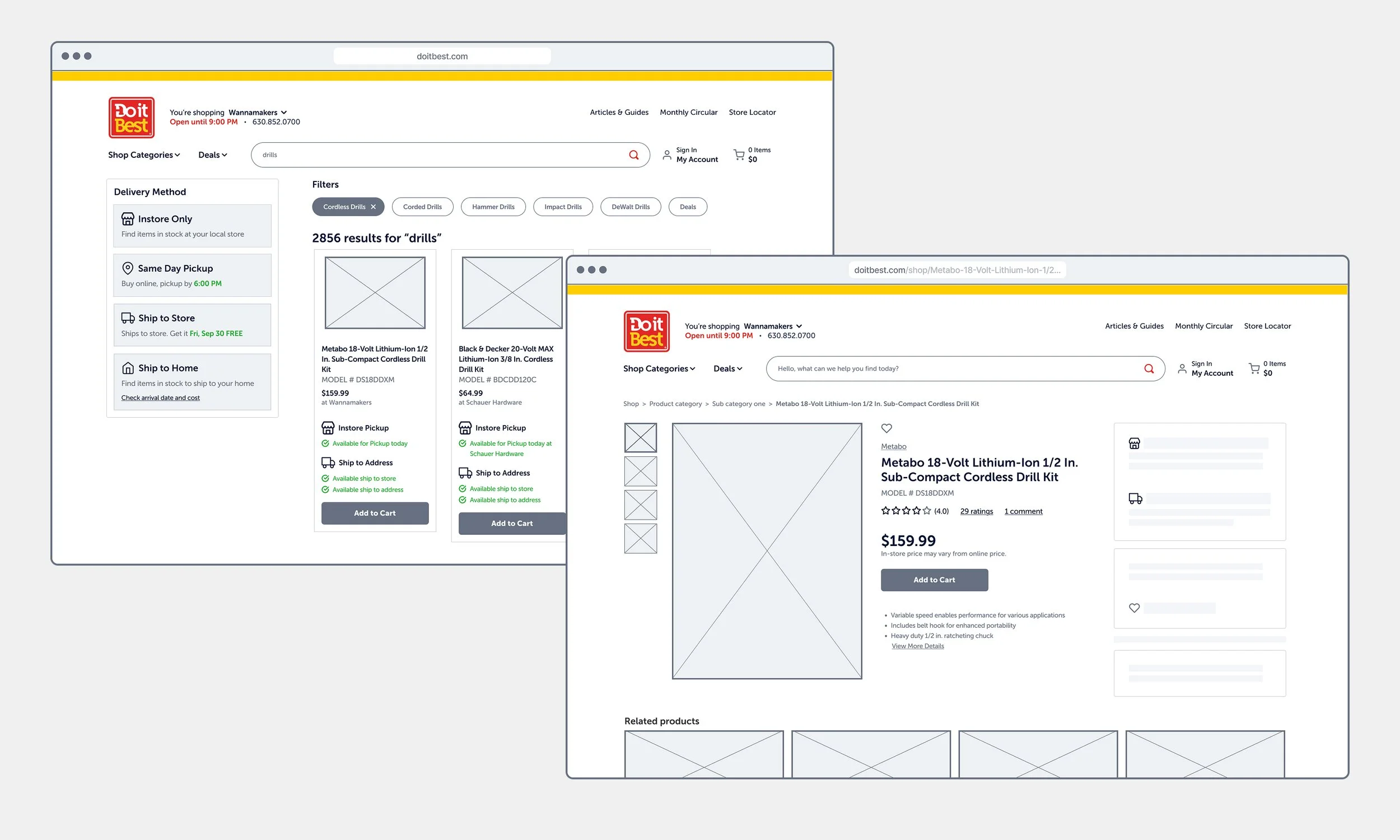
Produced mid-fidelity wireframes to test and refine the design system.
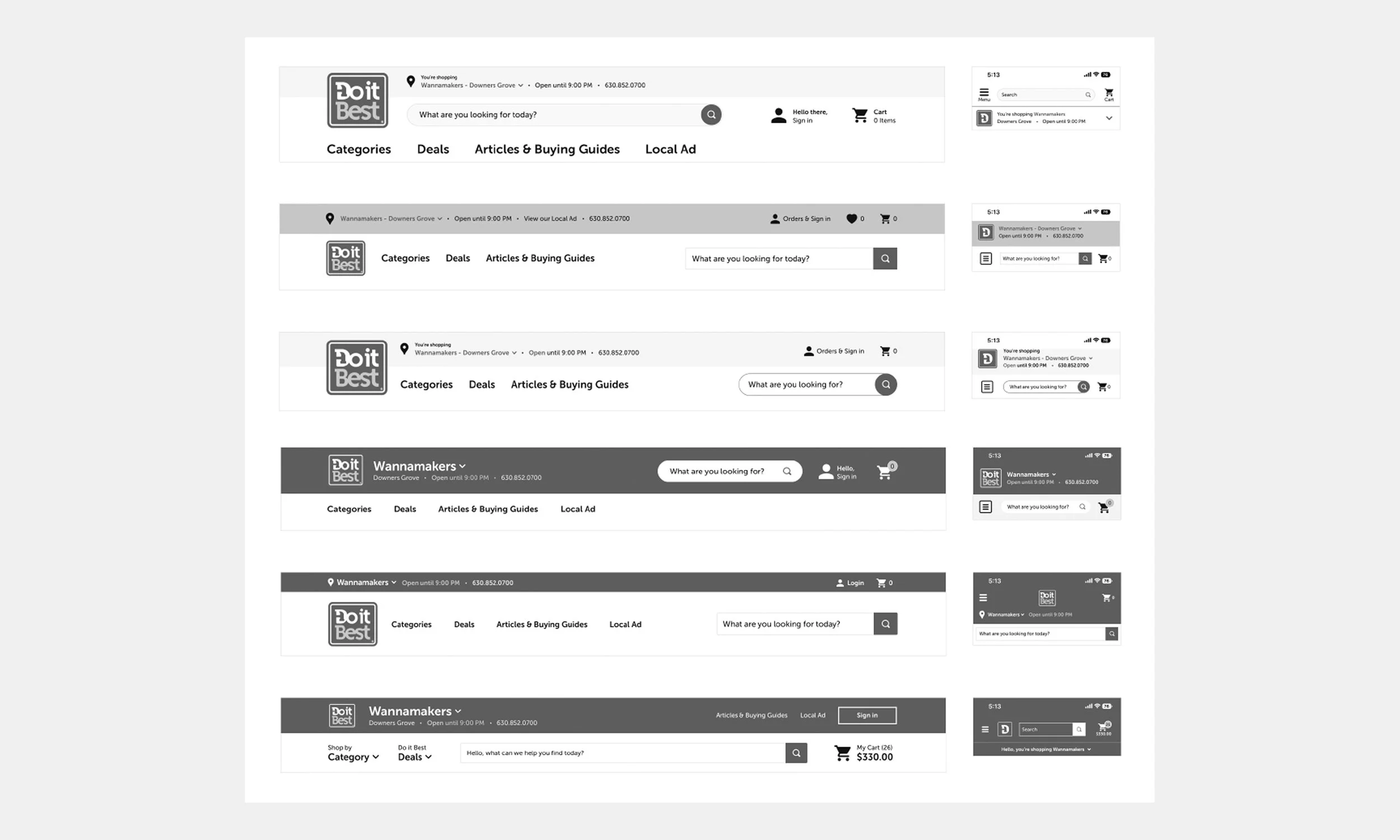
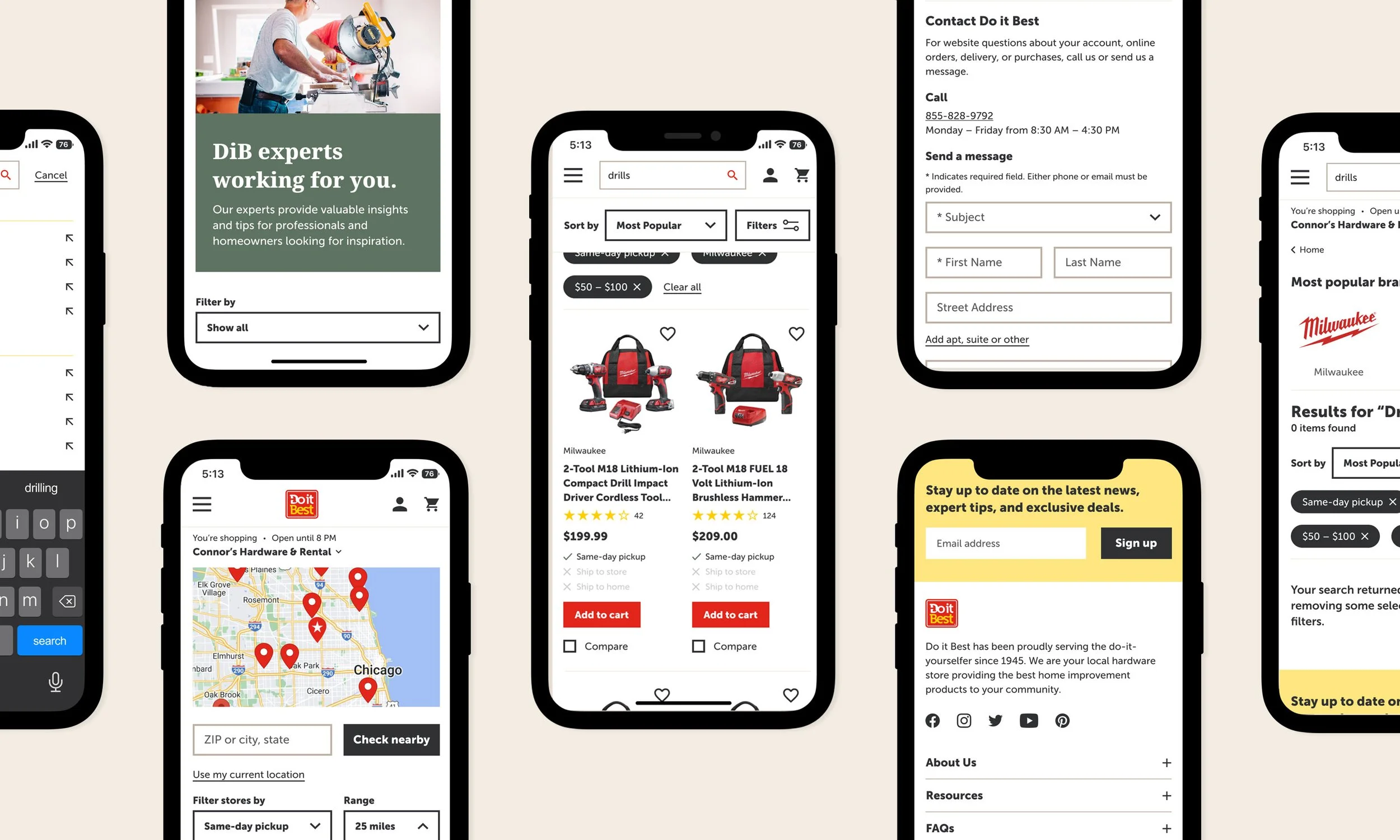
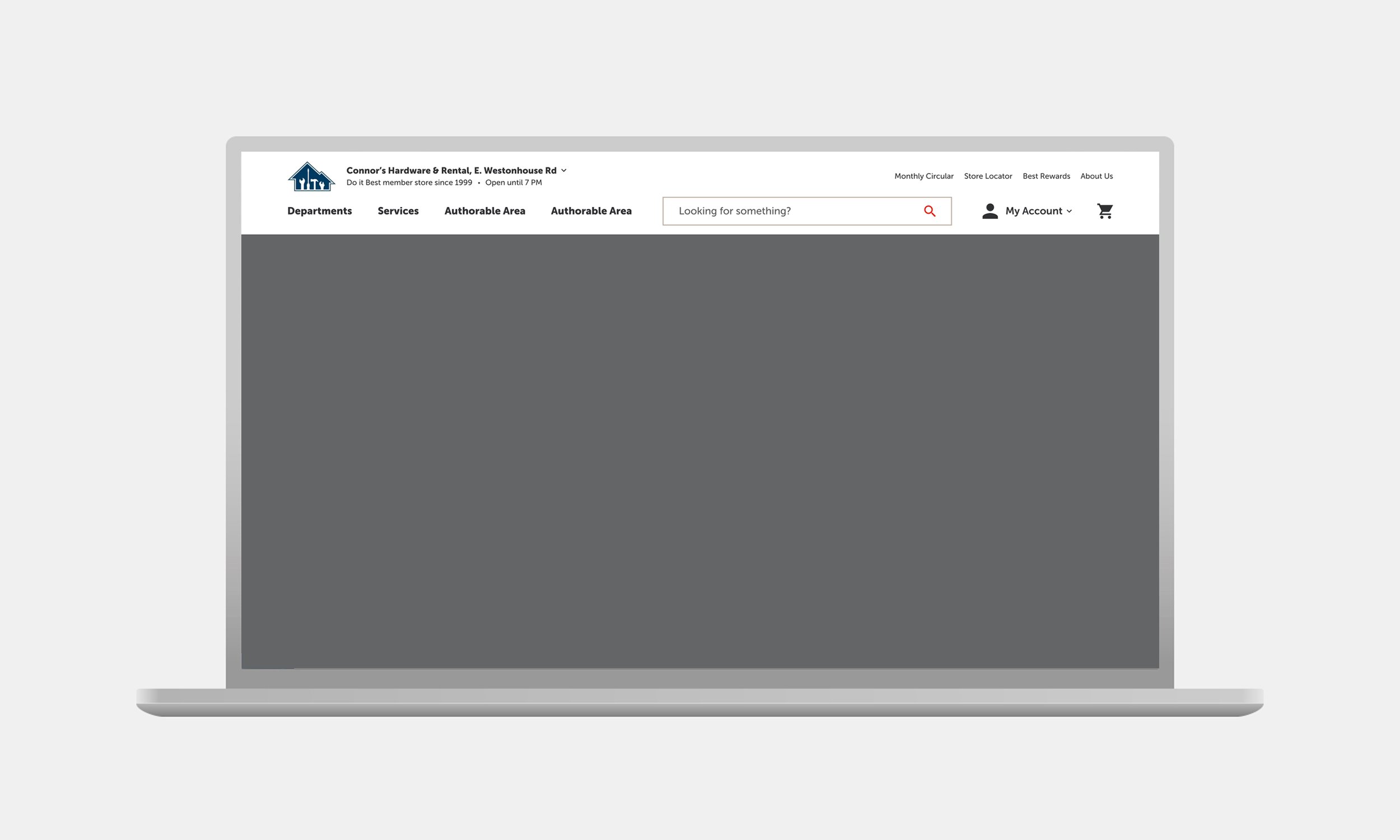
As a co-op, the challenge was to create a unified customer experience across DoitBest.com and member sites while supporting individual branding. To address this, we needed a header design that enabled customizable navigation and content.
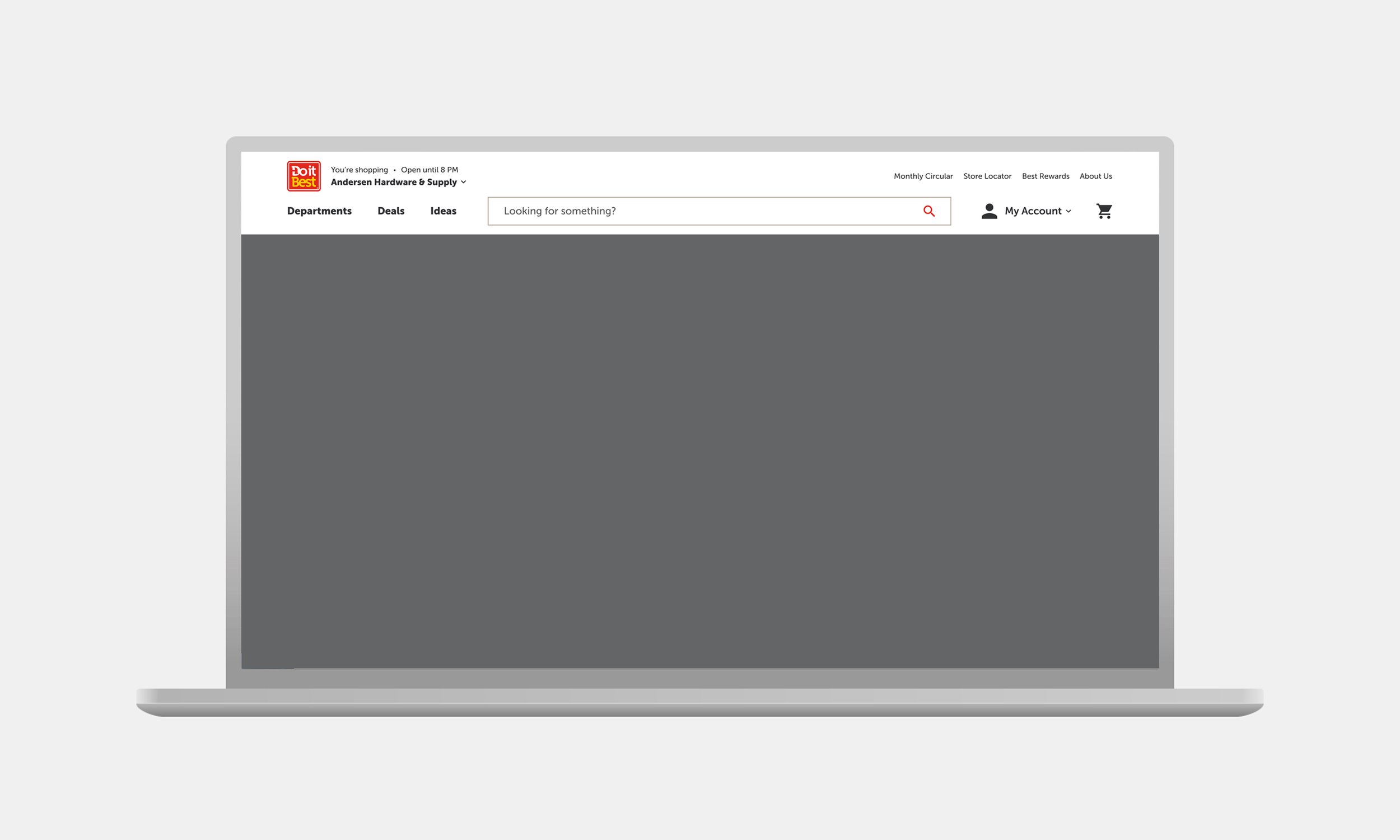
Flexible header solution that accommodates both DoitBest.com and member sites.
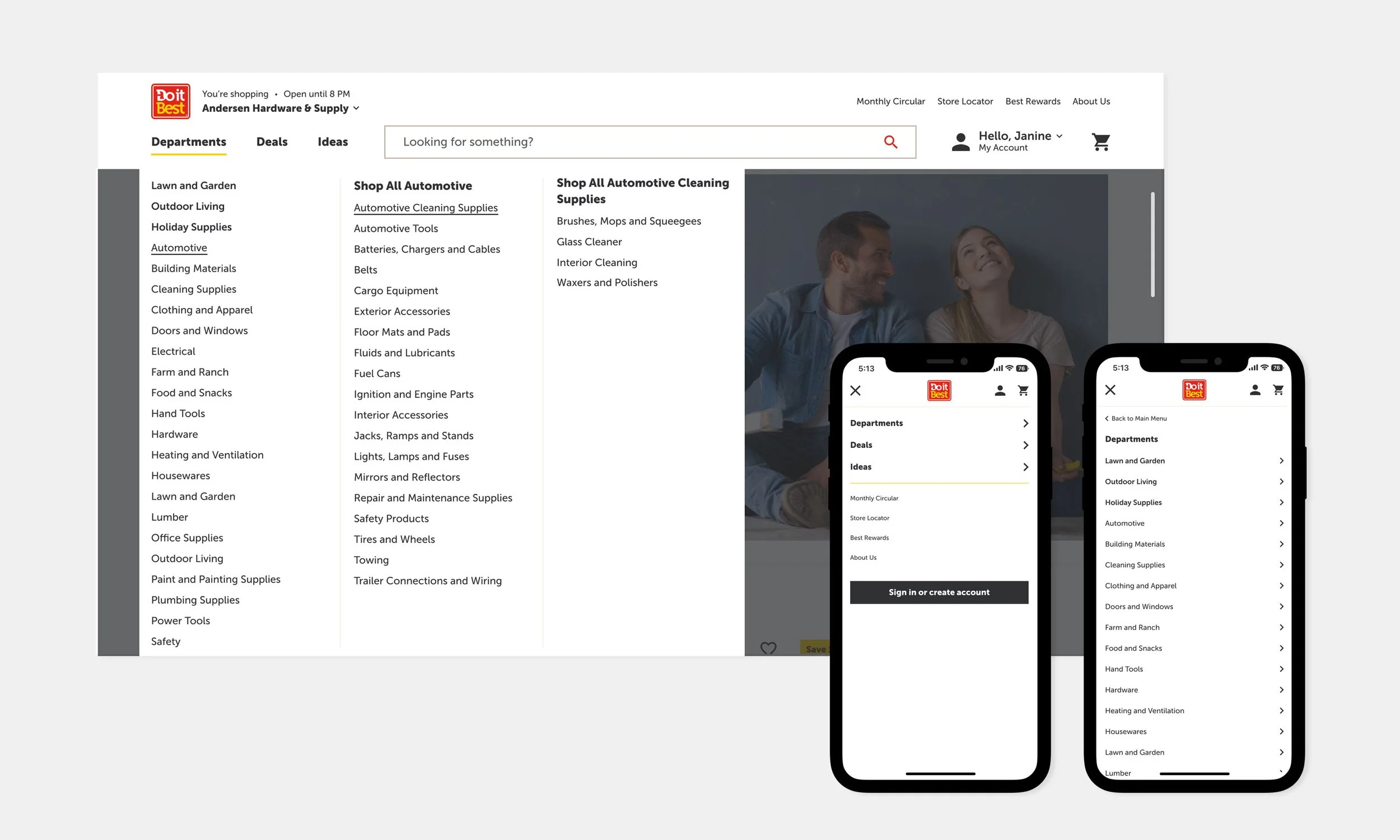
Navigation
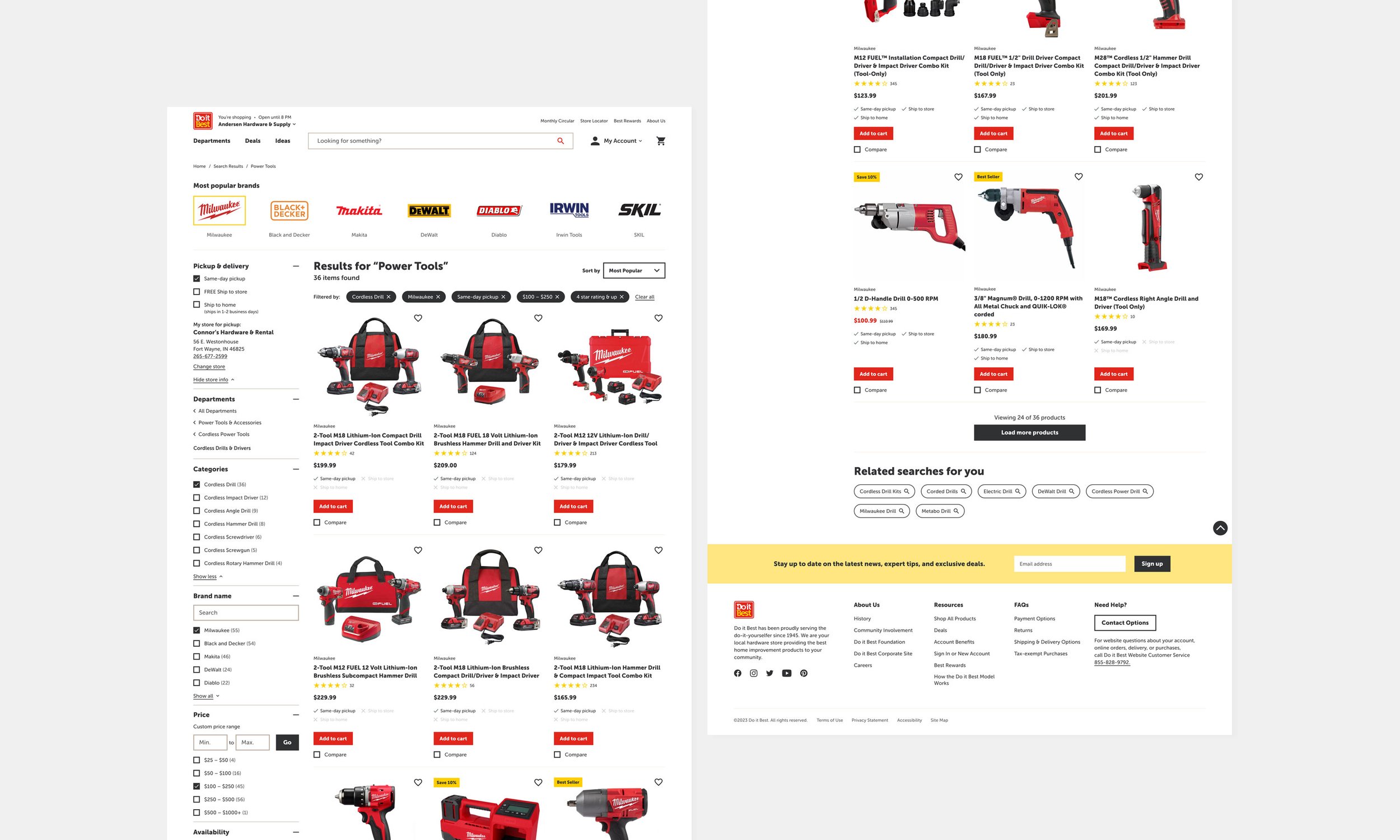
PLP
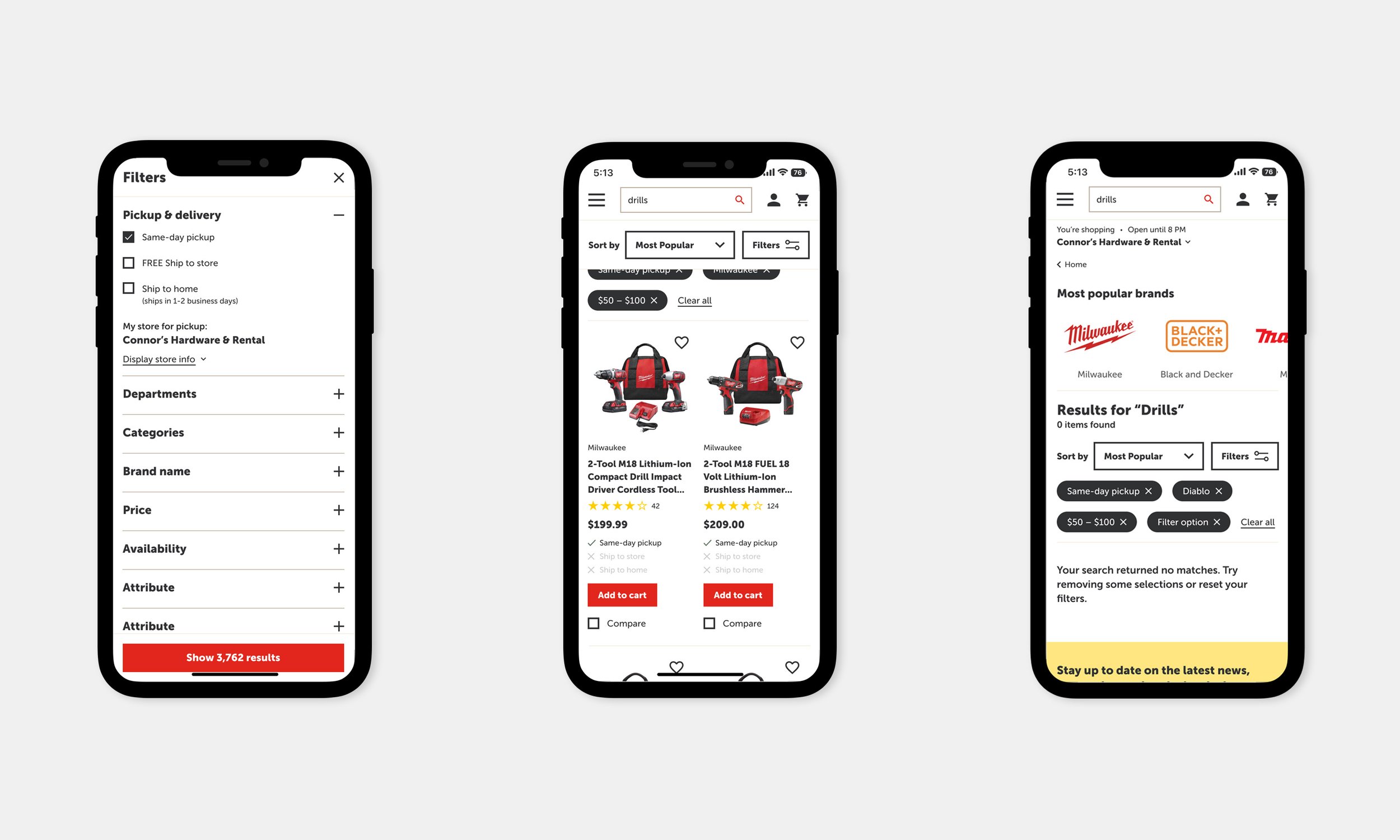
Mobile
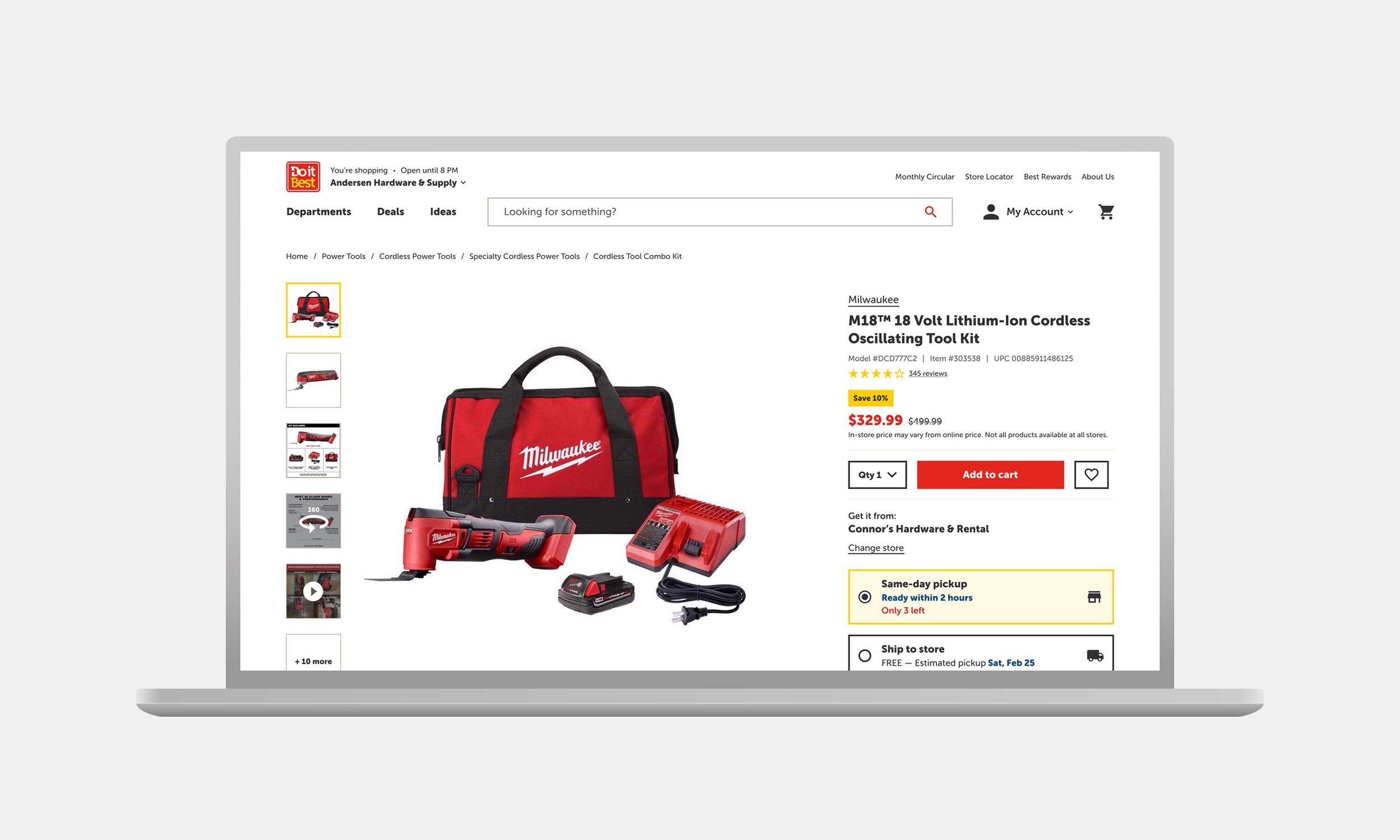
PDP
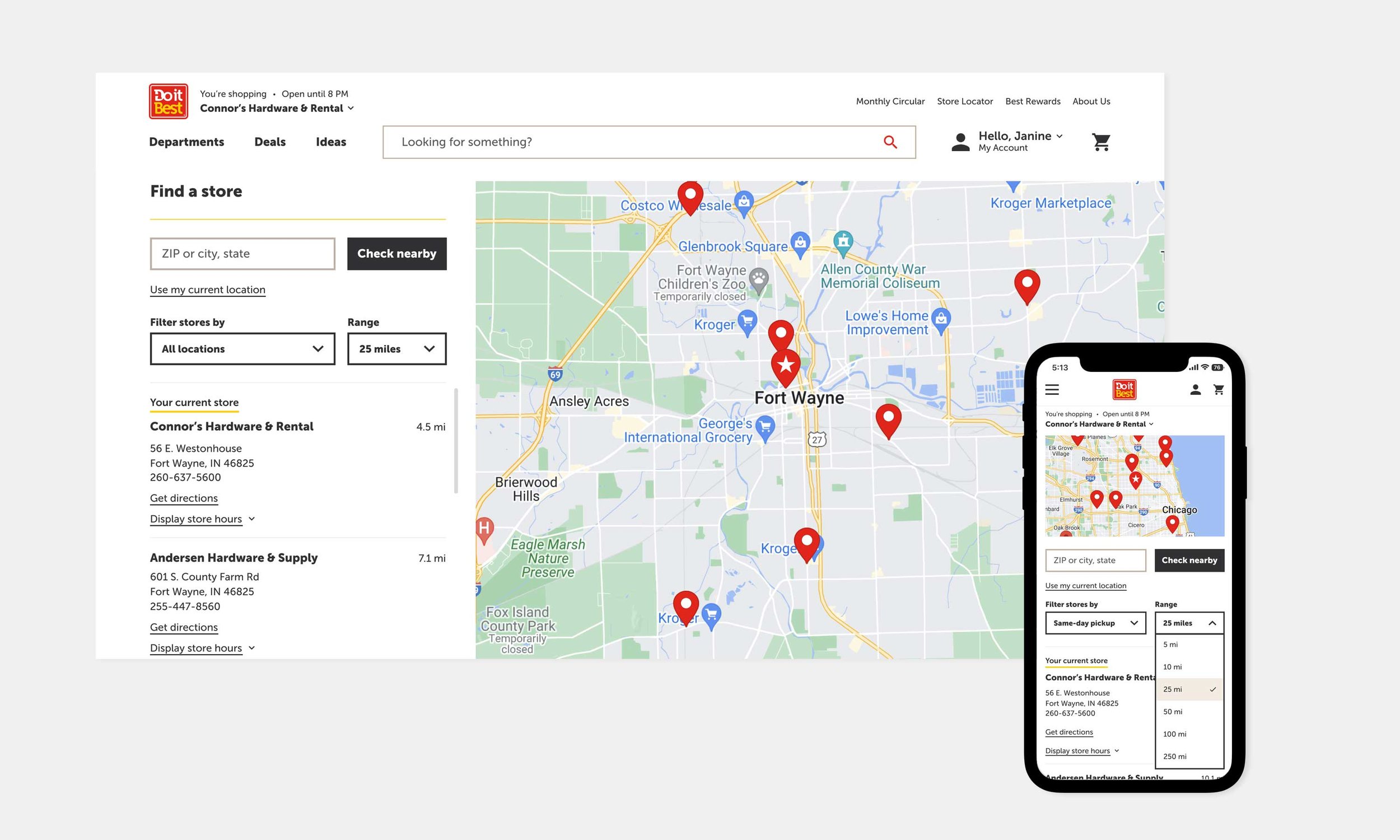
Dealer Search and Results
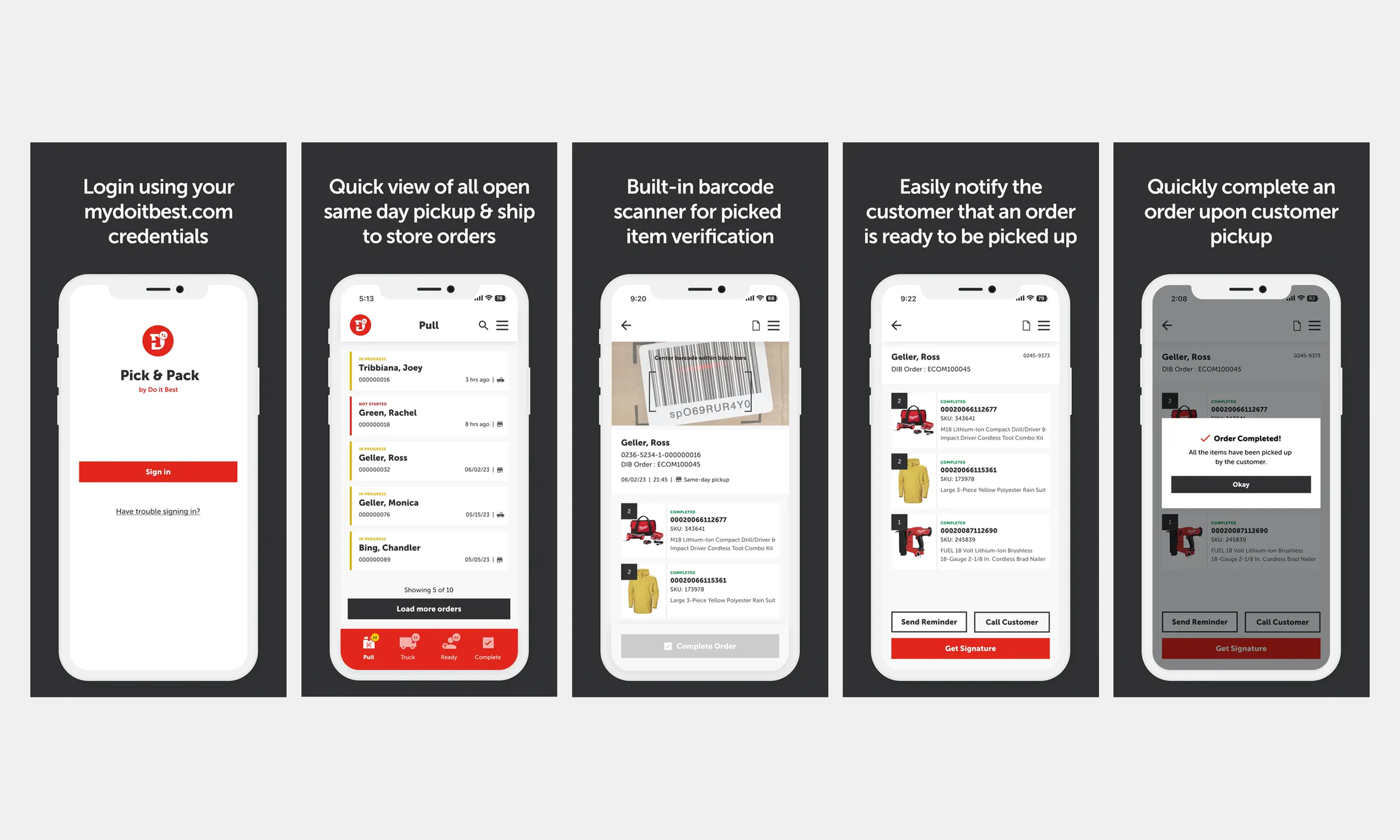
As E-commerce orders grew, member stores lacked a fast, reliable way to fulfill same-day pickup and ship-to-store orders, resulting in operational delays and friction. The Pick & Pack App streamlined store fulfillment, enabling faster, more reliable same-day pickup and ship-to-store orders.